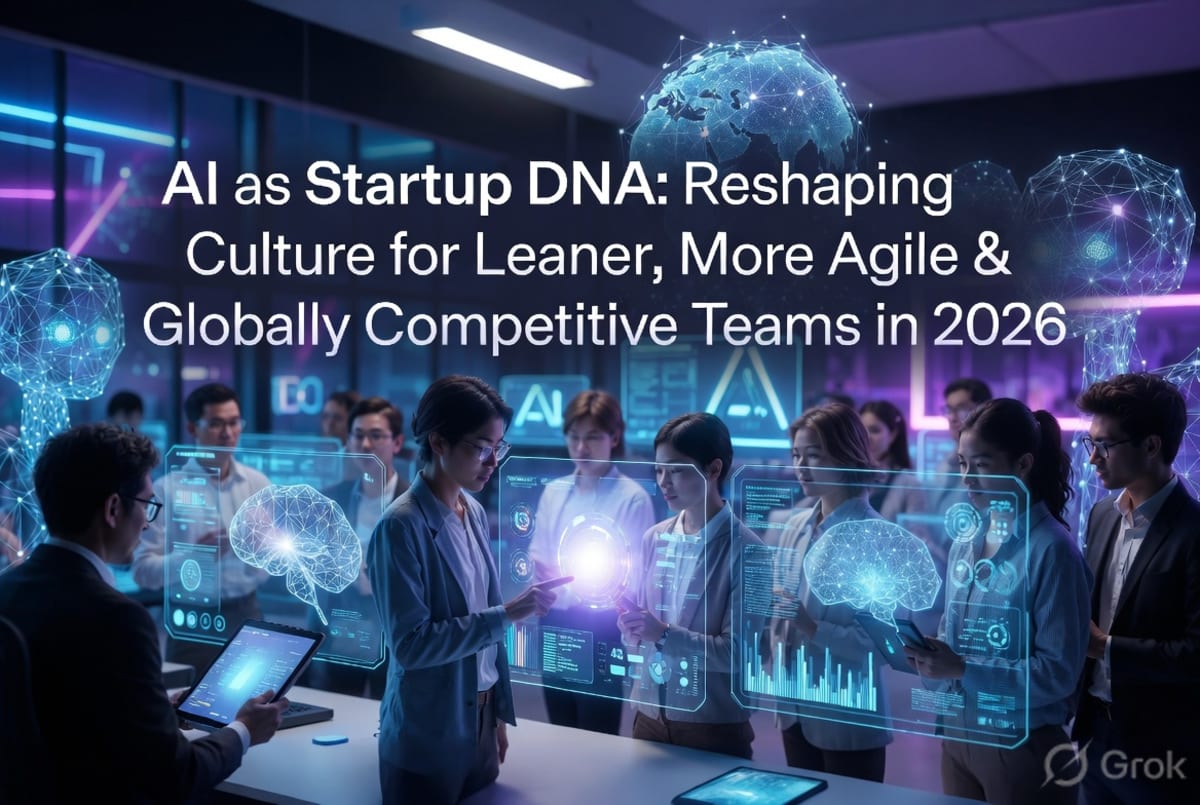
The modern startup landscape is undergoing a profound transformation, with Artificial Intelligence emerging not merely as a tool, but as a fundamental co-founder shaping the very essence of entrepreneurial culture. This shift is driven by AI's remarkable capacity to automate mundane tasks, thereby freeing human capital for more strategic and creative endeavors. As Hiram Ip notes, AI-powered tools streamline operations from data entry to customer service, allowing startup employees to focus on high-value activities like strategy development and problem-solving. This automation is not just about efficiency; it’s about redefining the human role within a startup, moving towards a more analytical and innovative focus.
Beyond operational efficiency, AI is revolutionizing decision-making processes. AI-driven analytics and predictive algorithms empower startups to make faster, more accurate, data-driven choices. By sifting through vast amounts of data, AI identifies patterns and extracts insights that minimize risks and uncover growth opportunities. This data-centric approach ensures that startups are not only agile but also strategically sound. Furthermore, AI enables personalized customer experiences at scale, analyzing preferences to deliver tailored interactions and marketing, fostering loyalty and driving growth. This deep understanding of the customer, facilitated by AI, becomes a core tenet of the startup’s engagement strategy.
The integration of AI also fuels product development and opens new revenue streams. Startups are leveraging AI to create innovative products and services, from intelligent automation to personalized platforms. This capability is crucial in a competitive market where differentiation is key. As Dima Maslennikov observes, AI brings significant economic value through optimization, efficiency, and simplification of processes, impacting areas from IT development to staffing. The ability to rapidly prototype and iterate, a hallmark of startup culture, is significantly accelerated by AI, allowing for quicker market validation and adaptation.
However, this AI-driven revolution is not without its challenges. While AI enhances productivity and efficiency, there's a growing discussion about over-reliance and the potential erosion of human interaction and organizational culture. Experts caution that a balance must be struck between technological integration and maintaining genuine human connections. The rise of AI also levels the playing field globally, meaning increased competition as all entrepreneurs have access to the same transformative technologies. Yet, this also underscores the entrepreneurial spirit’s inherent adaptability; as Mollick suggests, entrepreneurs are uniquely suited to navigate these transformative times, leveraging AI not to replace human judgment, but to augment it, fostering a new era of innovation and resilient business models.
---
⚠️ This article used AI assistance. Please verify facts independently.