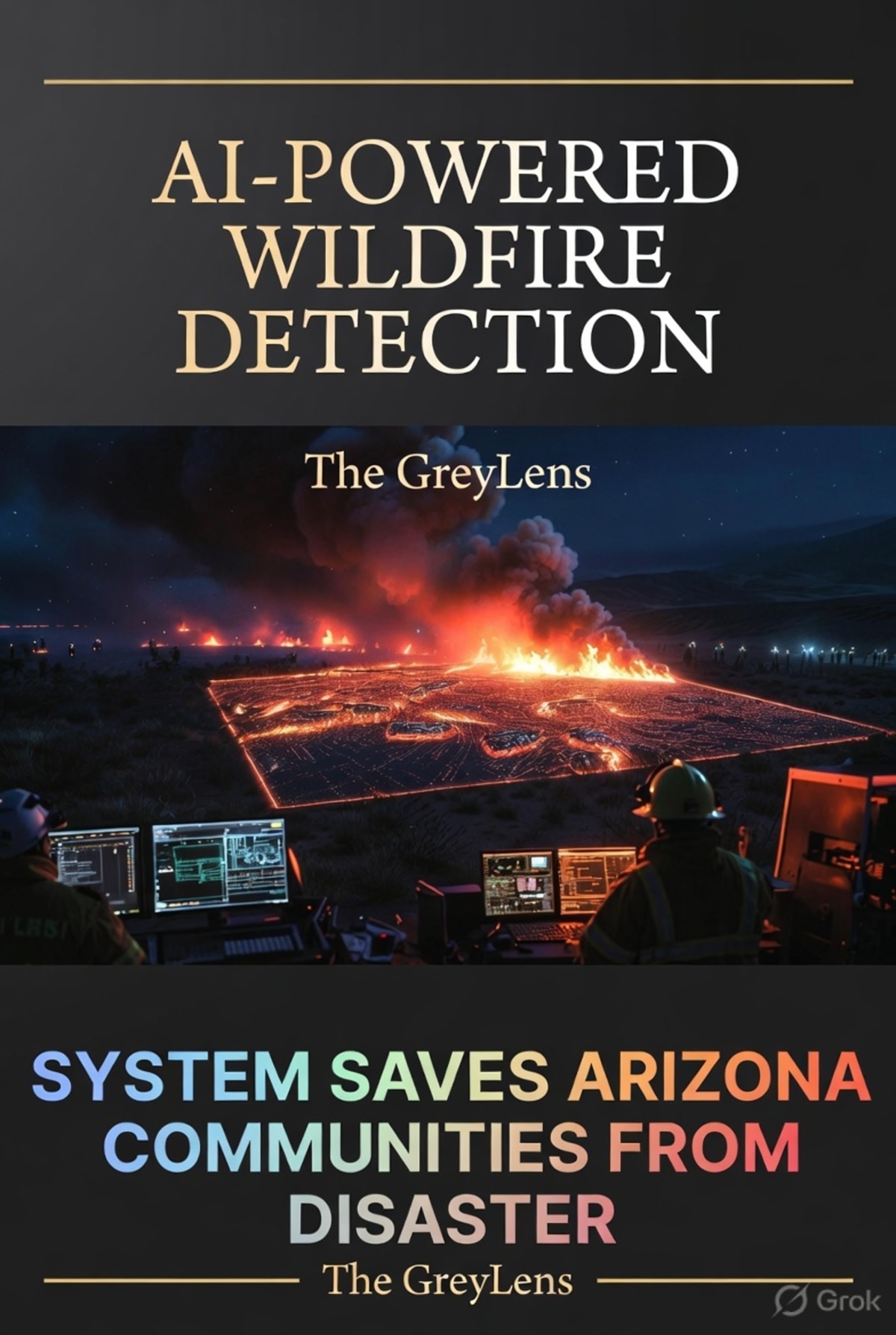
"New AI technology detects a wildfire in Arizona's Coconino National Forest, allowing for swift containment and preventing a larger crisis."
"AI Spots Arizona Wildfire in Crucial Early Minutes, Averting Disaster in Rural Community
In a development underscoring the rapid advancements in artificial intelligence for public safety, a sophisticated AI-powered camera system has successfully detected a nascent wildfire in Arizona's Coconino National Forest, enabling firefighters to contain the blaze before it could engulf the nearby rural community of Flagstaff. The incident, which occurred on a March afternoon, highlights how AI is becoming an indispensable tool in the fight against increasingly volatile wildfires.
The artificial intelligence system, installed by Arizona Public Service (APS) as part of its expanding wildfire detection network, identified an anomaly resembling smoke on a camera feed. Human analysts at APS quickly verified the visual data, distinguishing it from clouds or dust, and promptly alerted the Arizona Department of Forestry and Fire Management and APS itself. This swift, AI-driven alert allowed for an immediate response to what became known as the Diamond Fire.
A Critical Advantage in the Heat of the Moment
Firefighters were dispatched to the scene and managed to suppress the fire when it had barely spread beyond 7 acres. This rapid containment is a stark contrast to many recent wildfires that have devastated communities across the Western United States. According to an APS meteorologist, the AI technology provides notifications approximately 45 minutes faster on average than traditional 911 calls. This significant time advantage is crucial in wildfire scenarios, where every minute counts in preventing rapid spread and protecting lives and property.
The deployment of these AI cameras is a direct response to the escalating threat of wildfires, exacerbated by record-breaking heat and critically low snowpack. Arizona Public Service has already installed nearly 40 active AI smoke-detection cameras across its service areas and plans to increase this number to 71 by the end of summer. The state's fire agency has also deployed seven of its own AI-equipped cameras, demonstrating a coordinated, technology-driven approach to wildfire prevention.
Beyond Detection: A Proactive Stance Against Wildfires
This early detection capability is a game-changer for communities like Flagstaff, which lie in the path of potential wildfires. By spotting fires in their infancy, AI systems allow emergency services to mobilize resources more effectively and efficiently. This proactive strategy not only saves valuable natural landscapes but, more importantly, safeguards the lives and homes of residents.
The technology is part of a broader trend across the fire-prone Western United States, where states are increasingly integrating AI into their wildfire response toolkits. Utilities like Xcel Energy in Colorado are also expanding their AI camera networks, with plans to have cameras in seven of the eight states they serve by the end of the year.
John Truett, fire management officer for the Arizona Department of Forestry and Fire Management, emphasized the benefit: "Earlier detection means we can launch aircraft and personnel to it and keep those fires as small as we can." This sentiment is echoed by experts who note that AI's ability to analyze vast amounts of data and identify subtle patterns in real-time offers an unparalleled advantage in predicting and responding to evolving threats. As climate change continues to fuel more intense and frequent infernos, AI-driven early warning systems are proving to be a vital shield for vulnerable communities, transforming the fight against wildfires from a reactive measure to a more predictive and ultimately, life-saving endeavor."