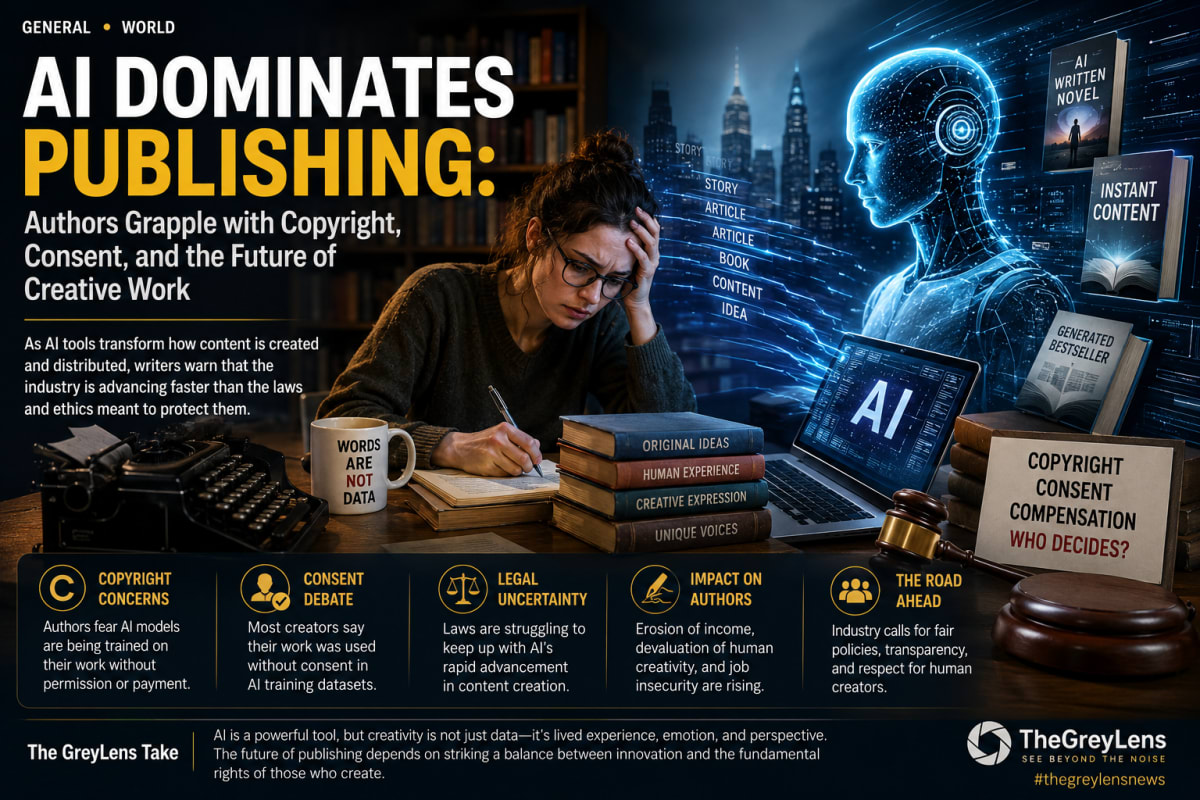
The publishing industry is at a critical juncture, facing an unprecedented wave of artificial intelligence-generated content that is challenging long-held norms around authorship, copyright, and creative integrity. What began as a trickle of AI-assisted writing has rapidly morphed into a deluge, with AI models capable of producing everything from marketing copy and plot summaries to entire novels.
The primary battleground is the question of copyright. As AI systems are trained on vast datasets of existing literature, often without explicit consent from authors, the line between inspiration and infringement becomes increasingly blurred. Authors and publishers are grappling with how to protect intellectual property when AI can mimic styles and generate content that is derivative of existing works. The US Copyright Office has indicated that works generated solely by AI are not eligible for copyright protection, but this ruling does little to address the underlying issue of training data and the economic impact on creators.
What is Going On
Recent weeks have seen a surge in reports detailing the growing presence of AI-generated books on platforms like Amazon. While some authors are experimenting with AI as a tool for brainstorming or editing, a more concerning trend is the emergence of content produced entirely by AI, often marketed under pseudonyms. This has led to accusations of 'spamming' the market with low-quality, derivative works designed to game recommendation algorithms and generate passive income. For instance, a recent report highlighted how AI-generated romance novels, often with nonsensical plots and repetitive prose, have begun appearing in bestseller lists, raising alarm bells among legitimate authors and readers alike. The ease with which these works can be produced and uploaded poses a significant challenge to discovery and curation on online retail platforms. Furthermore, publishers are increasingly concerned about the potential for AI to devalue human authorship and undermine the economic viability of the profession. The sheer volume of AI-generated content makes it difficult for human authors' works to gain visibility, potentially leading to a future where only the most established names can compete. The rapid advancement of AI models, such as OpenAI's GPT-4 and its successors, means that the sophistication and output quality of these tools are only expected to increase, exacerbating these concerns. There are also growing discussions around the ethical implications of AI training data, with many authors expressing outrage that their copyrighted works are being used without permission or compensation to train systems that could eventually replace them.
Why It Matters
This influx of AI-generated content has profound implications for the entire literary ecosystem. For authors, it threatens their livelihoods and the recognition of their creative efforts. If AI can produce content at a fraction of the cost and time, it could depress author royalties and make it harder for emerging writers to break through. The potential for AI to mimic writing styles also raises concerns about plagiarism and the originality of creative expression. For publishers, the challenge is twofold: how to leverage AI ethically and effectively while also protecting their authors and the value of professionally produced literature. They must navigate complex legal and ethical questions regarding AI-generated works, from copyright ownership to the potential for market saturation with low-quality content. Readers, too, are affected. The proliferation of AI-generated books can make it harder to find authentic, well-crafted stories, potentially diminishing the reading experience and eroding trust in online book recommendations. The very concept of a 'book' and the human connection it represents is being challenged. This is not merely a technological disruption; it is an existential crisis for an industry built on the unique voice and vision of human authors. The economic models that have supported writers for centuries are under immense pressure, and the cultural value placed on human creativity is being tested.
Let us be clear: AI is a powerful tool, but its current unchecked proliferation in publishing is a clear and present danger to human creativity. The industry's response thus far has been reactive, scrambling to catch up with a technology that is evolving at breakneck speed. The dominant conversation needs to shift from mere detection to proactive regulation and ethical frameworks. We must insist on transparency in AI-generated content, clear labeling of AI-assisted or AI-generated works, and robust legal protections for authors whose copyrighted material is used for training. The US Copyright Office's stance is a start, but it is insufficient. The real battle lies in ensuring that AI development and deployment in creative fields are guided by principles of fairness, consent, and respect for human artistry. To do otherwise is to risk a future where literature becomes a commodity churned out by algorithms, devoid of the soul and insight that only human experience can provide. The current approach by major platforms, which often lack sophisticated mechanisms for identifying and flagging AI-generated spam, is a dereliction of duty that actively harms creators and misleads consumers. This situation demands immediate, decisive action from both legislative bodies and industry leaders to safeguard the future of literature and the rights of its creators.
What You Should Know
Readers should be aware that the book market is increasingly populated by AI-generated content. Look for author transparency and be critical of suspiciously prolific pseudonymous authors or books with generic plots and repetitive prose. For aspiring authors, consider how AI can be used as a supplementary tool rather than a replacement for your unique voice. For established authors and publishers, engaging with legal counsel on copyright implications and advocating for industry-wide standards on AI content is crucial. Platforms like Amazon need to implement more rigorous systems for identifying and downranking AI-generated spam to ensure fair visibility for human authors. The ongoing lawsuits and regulatory discussions surrounding AI training data are critical to watch, as they will shape the future of copyright law in the digital age. Understanding the nuances of AI's capabilities and limitations is key to navigating this rapidly changing landscape. The debate is not about whether AI can write, but whether we should allow it to dominate creative spaces without ethical guardrails.
The publishing industry must act decisively to establish clear guidelines and legal frameworks. The alternative is a literary landscape increasingly dominated by soulless algorithms, where human creativity is marginalized and the value of authentic storytelling is irrevocably diminished. The choices made today will determine the future of literature for generations to come.