U.S. Treasury Secretary Scott Bessent has issued a strong call to Congress for the swift passage of comprehensive legislation governing digital assets. In an opinion piece published in The Wall Street Journal, Bessent articulated that clearer regulatory frameworks are crucial for the United States to maintain its position as a leader in financial innovation and capture its associated economic benefits. He highlighted the significant growth of cryptocurrencies and blockchain technology, noting that the sector's market capitalization has fluctuated between $2 trillion and $3 trillion over the past year, with nearly one in six Americans owning some form of digital asset. Bessent pointed to the recently enacted GENIUS Act, which addresses dollar-backed stablecoins, as a positive step but stressed that broader regulatory uncertainty, particularly due to overlapping oversight from the SEC and CFTC, remains a significant impediment. This ambiguity, he warned, is driving crypto firms and developers to seek clearer regulatory environments in places like Abu Dhabi and Singapore. The Treasury Secretary framed the issue as one of national security, arguing that a well-defined regulatory structure would enhance oversight, strengthen anti-money-laundering efforts, and reduce reliance on offshore markets, ensuring that future financial innovation is built on American infrastructure. According to Reuters, Bessent urged lawmakers to pass the proposed Clarity Act to establish clear boundaries, define digital assets as securities, and create registration pathways for trading platforms, thereby fostering domestic innovation and protecting consumers. The Treasury's push underscores the growing integration of digital assets into the broader financial system and the need for a robust regulatory approach. This initiative also aligns with efforts to bolster cybersecurity within the digital asset industry, with the Treasury's Office of Cybersecurity and Critical Infrastructure Protection (OCCIP) launching a program to share timely, actionable cybersecurity information with U.S. digital asset firms, a move aimed at strengthening defenses against evolving cyber threats and promoting a secure digital finance ecosystem. The Treasury's comprehensive approach emphasizes that responsible innovation in digital finance is intrinsically linked to strong cybersecurity and operational resilience, ensuring that as digital assets become more ingrained in the financial landscape, consumer protection and market stability are paramount.
Finance
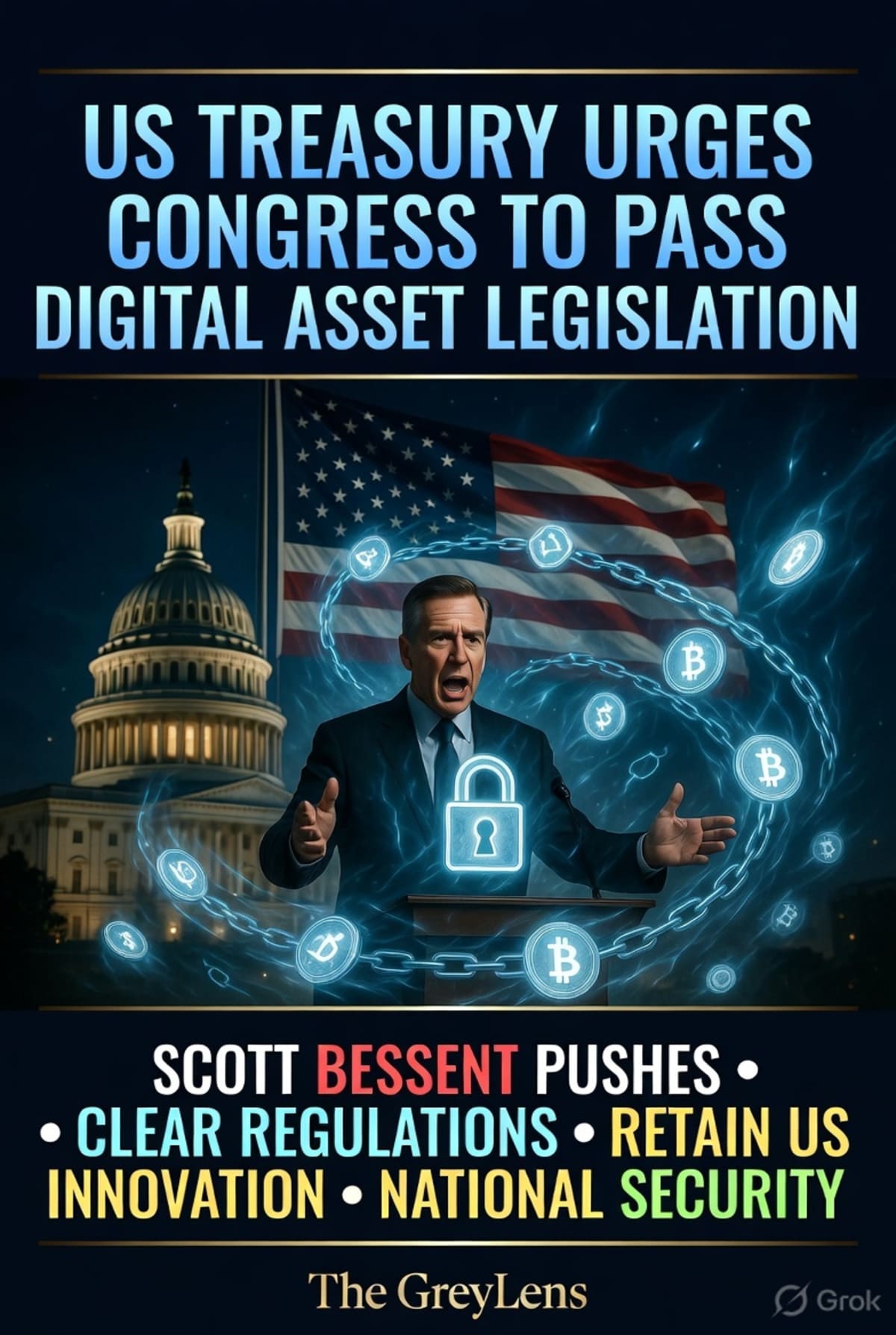
US Treasury Urges Congress to Pass Digital Asset Legislation
Treasury Secretary Scott Bessent is pushing Congress for comprehensive digital asset laws, emphasizing the need for clear regulations to retain financial innovation within the U.S. and address national security concerns.
Report an error/suggestion: news@thegreylens.com