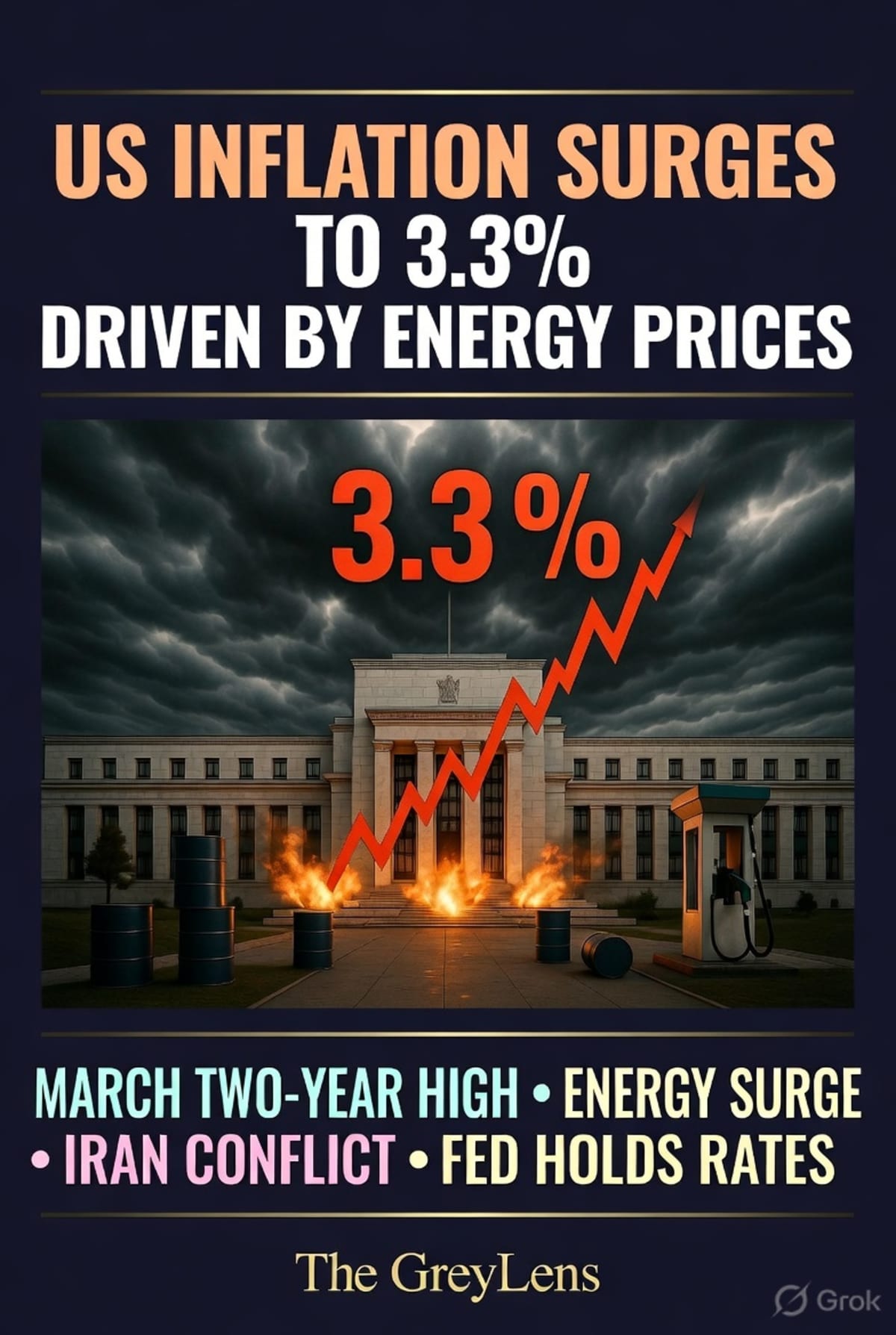
U.S. inflation reached a two-year high of 3.3% in March, a significant acceleration driven primarily by a sharp increase in energy prices, according to data from the Bureau of Labor Statistics. This surge in inflation, largely attributed to the ongoing conflict in the Middle East, has prompted the Federal Reserve to maintain its current interest rate at 3.50% to 3.75%. Federal Reserve officials are closely monitoring these developments, as higher energy costs could impede further progress toward the Fed's 2% inflation target. While Fed projections still indicate a potential rate cut later in 2026, the timing remains uncertain, with market expectations also centering on a single reduction. The ongoing geopolitical tensions and their impact on energy markets continue to be a key factor influencing monetary policy decisions, creating uncertainty for businesses and consumers alike regarding the economic outlook and borrowing costs.
Finance
US Inflation Surges to 3.3%, Driven by Energy Prices
US inflation hit a two-year high of 3.3% in March, largely due to a surge in energy prices linked to the Iran conflict. This has led the Federal Reserve to hold interest rates steady, with markets anticipating potential cuts later in the year.
Report an error/suggestion: news@thegreylens.com