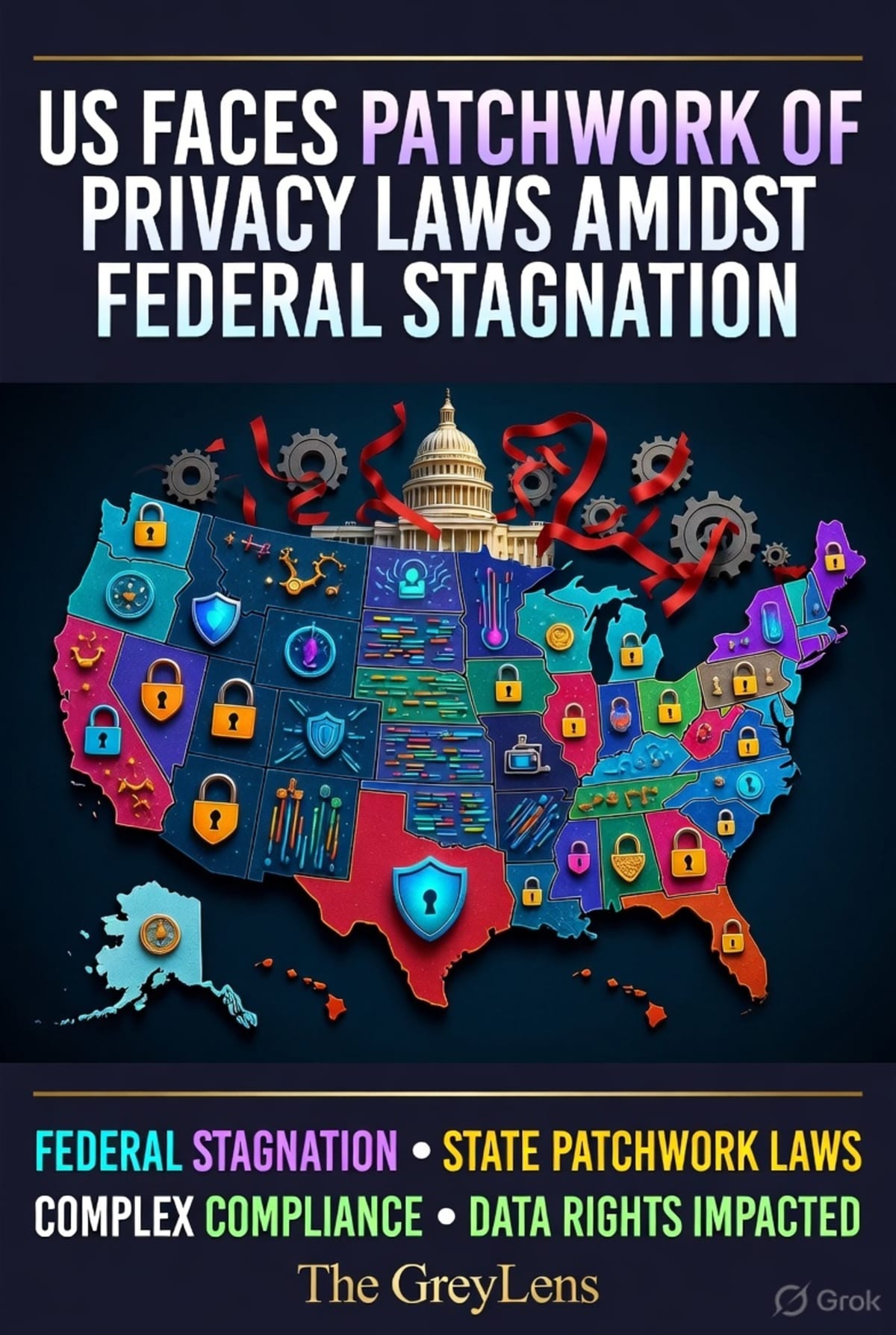
The United States continues to grapple with a fragmented approach to digital privacy, with nearly 20 states now having introduced or enacted their own data protection laws. This patchwork of state-level legislation, a trend accelerating in 2026, highlights the absence of a comprehensive federal privacy framework. While states like California, Indiana, Kentucky, and Rhode Island lead with stringent regulations, the varying requirements across jurisdictions pose significant compliance challenges for businesses. For young professionals, this means navigating a complex web of rules regarding data collection, usage, and protection, impacting everything from their online activity to their employment data. The recent introduction of the "Online Privacy Act of 2026" (H.R. 8014) signals a potential move towards a federal standard, but its passage remains uncertain amidst ongoing political and industry influence, according to reporting by Smarsh and Vertex AI Search. The lack of federal action leaves individuals with differing levels of data protection depending on their state of residence.
General
US Faces Patchwork of Privacy Laws Amidst Federal Stagnation
As federal privacy legislation stalls in the U.S., states are increasingly enacting their own diverse regulations, creating a complex compliance landscape for businesses and impacting individuals' data rights.
Report an error/suggestion: news@thegreylens.com