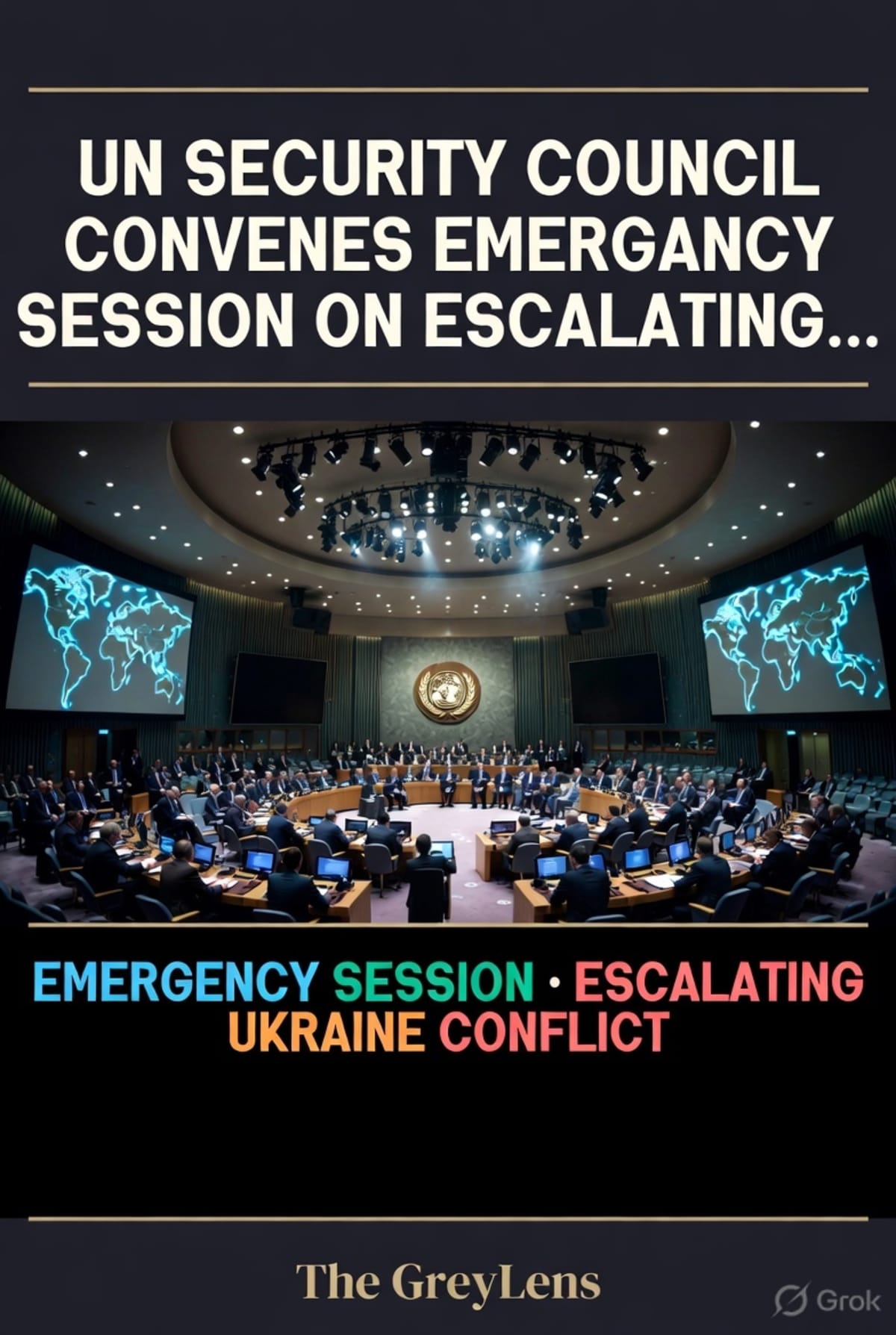
The United Nations Security Council convened an emergency session on April 20th to address the rapidly intensifying conflict in Ukraine. The urgent meeting was called at the request of Kyiv, which cited a significant increase in Russian aerial bombardments, including devastating strikes on the city of Dnipro. Ukraine reported that between late March and mid-April, over 5,000 drones and missiles were launched, resulting in numerous civilian casualties and hundreds of injuries.
During the briefing, officials highlighted the dire humanitarian situation, with Assistant Secretary-General for Humanitarian Affairs Joyce Msuya warning of mounting casualties and worsening infrastructure damage. The collapse of a brief Orthodox Easter truce underscored the hardening diplomatic positions, as both sides accused each other of violations. Ukraine continues to call for stronger international action, while refusing territorial concessions, and the Russian Federation has rejected ceasefire framing.
The Security Council also touched upon the ongoing pursuit of justice for alleged war crimes. Assistant Secretary-General for the Middle East, Asia and the Pacific, Mohamed Khaled Khiari, stressed the importance of implementing International Criminal Court arrest warrants issued for President Vladimir Putin and Maria Lvova-Belova in connection with the unlawful deportation and transfer of children. This commitment to accountability was framed as essential for upholding the principles of the UN Charter, including sovereignty, territorial integrity, and adherence to international law.
Despite some confidence-building measures, such as prisoner exchanges, the overall situation remains one of escalating hostilities. The persistent violence continues to take a heavy toll on civilians, with aid efforts stretched thin and constrained by ongoing military operations. The international community faces mounting pressure to find a path towards de-escalation and a sustainable peace in the region.