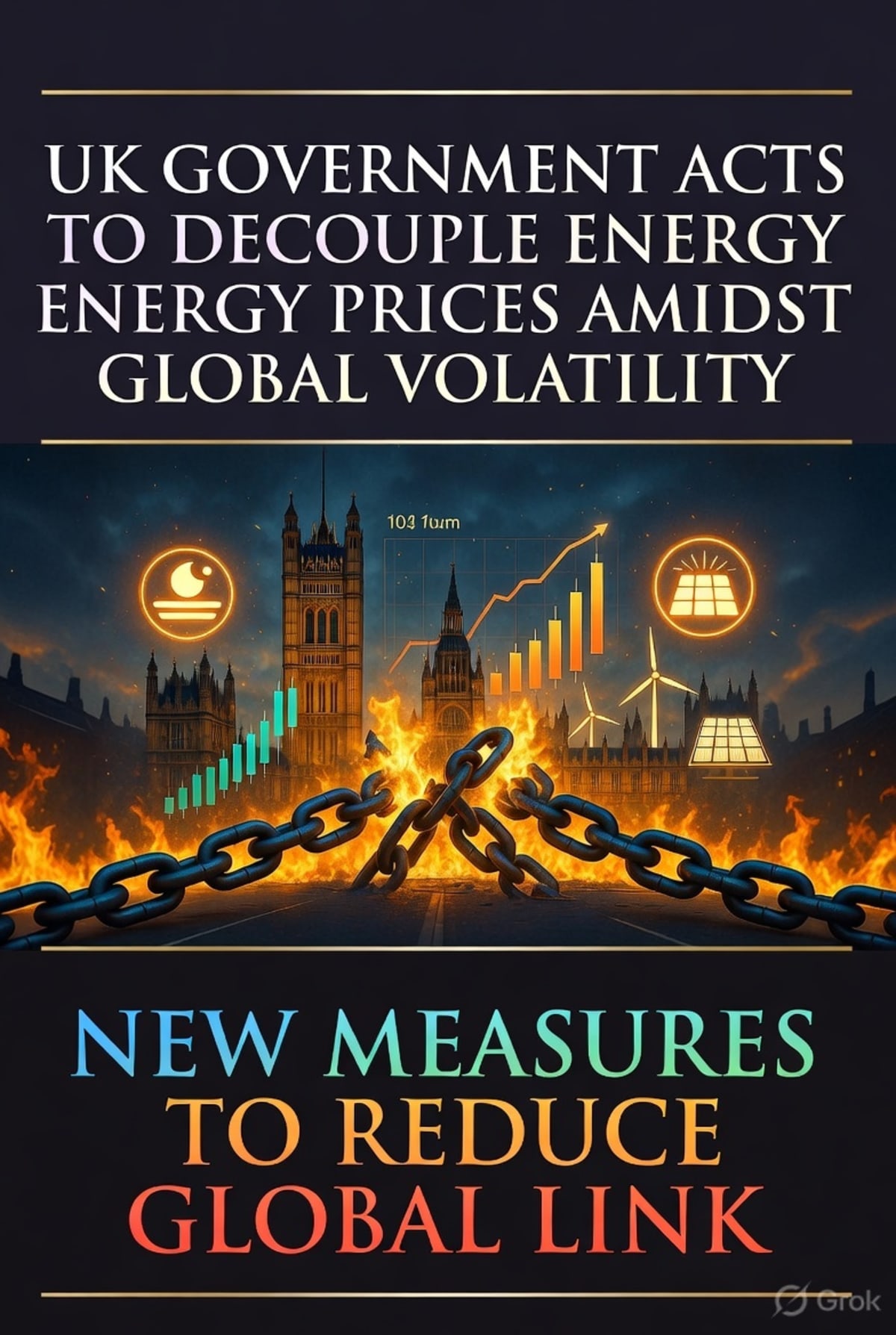
In response to escalating global energy market volatility, the UK government has unveiled a package of measures designed to significantly reduce the link between fluctuating gas prices and the cost of electricity for consumers. Energy Secretary Ed Miliband stated that "the era of fossil fuel security is over, and the era of clean energy security must come of age," highlighting the necessity for this shift following recent energy shocks.
Central to the new strategy is an increase in the "electricity generator levy," a windfall tax on older renewable and nuclear energy plants. This levy will rise from 45% to 55% from July 1, 2026. A portion of the revenue generated from this tax hike will be used to support households and businesses facing high energy bills. The government is also encouraging these older renewable projects to enter into long-term, fixed-price contracts, a move intended to shield consumers from the impact of gas price spikes.
The government's plan includes substantial investment in renewable energy infrastructure. Measures involve a cross-government drive to develop renewable energy sources on public land and expand solar panel installations in schools and colleges. Furthermore, funding has been increased for energy efficiency upgrades to social housing, with an additional £100 million allocated to the Warm Homes Plan to upgrade 100,000 homes. A £25 million pilot scheme will also provide plug-in solar panels for low-income households.
Efforts are also underway to accelerate the adoption of electric vehicles (EVs). Legislation is planned to expand EV charging provisions, including solutions for cross-pavement charging and easier installation for renters and residents in apartment buildings. The government aims to streamline planning, land access, and grid connection rules to speed up the deployment of clean energy infrastructure.
While the government emphasizes these measures will enhance energy security and provide long-term cost reductions, some experts have offered a cautious response. One researcher described the policy as a "big step in the right direction in policy terms," but noted that the immediate impact might be "relatively modest." Despite the government's assertion of a decisive shift, the reality is seen as more incremental, aiming to weaken rather than completely sever the link between gas and electricity prices. Nevertheless, the initiative marks a significant governmental effort to address energy price volatility and transition towards greater energy independence.