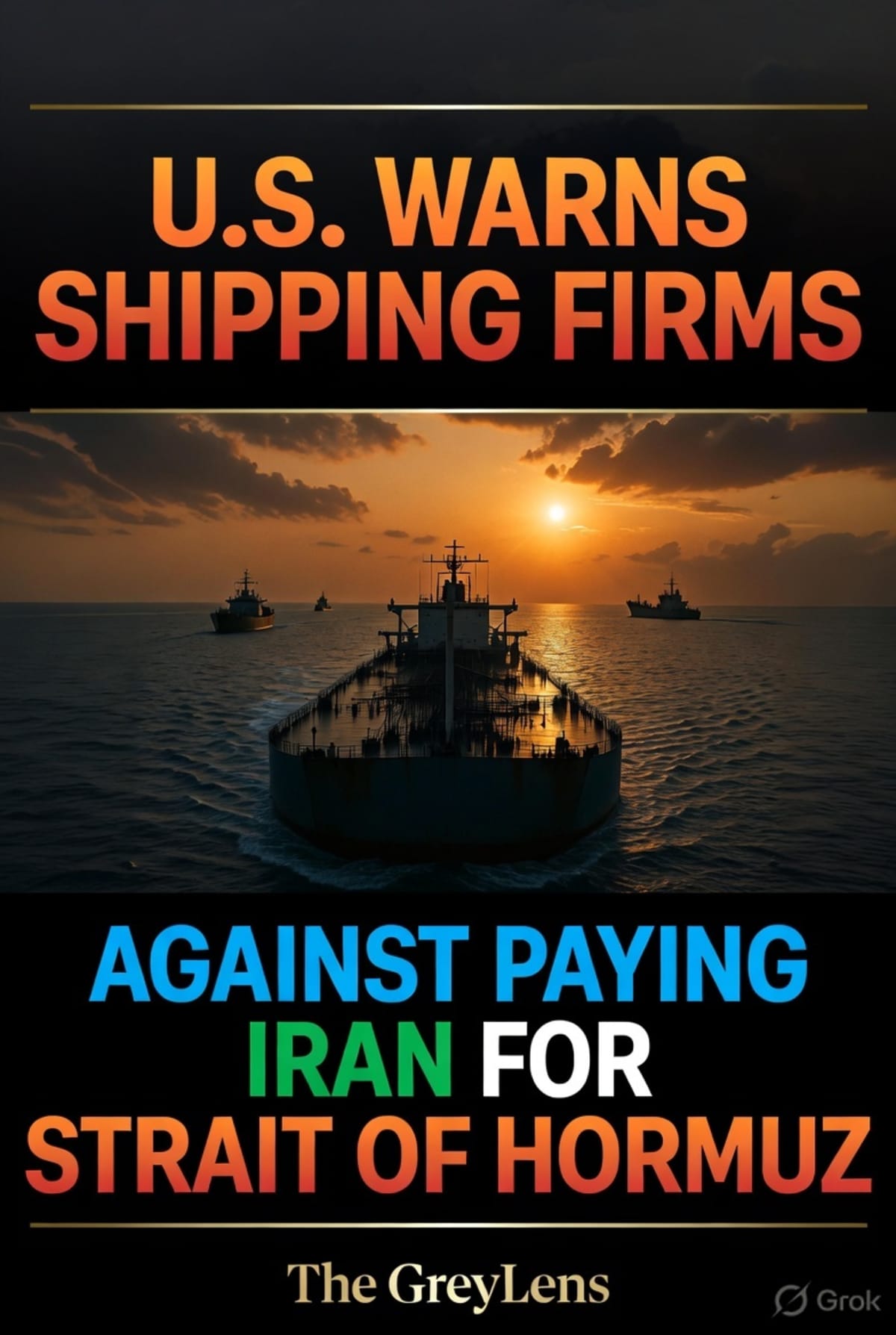
The United States is taking a hard line against shipping companies that engage in financial transactions with Iran to navigate the Strait of Hormuz, a vital chokepoint for global oil and natural gas trade. The U.S. Office of Foreign Assets Control issued an alert on Friday, cautioning that such payments could lead to sanctions. This advisory intensifies the pressure on Iran amid the ongoing conflict, which has seen the Strait of Hormuz become a focal point of international concern.
Iran's Assertions and U.S. Countermeasures
Following a period of increased aggression where Iran was accused of attacking and threatening ships, Tehran began offering some vessels passage through routes closer to its coast, often levying fees. The U.S. Treasury's warning explicitly states that prohibited transfers include not only cash but also "digital assets, offsets, informal swaps, or other in-kind payments," extending to charitable donations and even payments made at Iranian embassies. In response to Iran's actions, the U.S. has implemented a naval blockade of Iranian ports since April 13, aiming to cut off Tehran's oil revenues, which are crucial for its struggling economy. U.S. Central Command reported on Saturday that 48 commercial ships have been instructed to turn back as part of these measures.
Broader Geopolitical Context and Human Rights Concerns
The situation in the Strait of Hormuz is unfolding against a backdrop of wider geopolitical tensions. Reports indicate that imprisoned Nobel Peace Prize laureate Narges Mohammadi has been hospitalized in Zanjan, Iran, following a transfer from prison. Her foundation has expressed grave concern for her health, describing her condition as being at "very high risk" due to fluctuating blood pressure and severe nausea. Medical teams in Zanjan have reportedly requested her medical records, and her foundation advocates for her transfer to Tehran for treatment by her own doctors. However, the Intelligence Ministry is reportedly opposing this transfer, specifically for angiography.
The U.S. warning and its associated actions underscore the delicate balance of international maritime security and the complex geopolitical dynamics at play in the Persian Gulf region. The Strait of Hormuz, through which approximately one-fifth of the world's oil and natural gas typically passes, remains a critical artery for global commerce. The escalating tensions and the potential for sanctions against shipping firms highlight the significant risks involved for international trade and the broader economic implications of the ongoing conflict.