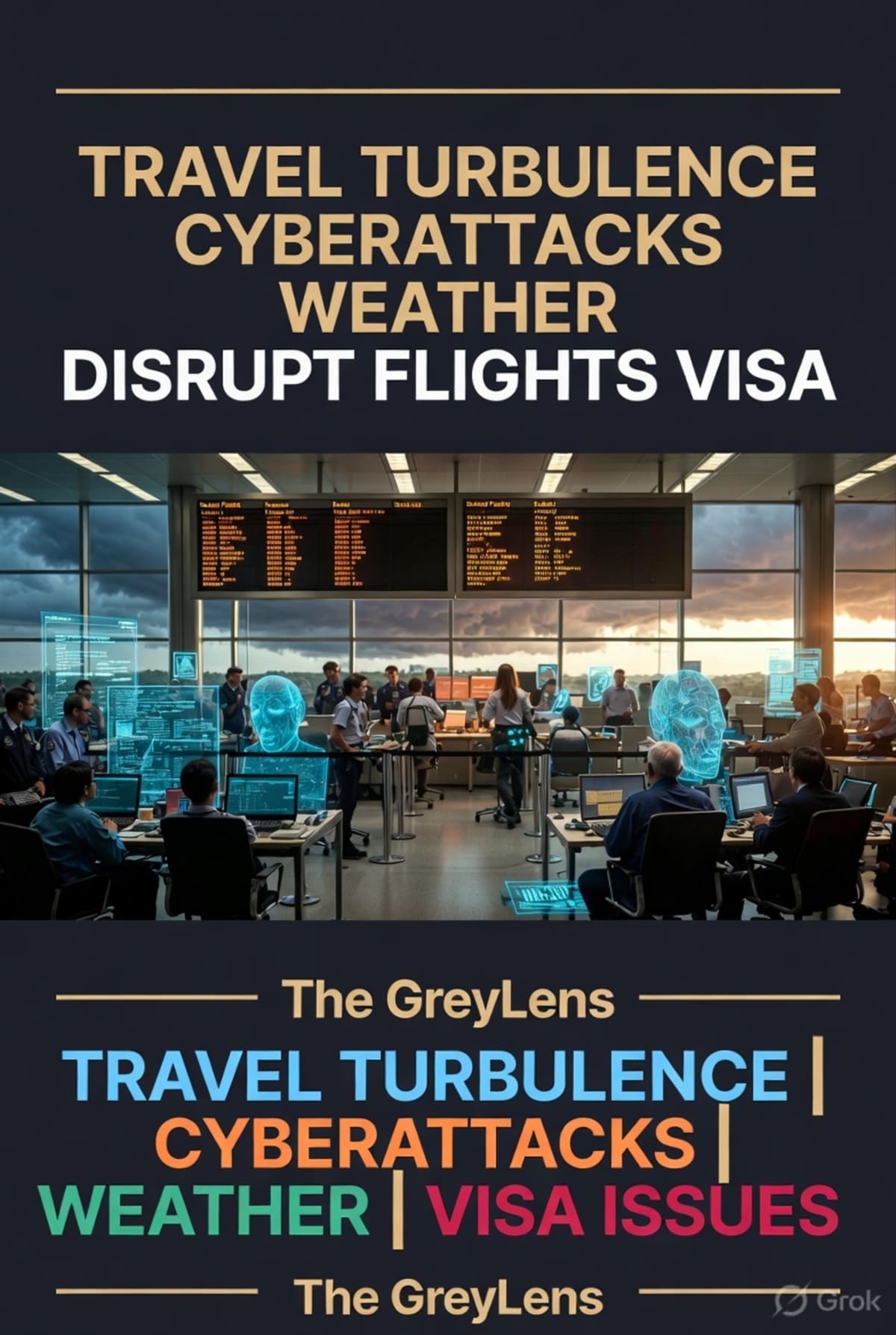
The last 30 days have presented a turbulent landscape for the travel industry, marked by widespread flight disruptions, evolving visa policies, and shifting tourism trends. Europe experienced significant chaos in early April due to a coordinated cyberattack that crippled IT systems at multiple airports, leading to over 1,600 flight delays and cancellations on April 6 alone, impacting major hubs like London Heathrow and Paris Charles de Gaulle. Travel news services reported that Oslo Gardermoen saw over a hundred disrupted services in a single day, with cascading effects across regional airports.
In the United States, severe thunderstorms and high winds caused considerable disruption on April 8, affecting 3,554 flights across 27 major airports. Hubs like Miami International Airport and Hartsfield-Jackson Atlanta International Airport reported hundreds of delays, with New York's major airports also experiencing significant impacts. These weather-related issues, compounded by air traffic control restrictions, led to over 50,000 passengers being affected within a 24-hour period. Aviation analysts note that a historically active storm season, combined with strong travel demand and tightly scheduled operations, has made the system more vulnerable to disruptions.
Meanwhile, U.S. international air travel statistics for March 2026 reveal a mixed picture. While overall international enplanements saw a 2.4 percent decline compared to the previous year, overseas visitor arrivals showed a modest increase of 3.6 percent. This suggests a gradual recovery in long-haul travel demand, even as total passenger numbers softened. Outbound travel by U.S. residents remained robust, exceeding pre-pandemic levels.
On the regulatory front, significant changes to U.S. visa policies have been implemented. The Trump administration has ended the wide availability of waivers for in-person consular interviews for temporary visa renewals, requiring nearly all applicants to attend an in-person interview in their home country. Additionally, the State Department suspended immigrant visa processing for 75 countries in January 2026, and expanded nonimmigrant visa categories subject to social media screening. These measures, framed as enhancing vetting and security, collectively aim to reduce legal immigration. Separately, Amnesty International and other human rights groups issued a World Cup travel advisory for the U.S., warning of potential issues related to aggressive immigration enforcement and rising violence, a move that tourism officials have condemned as politically motivated and harmful to the industry.
Amidst these challenges, the global travel and tourism industry has seen a full recovery from the COVID-19 pandemic, with international arrivals surpassing pre-pandemic records in 2025. However, the U.S. market, while still the largest, is reportedly losing market share, with a decline in international visitor numbers and spending in 2025. The upcoming 2026 FIFA World Cup presents a significant opportunity to boost tourism, though concerns remain about entry policies and the overall perception of the U.S. as a destination.