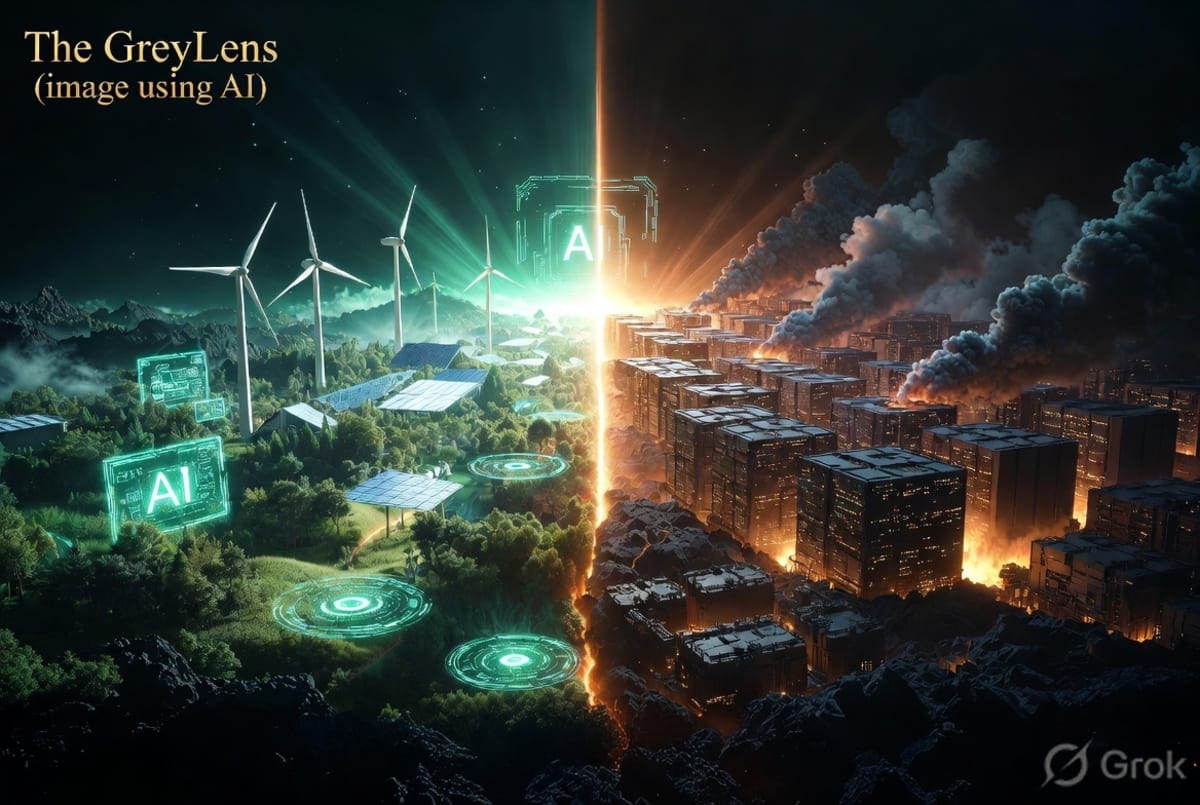
The relentless march of artificial intelligence (AI) presents a complex paradox in our urgent fight against climate change. On one hand, AI is a powerful engine for innovation in green technology, offering sophisticated solutions for optimizing energy consumption, enhancing efficiency in everything from data centers to urban planning, and enabling more accurate climate modeling. We see AI playing a crucial role in managing smart grids, designing energy-efficient buildings, and even optimizing transportation routes to reduce emissions. The potential for AI to accelerate our transition to a sustainable future is immense, promising not just environmental benefits but also significant economic opportunities and competitive advantages for businesses that embrace these technologies. The integration of AI into systems like Industry 4.0 is transforming manufacturing, making it more resource-efficient and less wasteful.
However, this technological leap forward comes with a substantial energy appetite. The computational power required for advanced AI, particularly generative AI (GenAI), is staggering. Data centers, the very infrastructure powering these AI advancements, are facing unprecedented pressure to balance their growing energy demands with sustainability goals. Experts highlight that as technologies like AI, blockchain, and quantum computing expand, they consume unsustainable amounts of energy. This creates a critical tension: the very tools we're developing to save the planet are also contributing to its strain.
The challenge, therefore, lies in mitigating the environmental consequences of AI itself. Organizations are beginning to recognize this imperative, with a growing focus on how to make AI investments both impactful and environmentally responsible. This includes exploring innovations like neuromorphic computing, which promises faster AI decision-making with significantly less power consumption, and developing tools like digital twins to help data centers manage power proactively and integrate renewable sources. The critical question is whether these efforts can keep pace with the exponential growth of AI's energy needs.
Ultimately, the AI revolution offers a double-edged sword for sustainability. It is an indispensable ally in developing and deploying green technologies, but its own resource demands necessitate a parallel revolution in energy efficiency and renewable energy integration. The coming years will be decisive in determining whether we can harness AI's potential for a greener future without exacerbating the very climate crisis it's meant to solve. The goal must be to ensure that our pursuit of technological advancement does not undermine our commitment to preserving the planet for future generations, demanding a delicate balance and a proactive approach to sustainable AI development and deployment.