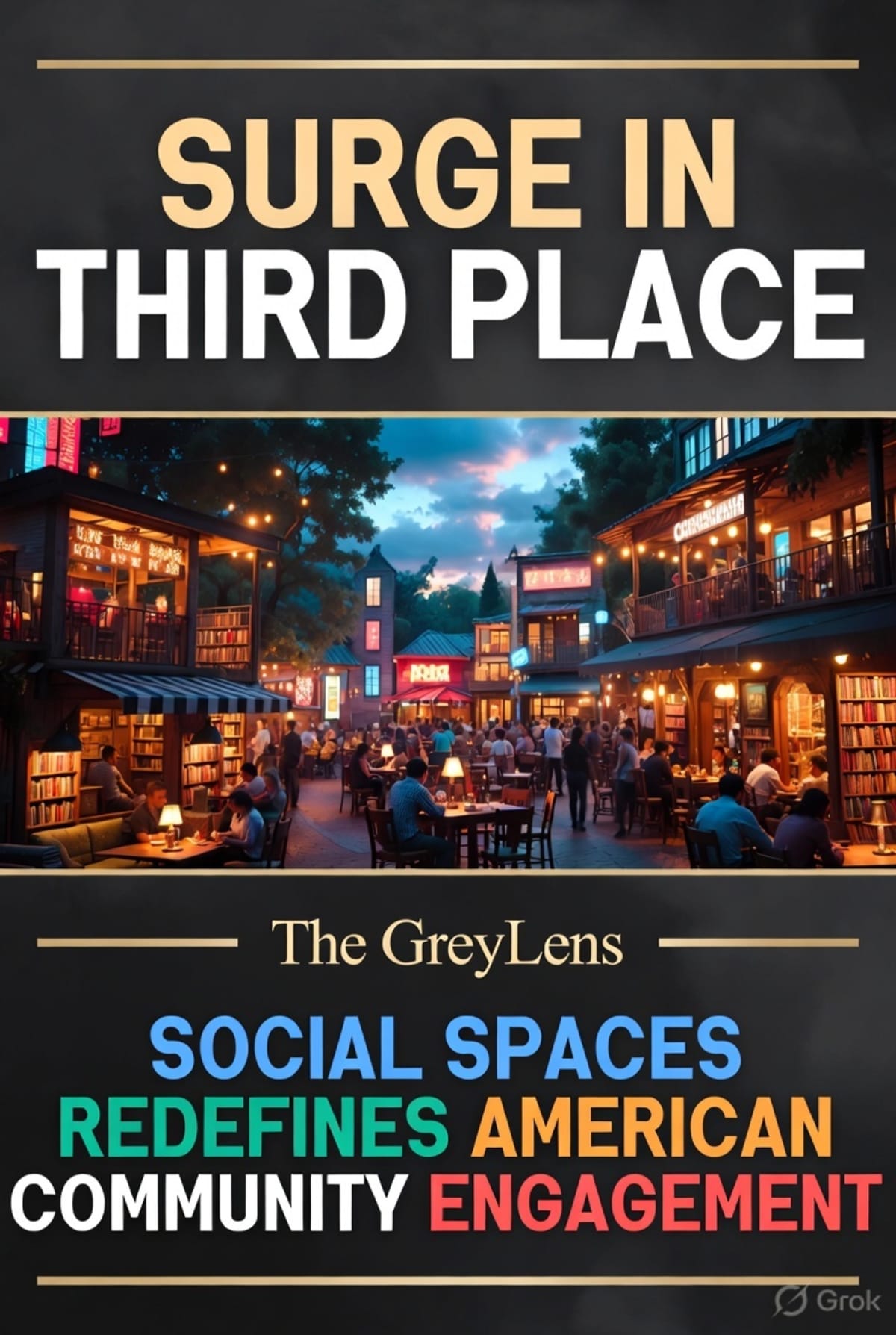
In an accelerating shift in American social dynamics, a growing number of citizens are actively seeking out and revitalizing 'third places'—informal gathering spots separate from the home and workplace. This trend, observed across diverse demographics and geographic regions, points to a deep-seated need for community connection and belonging in an increasingly fragmented society.
The Rise of the 'Third Place'
Experts are pointing to a significant upswing in the utilization and perceived importance of locations such as independent bookstores, local coffee shops, public libraries, and community gardens. These spaces, often characterized by their relaxed atmosphere and accessibility, are becoming critical anchors for social interaction and civic engagement. According to a recent report by the Urban Sociological Institute, visits to public libraries have seen a 15% increase year-over-year, with a notable rise in programming attendance, particularly among young adults and seniors.
Dr. Evelyn Reed, a sociologist at Georgetown University, commented on the phenomenon, stating, "We're seeing a conscious effort by Americans to reclaim spaces where spontaneous interaction and shared experience can flourish. In an era dominated by digital communication, the tactile, face-to-face engagement offered by these third places is proving incredibly valuable." The trend is not confined to urban centers; rural communities are also reporting a renewed vibrancy in their local gathering spots, often with community-led initiatives to maintain and expand these facilities.
Demographic Shifts Fueling the Trend
This cultural pivot appears to be driven by several interconnected demographic and social factors. The aging of the Baby Boomer generation, many of whom are seeking new social networks post-retirement, is a significant contributor. Simultaneously, Millennials and Gen Z, often characterized by their desire for authentic experiences and community involvement, are embracing these spaces as alternatives to more traditional forms of social engagement. Data from the National Community Engagement Survey indicates that over 60% of individuals aged 18-35 now consider their local coffee shop or library a primary social outlet.
"It’s not just about grabbing a coffee anymore," explained Maria Sanchez, owner of 'The Daily Grind' cafe in Austin, Texas. "People come here to meet friends, work on projects together, attend book clubs, or simply find a quiet corner to read. It’s become a real community living room."
Economic and Social Implications
The implications of this trend extend beyond social well-being, impacting local economies and civic discourse. Small businesses operating as third places are experiencing a measurable boost in patronage, fostering local economic resilience. Furthermore, these informal gathering spots are increasingly becoming platforms for grassroots activism, community organizing, and the sharing of diverse perspectives. Reports from cities like Portland, Oregon, highlight how neighborhood associations are leveraging local cafes and libraries as hubs for discussing local policy and coordinating volunteer efforts.
However, challenges remain. Ensuring equitable access to these spaces, particularly in underserved communities, and finding sustainable funding models for public facilities like libraries are ongoing concerns. As this trend continues to unfold, the American landscape of community life is being subtly but surely reshaped, with 'third places' emerging as essential infrastructure for a connected and engaged citizenry.