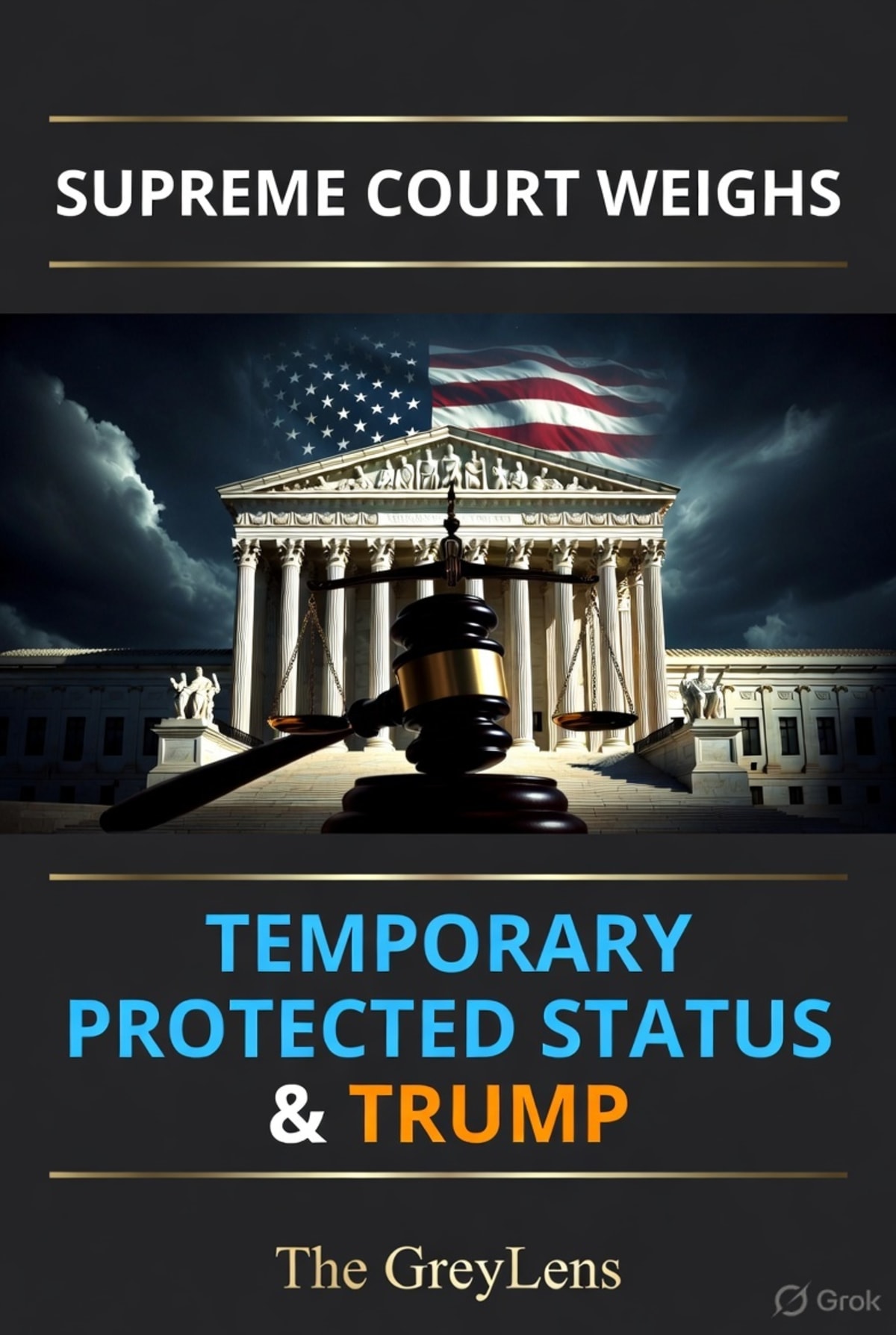
Washington D.C. – Wednesday, April 29, 2026 – The United States is navigating significant legal and geopolitical developments today, with the Supreme Court hearing arguments in a pivotal case concerning Temporary Protected Status (TPS) and President Donald Trump offering his assessment of Iran's political landscape.
The Supreme Court's consideration of TPS is of paramount importance to hundreds of thousands of individuals residing in the U.S. under this designation. The case could determine the future stability of families and communities, impacting whether TPS recipients can continue to work, contribute to society, and raise their children without fear of uprooting their lives. The TPS program, established in 1990, provides protection from deportation and work authorization to individuals whose home countries face armed conflict, natural disasters, or other conditions making safe return impossible. The current administration's stance on TPS decisions being unreviewable by courts has been a point of contention, with critics arguing it undermines established law and humanitarian protections.
Meanwhile, President Trump has asserted that Iran is "in a state of collapse" and is seeking a deal with Washington. Speaking on social media, the President claimed Tehran is pleading for the reopening of the Strait of Hormuz. However, reports suggest a more complex reality, with a hardened maritime standoff in the critical waterway. This impasse has been impacting global economies, including that of the United States. Analysts indicate that the situation may involve a mutual coercion strategy rather than a unilateral capitulation by Iran. The ongoing tensions highlight the delicate balance in international relations, especially concerning crucial oil and gas shipping routes.
In legislative news, Congressman Adam Gray has advanced three bipartisan bills in the House of Representatives. These bills, which now move to the Senate, focus on areas such as reauthorizing telehealth grants, environmental protections, and facilitating geothermal energy development. These legislative efforts underscore a push for bipartisan cooperation on key domestic issues.
Additionally, the U.S. Food and Drug Administration (FDA) is taking steps to implement real-time clinical trials, with proof-of-concept trials initiated by AstraZeneca and Amgen. FDA Commissioner Marty Makary stated that this initiative aims to accelerate promising therapies by allowing real-time data review. These advancements signal a move towards modernizing drug development and regulatory processes.