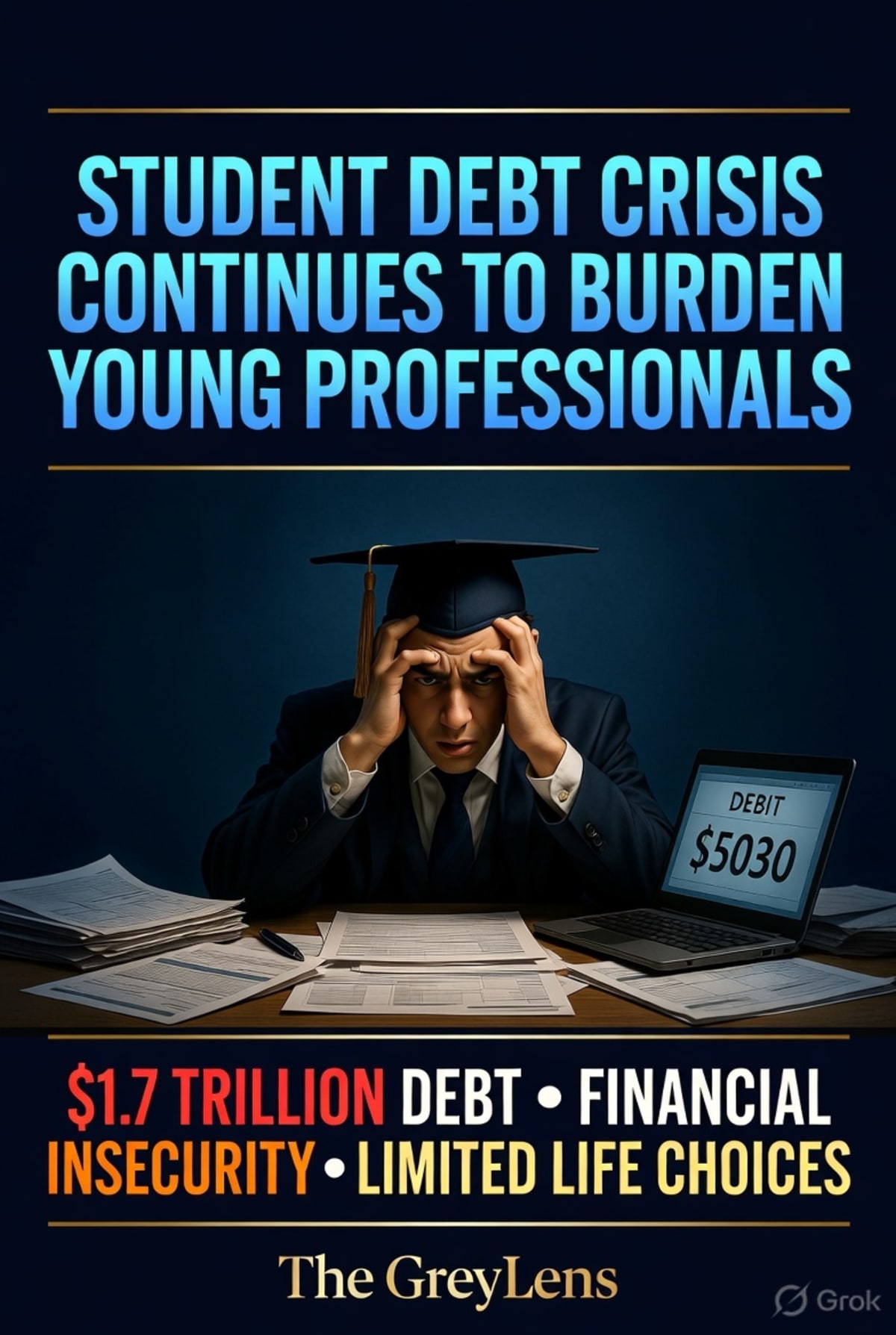
The escalating cost of higher education has created a persistent student debt crisis, profoundly affecting young professionals and their long-term financial stability. As of late 2023, total student loan debt in the United States surpassed $1.7 trillion, with the majority held by federal borrowers, according to the Council on Foreign Relations. This significant financial burden is not merely an abstract economic figure; it translates into tangible stress and anxiety for millions of individuals. Research indicates that a substantial percentage of borrowers report high levels of stress, anxiety, and even depression directly linked to their student loan obligations. This psychological toll can manifest in delayed life milestones such as homeownership and starting a family, as individuals grapple with the immense weight of their debt. As reported by Harvard Law School's Center on the Legal Profession, over 70 percent of those with $100,000 to $200,000 in student debt, and over 80 percent with more than $200,000, experience high or overwhelming stress. For many, this debt hinders their ability to make crucial financial decisions, impacting their career paths and personal lives. This situation is exacerbated by the fact that tuition costs have risen significantly faster than incomes over the past few decades, placing a greater financial strain on each new cohort of students.
The consequences of this debt crisis extend to critical aspects of professional and personal development for young adults. Many individuals find themselves making career decisions based on debt repayment rather than passion or potential, sometimes staying in disliked jobs or taking on second jobs to manage their loan payments, according to the National Association of REALTORS®. This is particularly true for Millennials, who are more likely than other generational cohorts to report being influenced by student debt in their employment choices. Furthermore, the financial strain can delay essential life decisions, with a significant portion of debt holders indicating that their loans have impacted their ability to pursue further education, start a family, or even find a long-term partner. The Brookings Institute has noted that while student loans can be a resource for accessing higher education, the burden of repayment can lead to increased depressive symptoms and health problems as borrowers move into their mid-twenties and beyond. The long-term impact also affects retirement readiness, with some older borrowers dipping into retirement savings to manage student loan payments, as highlighted by PLANSPONSOR. The sheer scale of this debt, and its pervasive influence on life choices, underscores a systemic issue with far-reaching implications for individual well-being and the broader economy.