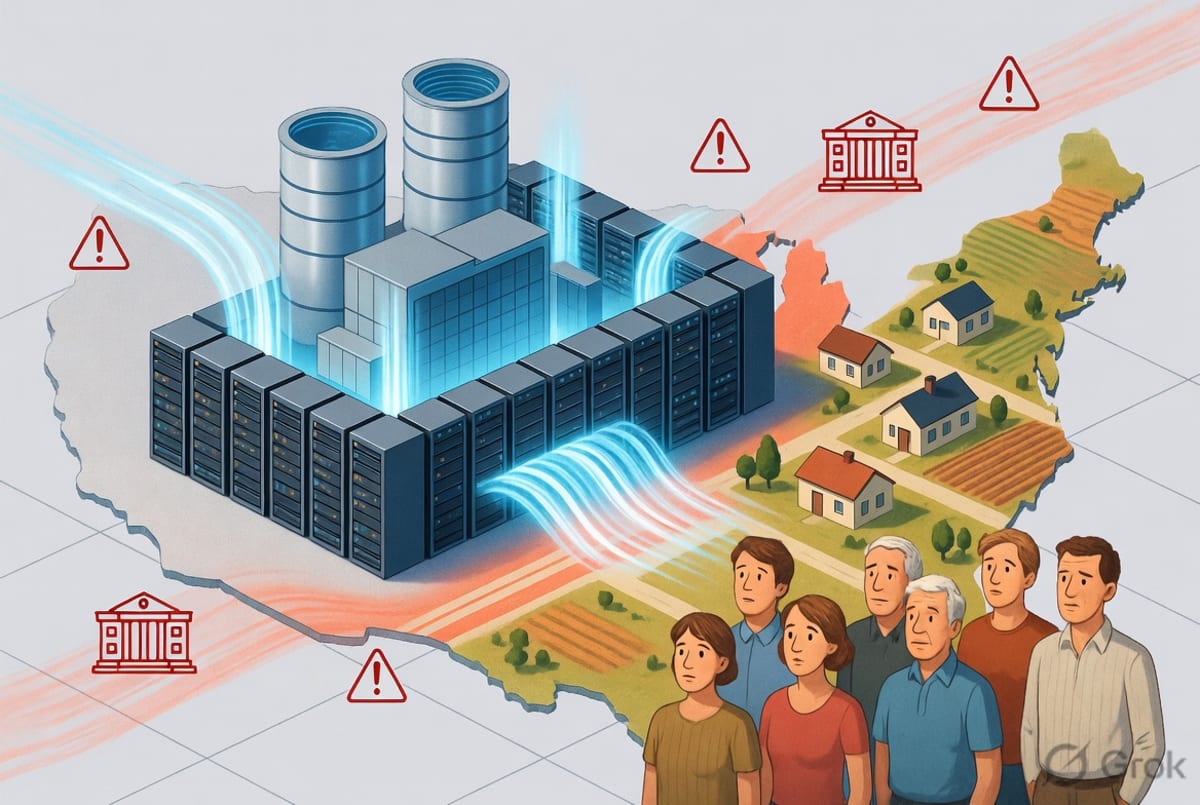
A growing wave of resistance is building across the United States against the expansion of data centers by major technology companies, including Google, Microsoft, Amazon, and Meta. At least eleven states have introduced legislation since late 2025 aimed at restricting or pausing the construction of new facilities. This trend signals a significant shift from a previously quiet infrastructure build-out to a prominent political and public issue.
The backlash comes as these tech giants are investing heavily in data centers to power the burgeoning field of artificial intelligence. Companies are pouring billions into these facilities, recognizing their critical role in AI development and deployment. However, this rapid expansion has triggered concerns among various states regarding the immense power consumption, potential strain on local energy grids, and the overall environmental impact.
Maine is emerging as a potential leader in this movement, with lawmakers advancing a bill that would impose a pause on large data center construction until November 2027. This proposed regulation would apply to projects consuming at least 20 megawatts of power, an amount sufficient to supply over 15,000 homes. Governor Janet Mills has expressed support for such a pause, particularly as the state grapples with rising electricity costs, a concern echoed in other regions facing similar pressures.
The intensifying scrutiny and proposed restrictions suggest a complex future for data center development. While states like Wyoming are actively trying to attract these investments by highlighting their energy resources and favorable climate, the broader trend indicates a growing demand for greater oversight and a more balanced approach to the expansion of critical digital infrastructure. The pushback reflects a broader societal conversation about the costs and benefits of unchecked technological growth.
---
⚠️ This article used AI assistance. Please verify facts independently.