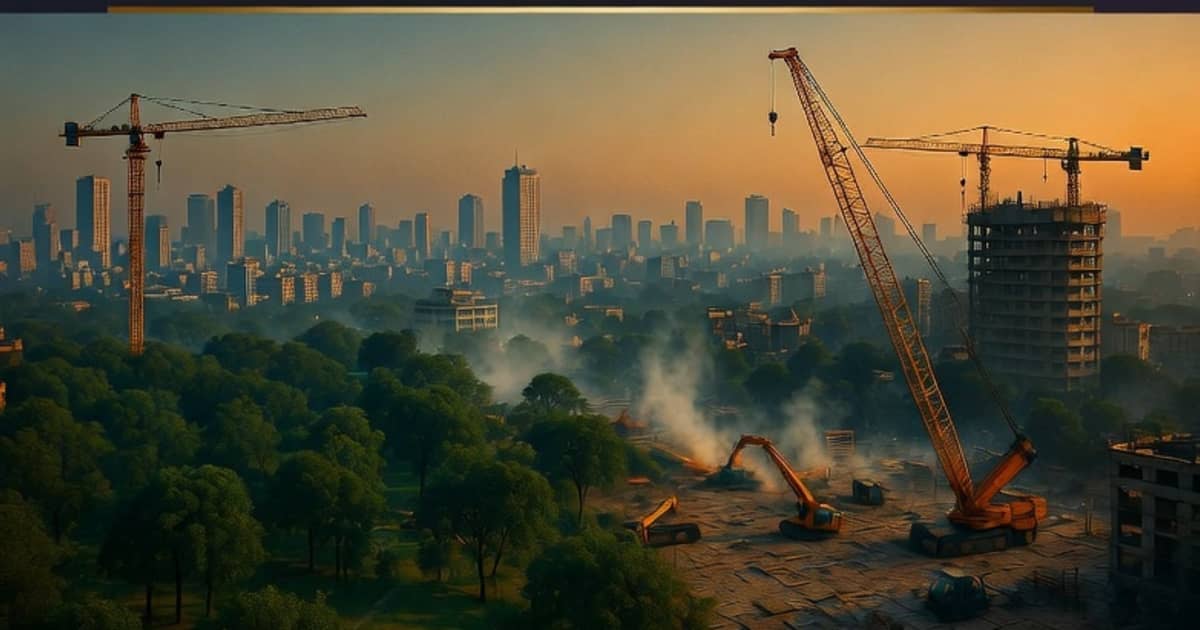
A stark editorial published yesterday in The Wire has sounded an alarm over the accelerating disappearance of New Delhi’s urban green cover, a crisis often overshadowed by more prominent national headlines. The piece, titled "Concrete Jungle's Grip Tightens: Where Have Delhi's Trees Gone?", meticulously details how the relentless pace of construction, coupled with lax enforcement of environmental regulations, is systematically eroding the city's vital green lungs.
The Vanishing Canopy
The editorial draws upon data from recent satellite imagery analyses and local environmental reports, revealing a significant decline in tree density and parkland over the past five years. It points to specific instances in South Delhi’s Sainik Farm area and parts of East Delhi where large tracts of land, previously marked as green belts, have been converted into commercial complexes and residential societies. According to the piece, officials often cite “infrastructure development” and “urban beautification” projects as justifications, but the narrative frequently fails to account for the ecological cost. The authors cite a recent, albeit unverified, report by a local environmental NGO suggesting that over 50,000 trees might have been felled or transplanted for various projects in the last fiscal year alone, with a survival rate for transplanted trees reportedly as low as 30%.
Public Health and Environmental Fallout
The implications of this vanishing greenery extend far beyond aesthetics. The Wire’s editorial connects this trend to rising levels of air pollution in the capital, a long-standing issue that frequently makes global headlines. Trees, it argues, are not mere decorative elements but crucial natural filters that absorb particulate matter and harmful gases. Their removal exacerbates the already critical air quality, directly impacting the respiratory health of Delhi's millions of residents. Furthermore, the loss of green spaces reduces the city's capacity to manage stormwater runoff, increasing the risk of urban flooding during monsoon seasons, a phenomenon that has become more pronounced in recent years.
The piece also touches upon the psychological impact, noting that access to green spaces is intrinsically linked to mental well-being. As concrete structures proliferate, residents are increasingly deprived of areas for recreation and relaxation, contributing to a more stressful urban environment. The editorial criticizes the city’s planning authorities for prioritizing rapid expansion over sustainable urban living, questioning the long-term vision for a city grappling with extreme heatwaves and deteriorating environmental conditions.
A Call for Accountability and Change
The editorial strongly advocates for greater public participation in urban planning decisions and more robust accountability mechanisms for developers and government bodies responsible for environmental clearances. It calls for a moratorium on the felling of mature trees and a more rigorous enforcement of existing green cover protection laws. The authors suggest that the current development model is short-sighted, potentially leading to an unlivable city in the not-too-distant future. While national news cycles often focus on broader policy debates or large-scale infrastructure projects, this editorial serves as a critical reminder of the granular, on-the-ground environmental degradation that demands urgent attention and a fundamental shift in development priorities for New Delhi.