Widespread airspace closures across the Middle East are causing significant aviation disruptions, impacting major global travel hubs like Dubai, Abu Dhabi, and Doha. As of early March, nearly 2,000 flights were canceled, with ripple effects extending globally, forcing airlines to reroute flights, leading to longer travel times and higher airfares for journeys between Asia and Europe. The U.S. State Department has issued a worldwide security alert, advising Americans to exercise increased caution, particularly in or near the Middle East. This alert warns that groups supportive of Iran may be targeting U.S. interests and locations associated with Americans globally, noting that U.S. diplomatic facilities outside the Middle East have already been targeted. The advisory urges Americans to stay alert and follow guidance from the nearest U.S. embassy or consulate. Several countries, including Canada, the United Kingdom, and Australia, have issued similar advisories, encouraging their citizens to register with government alert systems and prepare for potential disruptions. Major regional airlines such as Emirates, Etihad Airways, and Qatar Airways have suspended most scheduled flights, operating only repatriation and cargo services. International carriers like Lufthansa have also paused service to several Middle Eastern destinations. Cruise operators have similarly canceled sailings or kept ships docked in Gulf ports. In response to ongoing conflict, the U.S. State Department has also eased its travel advisory for Venezuela, lowering it from Level 4 to Level 3, while maintaining advisories for other regions. Mexico has a Level 2 advisory, urging increased caution due to cartel-related violence in certain states, with specific regions remaining under Level 4 "Do Not Travel" advisories. Meanwhile, destinations in the Middle East such as Israel, Qatar, Kuwait, and others are listed at Level 3, advising travelers to reconsider visits due to the threat of armed conflict. The situation underscores the volatility impacting international travel and the importance for travelers to remain informed and flexible. In a separate development, the World Travel & Tourism Council (WTTC) has reported that while the United States remains the largest travel and tourism market globally, it is experiencing a decline in market share. The WTTC warns that the U.S. is at a "crossroads," highlighting the need for increased investment and promotion to maintain its competitive edge, especially with major events like the 2026 FIFA World Cup on the horizon. Concurrently, Southeast Asia's cruise industry has shown strong economic performance, generating $10 billion in total output in 2024, though the region accounts for only 2% of global cruise passengers. These diverse developments highlight the dynamic and often unpredictable nature of the global tourism landscape in early 2026.
General
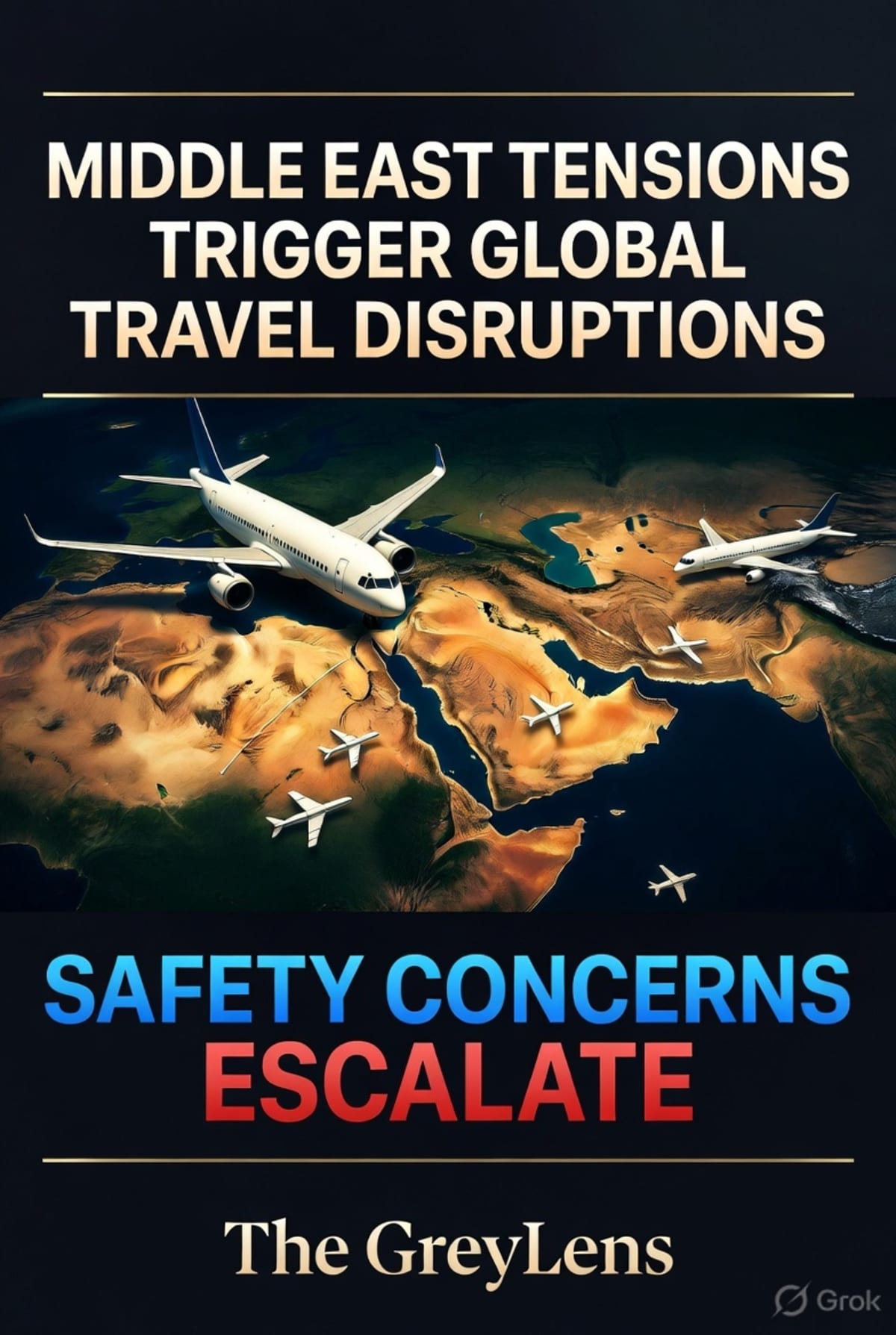
Middle East Tensions Trigger Global Travel Disruptions and Safety Advisories
Escalating conflict in the Middle East has led to widespread airspace closures, flight cancellations, and a global security alert urging Americans to exercise increased caution worldwide.
Report an error/suggestion: news@thegreylens.com