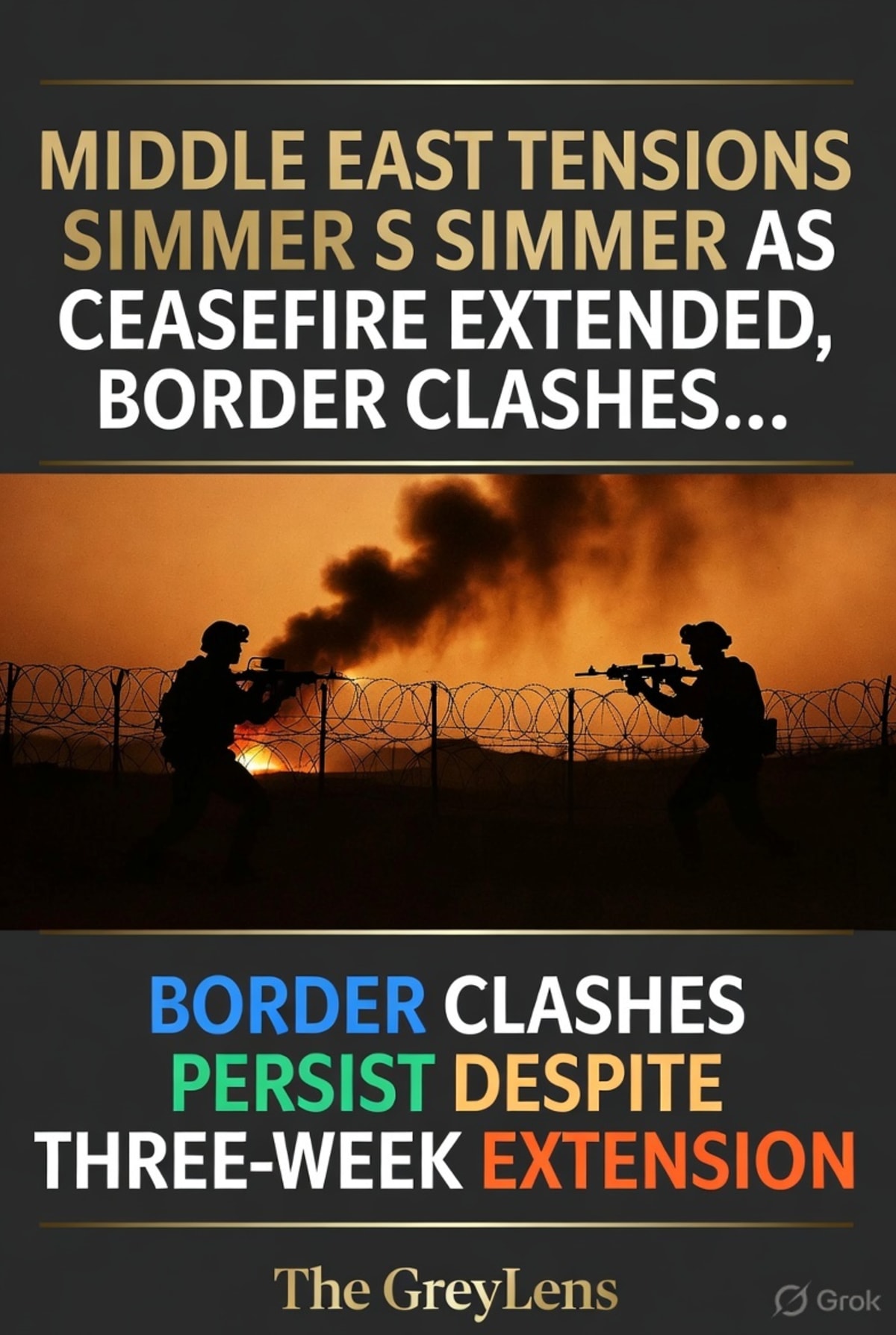
JERUSALEM – The delicate ceasefire between Israel and Lebanon has been extended for an additional three weeks, a move announced by U.S. President Donald Trump following peace talks in Washington. However, the fragile peace remains under strain as sporadic clashes continue along the border and broader regional tensions persist.
Despite the extended truce, the Israeli army reported that its soldiers "identified two armed terrorists who approached the soldiers, posing an immediate threat. Following the identification, the soldiers eliminated the terrorists" in the Aainata area of southern Lebanon. The Lebanese national news agency reported Israeli strikes killing two people on Wednesday, adding to a significant death toll since early March.
In a separate incident, the IDF announced on Thursday night that it had intercepted several rockets launched by Hezbollah towards Israel. The military stated that it later destroyed the launchers used in the attack. These exchanges highlight the ongoing volatility in the region, with both sides frequently accusing each other of breaching the truce.
The broader geopolitical landscape remains fraught with concern. U.S. President Trump has ordered the U.S. Navy to "shoot and kill" any small Iranian boats found laying mines in the Strait of Hormuz, asserting that American minesweepers are actively clearing the vital waterway. This heightened tension in the Strait of Hormuz follows Iran's recent actions, including the boarding of a stateless oil tanker by Iranian forces, which the Pentagon claims was carrying Iranian crude oil.
Meanwhile, efforts to de-escalate the conflict continue. The second round of peace talks between Israel and Lebanon in Washington aimed to solidify the ceasefire, with President Trump expressing hope for a long-term peace deal. However, concerns about wider regional stability persist, with reports of Iran intercepting drone swarms over Tehran and questions remaining about the source of these aerial threats.
The conflict's impact continues to be felt across the region, with the United Nations warning that the war could push over 30 million people back into poverty. The humanitarian crisis in Gaza also remains severe, with extensive damage to infrastructure and a significant portion of the population displaced. As the region navigates these complex challenges, the extended ceasefire offers a glimmer of hope, though the path to lasting peace remains uncertain.