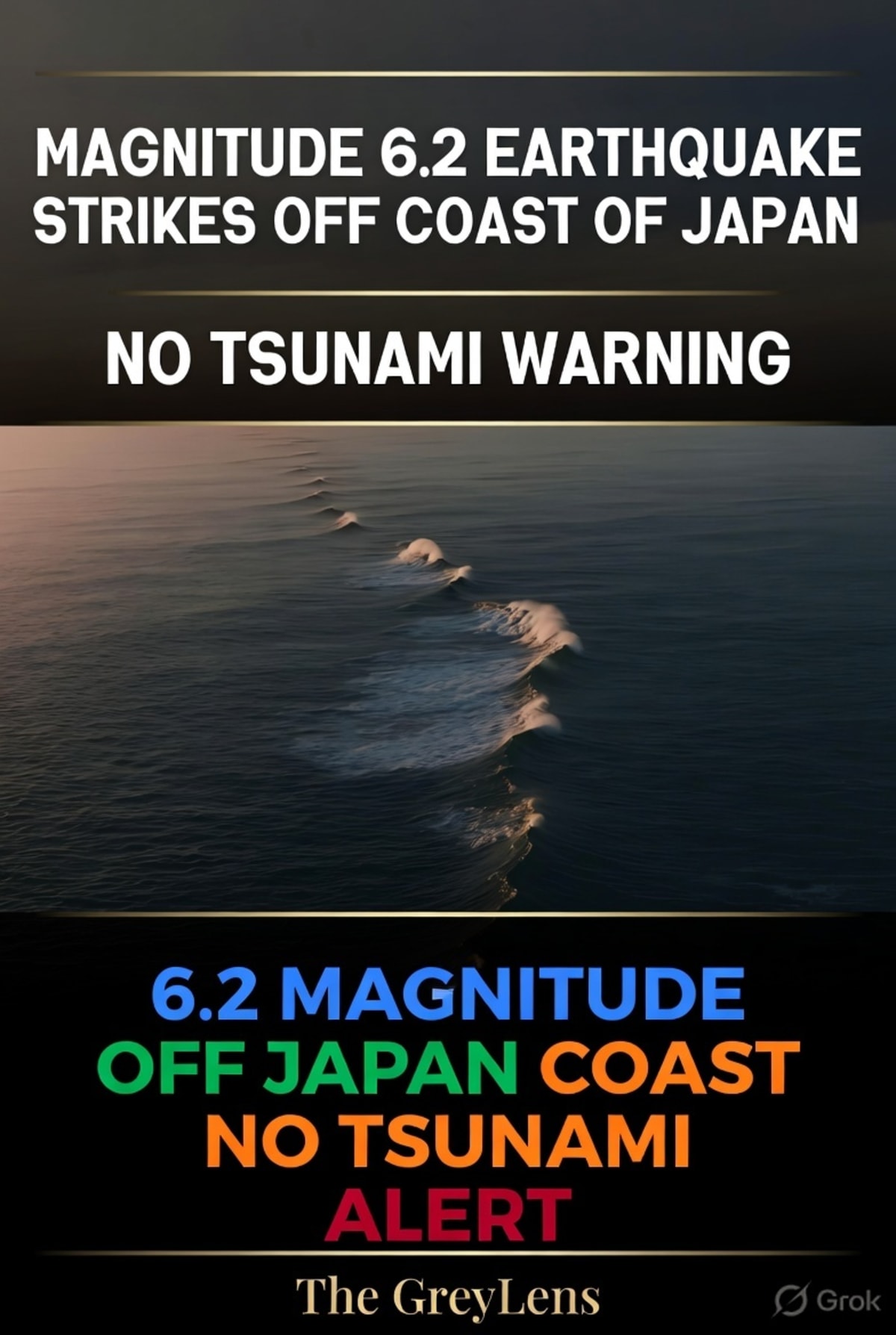
A powerful undersea earthquake with a preliminary magnitude of 6.2 struck off the eastern coast of Japan early Thursday morning, according to reports from the Japan Meteorological Agency (JMA). The tremor occurred at approximately 7:15 AM JST (22:15 UTC Wednesday) at a relatively shallow depth, generating significant shaking felt across parts of northeastern Japan, including Fukushima and Miyagi prefectures. While the intensity of the shaking caused some alarm and briefly disrupted train services in the region, authorities have confirmed that no tsunami warning has been issued, and there have been no immediate reports of widespread damage or casualties. The JMA is continuing to monitor the situation closely for any aftershocks.
Residents in coastal areas, particularly those who experienced the devastating 2011 earthquake and tsunami, expressed a renewed sense of anxiety. However, officials from the local government and emergency services have been quick to reassure the public, emphasizing the absence of any tsunami threat. The shallow depth of the earthquake is often associated with strong ground shaking but a lower risk of generating large tsunami waves compared to deeper seismic events. Japanese news outlets, including NHK, have been providing live updates, showing footage of some minor items falling from shelves in stores, but no structural damage to buildings has been widely reported. The focus remains on ensuring public safety and assessing any potential localized impacts.
Japan, situated on the Pacific Ring of Fire, is one of the world's most seismically active countries, and robust earthquake preparedness is a cornerstone of its national infrastructure. The country's advanced early warning systems and stringent building codes are designed to mitigate the impact of such seismic events. Following the 6.2 magnitude earthquake, authorities are urging citizens to remain vigilant for potential aftershocks, a common occurrence after significant tremors. The government has also initiated checks on nuclear power facilities in the affected region, though initial reports indicate no anomalies have been detected at any of the plants, including the Fukushima Daiichi nuclear power station, which was severely damaged in the 2011 disaster.