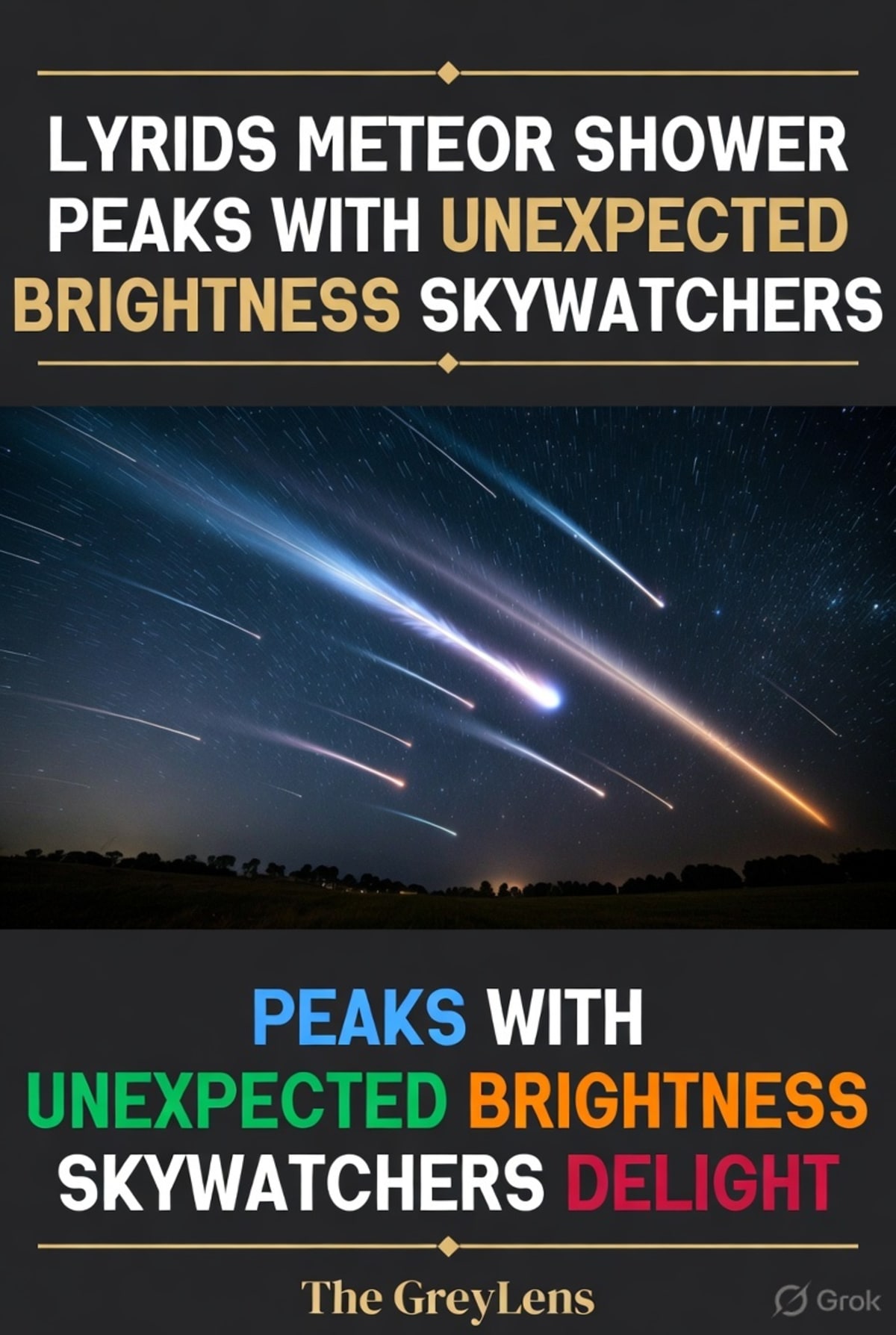
The Lyrids meteor shower, a celestial event that occurs annually in April, offered a particularly dazzling spectacle for observers this year as it reached its zenith. Reports from various skywatching communities and social media channels, corroborated by astronomical observatories, indicate a higher-than-average number of bright meteors, commonly referred to as fireballs. These exceptionally bright meteors, which can leave persistent trails of light, have been a focal point of discussion among enthusiasts and scientists alike, with many sharing stunning photographic and video evidence of the display. The Lyrids originate from debris left behind by the comet C/1861 G1 (Thatcher), and while the shower typically produces around 20 meteors per hour at its peak, this year's event seems to be characterized by more pronounced fireballs.
While the peak of the Lyrids shower occurred overnight on April 22-23, astronomers suggest that lingering activity may still be visible for a few more nights, though with reduced intensity. Experts from NASA and other leading astronomical institutions have been analyzing observations and are suggesting that the increased number of bright meteors could be due to Earth passing through a denser stream of cometary debris from Comet Thatcher. Although the Lyrids are not as prolific as some other meteor showers, such as the Perseids in August, their propensity for producing bright fireballs makes them a consistent favorite among stargazers. Many individuals took advantage of clear skies in various regions to witness the event, with some reporting that the meteors were bright enough to be seen even in areas with moderate light pollution.
The human element of this astronomical event is significant, as it provides a shared experience and a sense of wonder for people across different cultures and geographical locations. Social media platforms have been abuzz with shared photos and personal accounts of meteor sightings, fostering a sense of community among those who stayed up late to watch the skies. For many, particularly younger generations, these events offer a rare opportunity to connect with the natural world and appreciate the vastness of the universe. Amateur astronomy groups have reported increased engagement, with members sharing tips on optimal viewing locations and times. This year's Lyrids display, with its unexpected brilliance, has undoubtedly reignited public interest in astronomy and the captivating beauty of our night sky.