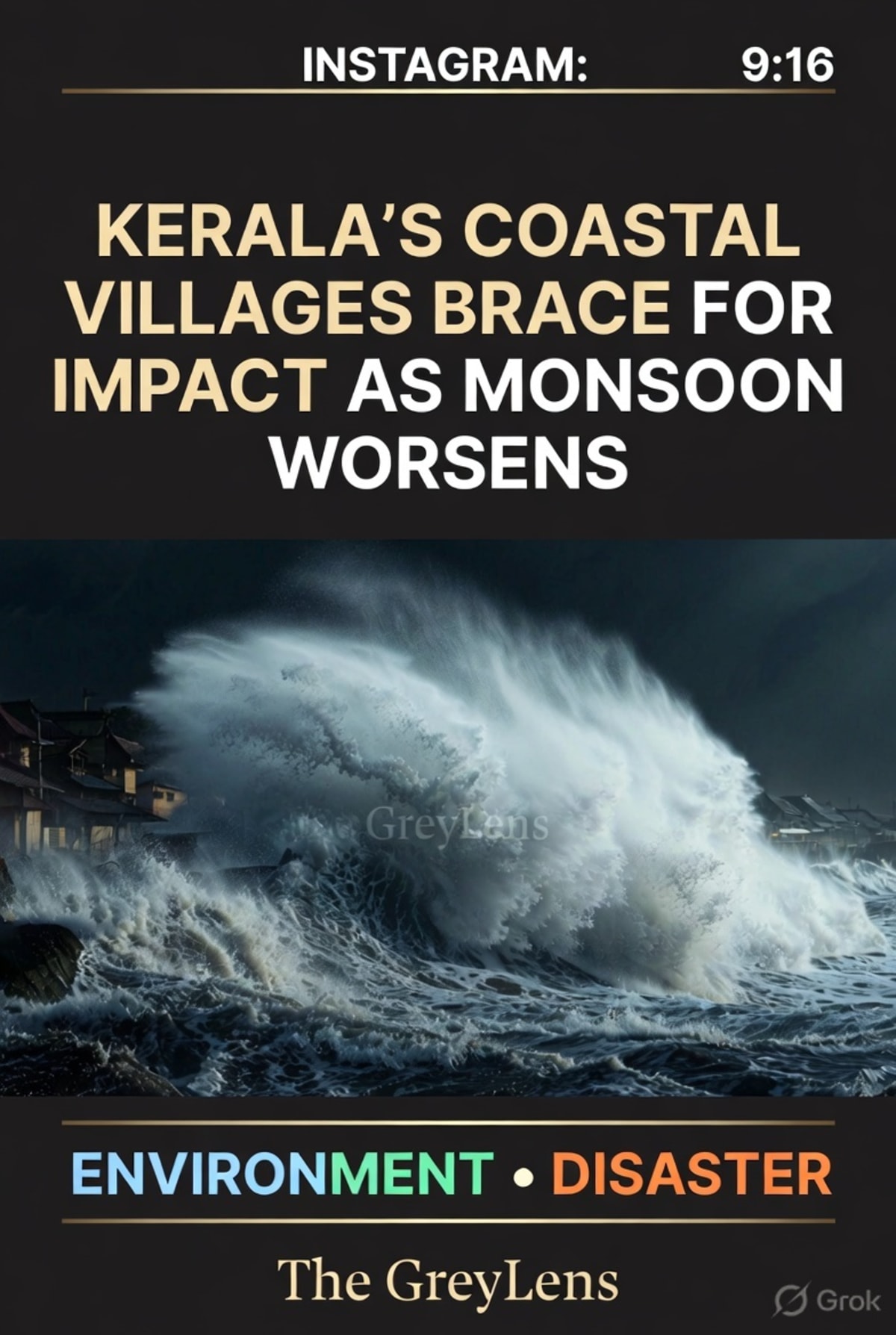
The relentless monsoon downpour battering Kerala over the past 24 hours has intensified, pushing coastal villages to the brink and sparking anxieties among fishing communities about their immediate future and the long-term viability of their livelihoods.
Rising Waters and Evacuations
Several low-lying areas in districts like Ernakulam and Alappuzha have witnessed significant waterlogging, with reports indicating that at least 15 villages along the coastline are facing the threat of inundation. Local authorities have initiated precautionary evacuations, urging residents to move to higher ground and relief camps. The India Meteorological Department (IMD) has issued an orange alert for several districts, forecasting extremely heavy rainfall and strong winds along the coast. The choppy seas have made fishing impossible, a primary source of income for thousands, pushing families into immediate financial distress.
"The water rose so fast last night; we barely had time to gather our belongings," shared Leena Varghese, a resident of a coastal hamlet near Kochi, her voice trembling. "Our small boat, our only means of earning, is submerged. We don't know when we can go back to sea or how we will feed our children."
The immediate concern for many is the damage to their homes and the potential loss of fishing gear. Relief camps, set up in schools and community centers, are reportedly struggling to accommodate the influx of displaced families. Volunteers and local NGOs are working tirelessly to provide food, water, and essential supplies, but the scale of the displacement is testing resources.
Livelihoods Adrift: The Fishing Community's Plight
The monsoon season is always a challenging period for Kerala's fisherfolk, but this year's intensity has amplified the concerns. The prolonged suspension of fishing activities, coupled with the damage to boats and nets, could have a devastating ripple effect on the local economy. Fish markets have seen a sharp decline in supply, leading to increased prices for consumers. Moreover, the dependence on daily catches means that extended periods of no fishing translate directly into no income.
K. S. Gopakumar, a fisherman with over three decades of experience, expressed his grim outlook. "Every year, we face the monsoon, but this year feels different. The rains are fiercer, and the sea is angrier. If this continues, many of us will have to look for alternative work, but what else do we know? Our lives are tied to the sea."
Environmental experts and local community leaders are increasingly vocal about the need for more robust coastal protection measures and sustainable livelihood alternatives. The recurring nature of such events, exacerbated by changing climate patterns, highlights the vulnerability of these communities and the urgent need for long-term adaptation strategies. The state government has announced immediate relief packages, but the road to recovery for these coastal villages will likely be long and arduous, demanding sustained support and innovative solutions to rebuild lives and livelihoods.
The Indian stock markets, meanwhile, saw a mixed performance in the past 24 hours. The Nifty 50 closed marginally lower, while the Sensex registered a slight gain. The S&P 500 and Dow Jones experienced minor fluctuations in pre-market trading, reflecting broader global economic sentiment rather than specific local events. The FTSE 100 also showed a similar trend. However, the immediate focus for many in Kerala remains on securing basic necessities and navigating the immediate aftermath of the severe weather, with market indices offering little solace against the tangible impact of nature's fury on their doorstep.