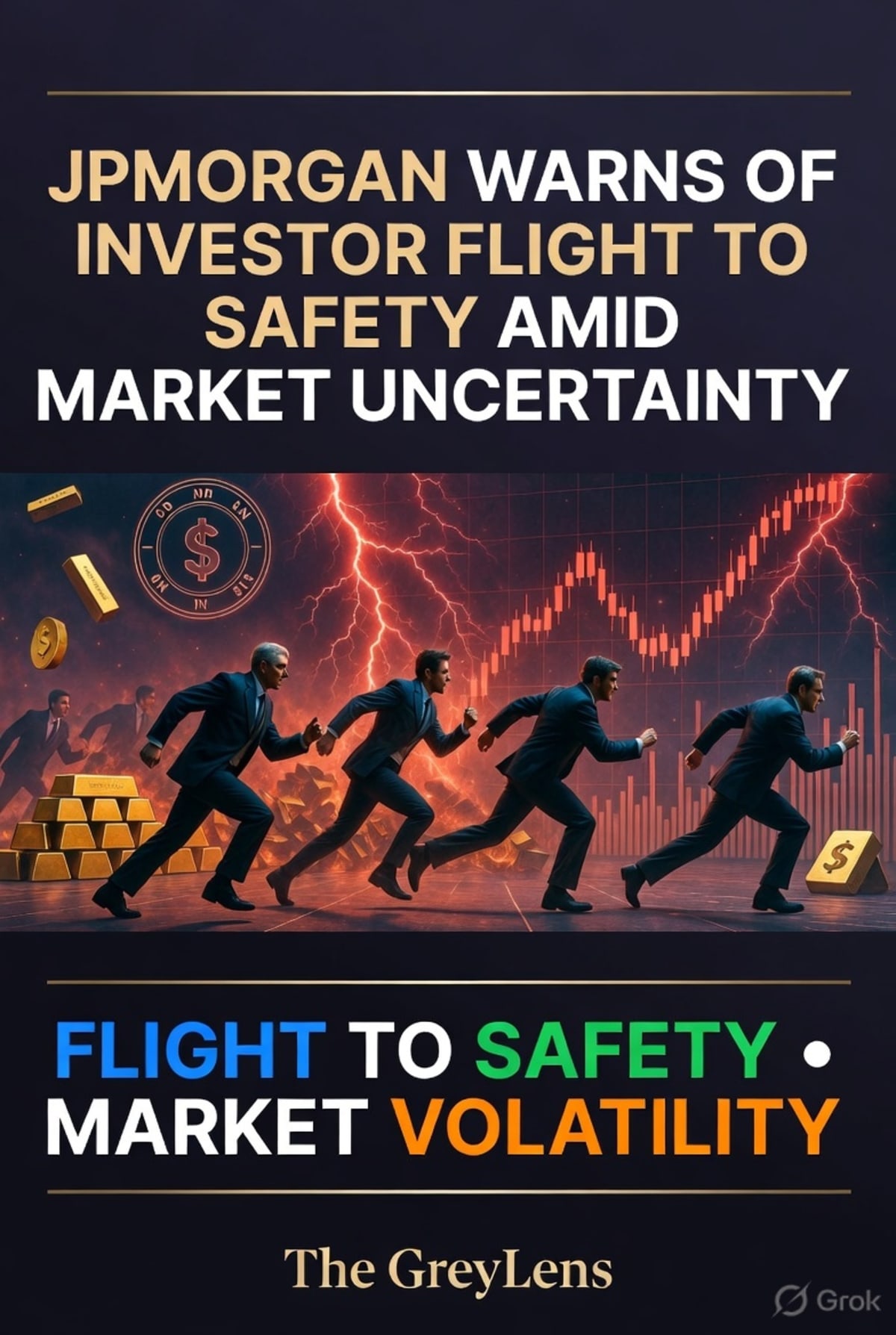
JPMorgan Chase, a leading global financial institution, has alerted investors to a noticeable trend of capital moving into safer havens as economic uncertainties persist. According to reports from Bloomberg, the bank's strategists observed a significant uptick in demand for assets traditionally considered less risky, such as government bonds and gold, as market participants seek to preserve capital amidst a complex global economic landscape. This shift suggests a growing cautiousness among investors, who are increasingly wary of potential downturns and are prioritizing stability over higher, more speculative returns. The warning comes at a time when various geopolitical tensions and domestic economic data releases are creating a volatile environment, making it difficult for many to gauge the true health of the market.
The implications of this move to safety could be far-reaching for various market segments. As investors divest from equities and other growth-oriented assets, the valuation of these sectors may come under pressure. Bloomberg further detailed that JPMorgan's analysis highlights concerns about persistent inflation and the potential for slower-than-expected economic growth, factors that typically drive investors towards the perceived security of traditional safe-haven assets. This strategic pivot by a major financial player like JPMorgan often serves as a bellwether for broader market sentiment, signaling a period where risk appetite may be significantly diminished. Businesses reliant on capital investment and venture funding might find it more challenging to secure the necessary resources if this trend continues.
For the average investor, this evolving market dynamic underscores the importance of a well-diversified portfolio and a clear understanding of their risk tolerance. While the allure of quick gains can be tempting, the current climate, as advised by JPMorgan, favors a more conservative approach. The bank's outlook suggests that navigating these uncertain times will require careful monitoring of economic indicators and a strategic allocation of assets to weather potential storms. The human impact of such financial shifts can be substantial, affecting retirement plans, investment portfolios, and the overall economic confidence of individuals and families who rely on the stability of financial markets for their future security.