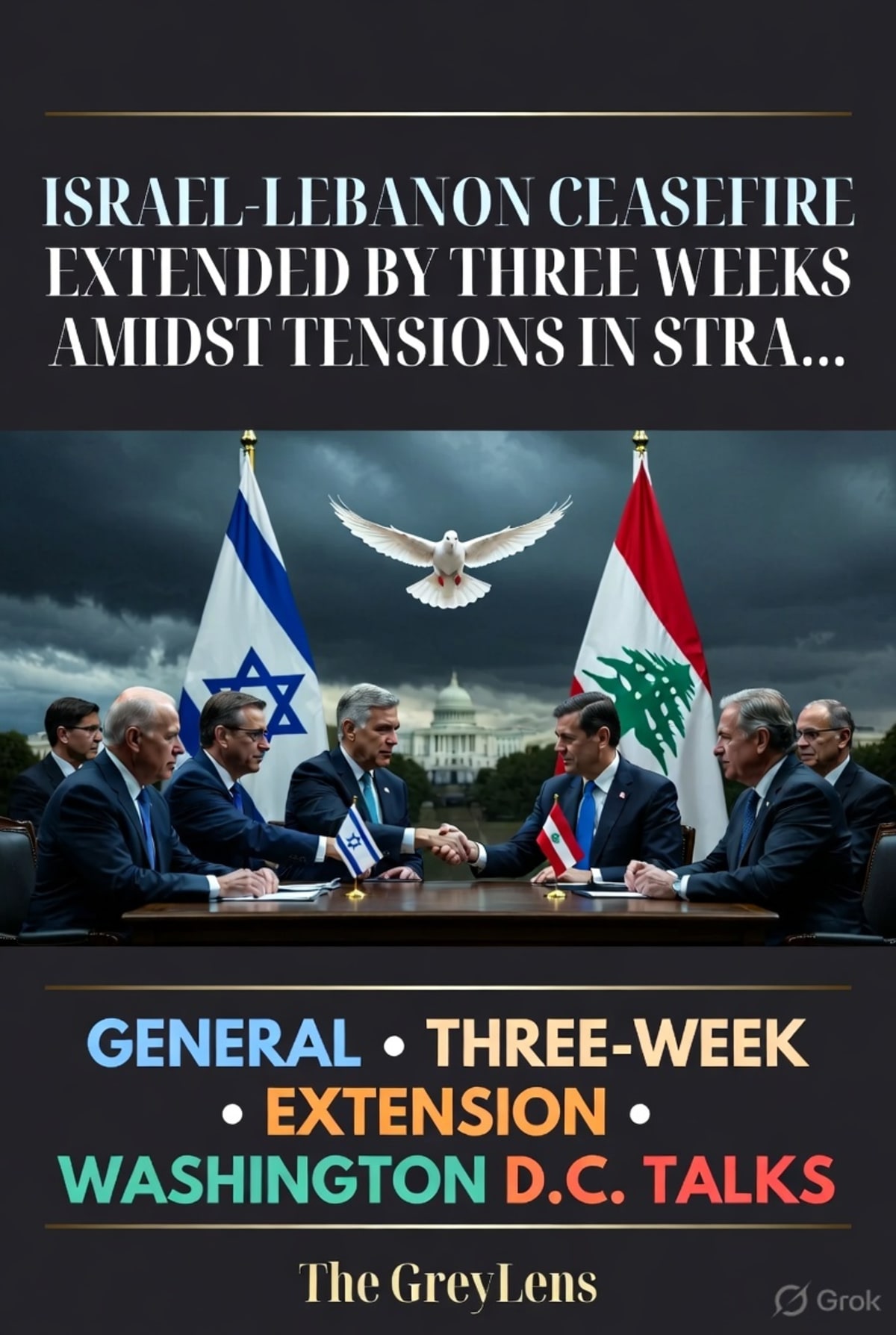
Washington D.C. – The United States announced today that a ceasefire between Israel and Lebanon has been extended by three weeks, a move that comes after direct negotiations between high-ranking officials from both nations at the White House. According to President Trump, the negotiators \"like each other,\" fostering a positive atmosphere for the talks that aim to de-escalate the ongoing conflict. However, the situation remains tense in the broader Middle East, particularly concerning the Strait of Hormuz. U.S. Secretary of War Pete Hegseth issued a strong warning, stating that U.S. forces are authorized to \"shoot to destroy\" any Iranian vessels found laying mines in the critical shipping lane, underscoring the U.S. commitment to maintaining freedom of navigation. The extension of the Israel-Lebanon ceasefire, while offering a glimmer of hope for regional stability, is intricately linked to the wider diplomatic efforts to resolve the conflict between the United States and Iran. Iran has made it clear that a continued pause in the fighting in Lebanon is a prerequisite for its engagement in further peace talks with the U.S. Despite the ceasefire extension, sporadic clashes have been reported along the Israel-Lebanon border, highlighting the fragility of the current truce. The Israeli military confirmed strikes on Hezbollah sites in southern Lebanon after the Iran-backed group fired rockets into Israel. The conflict in Lebanon has resulted in a significant humanitarian toll, with nearly 2,300 people killed and approximately 1.2 million displaced, according to the Lebanese government.
Simultaneously, diplomatic efforts are underway to address the broader U.S.-Iran conflict. Iranian Foreign Minister Abbas Araghchi is expected to travel to Islamabad, Pakistan, for a potential new round of direct talks with U.S. envoys, including President Trump's son-in-law Jared Kushner. These talks are being mediated by Pakistan, with critical issues on the agenda including freedom of navigation through the Strait of Hormuz, Iran's nuclear and ballistic missile programs, and sanctions relief. The U.S. has maintained a naval blockade on Iranian ports, which Iran has dismissed as a violation of the ceasefire and a hindrance to negotiations. The U.S. military has also significantly increased its presence in the region, with three aircraft carriers operating in the Middle East, a deployment not seen since the lead-up to the 2003 invasion of Iraq. This military buildup, coupled with economic sanctions, is intended to pressure Iran into reaching a comprehensive peace agreement.
The human impact of these ongoing conflicts and negotiations is significant. The extended ceasefire in Lebanon, though fragile, offers a temporary respite for civilians caught in the crossfire, while the broader U.S.-Iran talks aim to prevent further escalation and potential wider regional destabilization. The economic ramifications are also substantial, with businesses facing disruptions and increased costs due to the closure of the Strait of Hormuz. The U.S. Treasury Department's