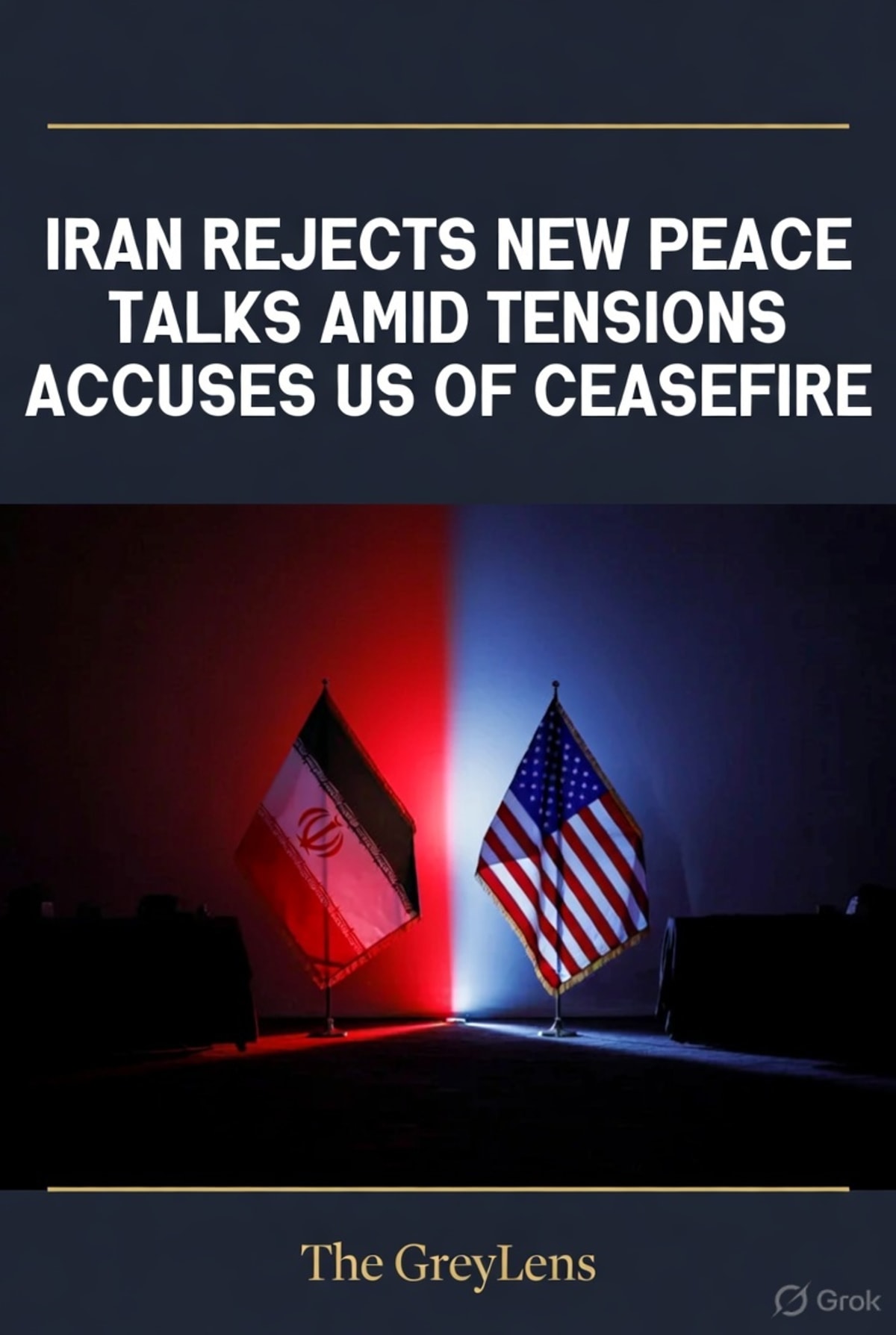
Iran has officially rejected a new round of peace talks with the United States, with its state news agency IRNA reporting that the decision stems from "excessive demands, unrealistic expectations, constant shifts in stance, repeated contradictions, and the ongoing naval blockade, which it considers a breach of the ceasefire". This stance was further solidified by Iranian President Masoud Pezeshkian, who accused the United States of "continued breaches of commitments" and "bullying and unreasonable behaviour" during negotiations and the ceasefire period. He specifically condemned the U.S. naval blockade as a "clear violation of the ceasefire understanding and contrary to the United Nations Charter". According to Reuters and Anadolu Ajansı, Iran's military has vowed a swift response to the U.S. seizure of an Iranian-flagged tanker in the Gulf of Oman, denouncing the act as piracy. The U.S. Navy confirmed intercepting the vessel, stating it attempted to breach a naval blockade and ignored multiple warnings. This incident has further inflamed diplomatic tensions, with Iran launching drones towards U.S. warships in retaliation, according to Iranian media.
Amidst these escalating tensions, U.S. negotiators, including Special Envoy Steve Witkoff and Jared Kushner, were reportedly en route to Islamabad, Pakistan, for potential talks with Iran. However, Iranian sources have not confirmed their participation in these negotiations. The primary sticking points in any potential agreement remain Iran's nuclear program, particularly its stockpile of enriched uranium, and control over the Strait of Hormuz. The Strait of Hormuz, a critical global shipping lane, has been a point of contention, with Iran previously restricting passage in response to the U.S. blockade. The volatile situation around the strait has created widespread uncertainty over global shipping.
The broader geopolitical landscape also sees diplomatic efforts from other international players. China has positioned itself as a stable partner amidst the turbulence, hosting leaders from various nations to discuss regional stability and deepen ties. Chinese President Xi Jinping has put forward a proposal for maintaining peace in the Middle East, emphasizing peaceful coexistence, sovereignty, and international rule of law. Meanwhile, the Israel-Lebanon ceasefire, brokered by the U.S., appears to be largely holding, though with reports of isolated incidents. Lebanese and Israeli officials are scheduled to hold preparatory meetings for direct negotiations. The human impact of these ongoing conflicts and diplomatic impasses is significant, affecting regional stability, global trade routes, and the daily lives of those in affected areas.