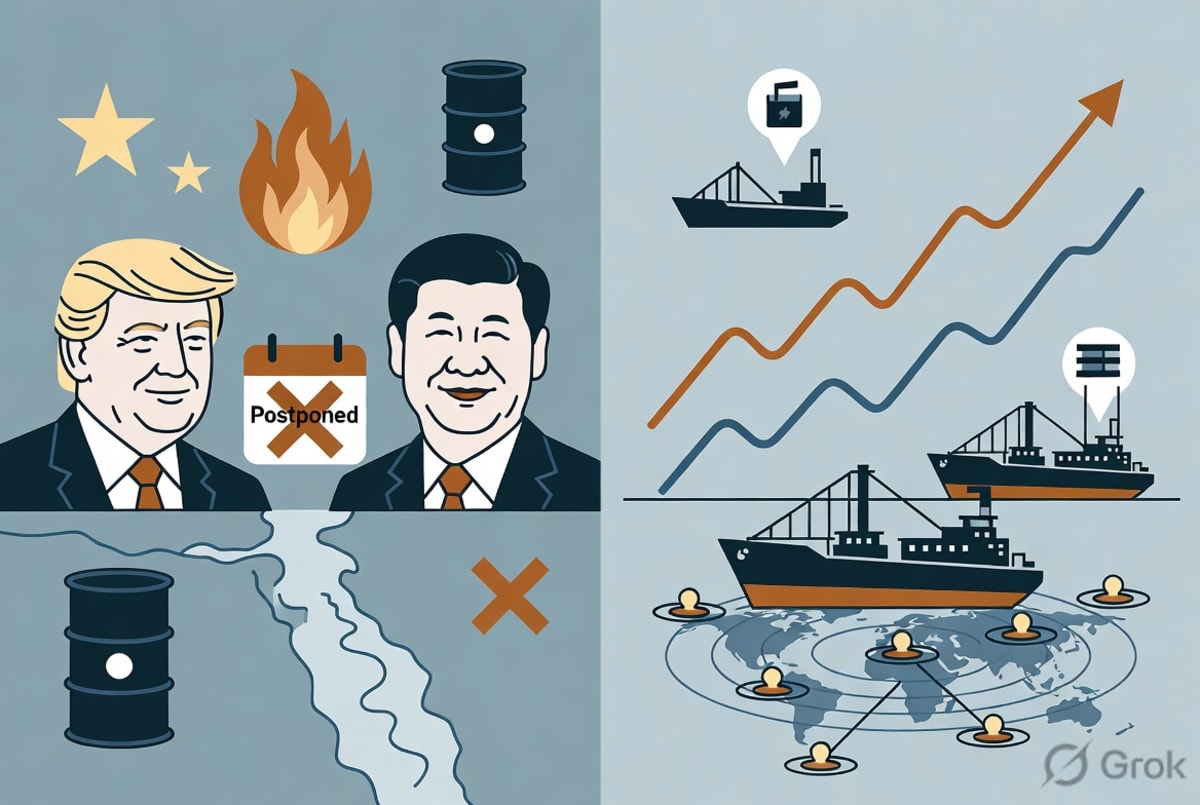
The ongoing conflict involving Iran has sent shockwaves through the global energy market, leading to significant disruptions and heightened volatility. The Strait of Hormuz, a critical chokepoint for oil transportation, is currently closed, effectively holding the world economy captive with no immediate resolution in sight. This situation has led to a surge in oil prices, with crude fluctuating above $100 per barrel amid persistent uncertainty over supply. The implications are far-reaching, impacting not only energy-importing nations but also global diplomatic engagement.
The ramifications of the Iran conflict extend beyond energy markets, influencing broader diplomatic efforts. A planned summit between US President Donald Trump and Chinese President Xi Jinping has been postponed, a clear indication of how rapidly evolving developments in the Middle East are shaping global relations. This postponement underscores the interconnectedness of global politics, where regional conflicts can have immediate and significant impacts on high-level international dialogue. The disruption to energy flows through the Strait of Hormuz is a stark illustration of how transit routes themselves are becoming potent levers in geopolitical confrontation.
In response to the crisis, the International Energy Agency (IEA) has orchestrated the largest coordinated release of emergency reserves in its history, deploying 400 million barrels to mitigate supply shortages and stabilize markets. Despite these drastic measures, oil prices remain highly volatile, reflecting the scale of the shock and the limitations of current policy responses. The United States has also announced a temporary easing of certain oil-related sanctions to further alleviate supply concerns, a move that could potentially alter global supply dynamics, including by increasing the availability of Russian crude.
The current geopolitical landscape, characterized by fragmentation, has amplified the role of energy as a critical instrument of statecraft. The weaponization of energy, whether through direct disruption or the threat of it, generates immediate global effects. While the full duration and long-term implications of the conflict remain uncertain, early indications suggest that restoring energy flows from the Gulf could take months, even in the event of de-escalation. This prolonged disruption highlights the deep interdependencies within the global energy system, demonstrating that even in a more fragmented world, disruptions in one region can rapidly reverberate across markets worldwide.
---
⚠️ This article used AI assistance. Please verify facts independently.