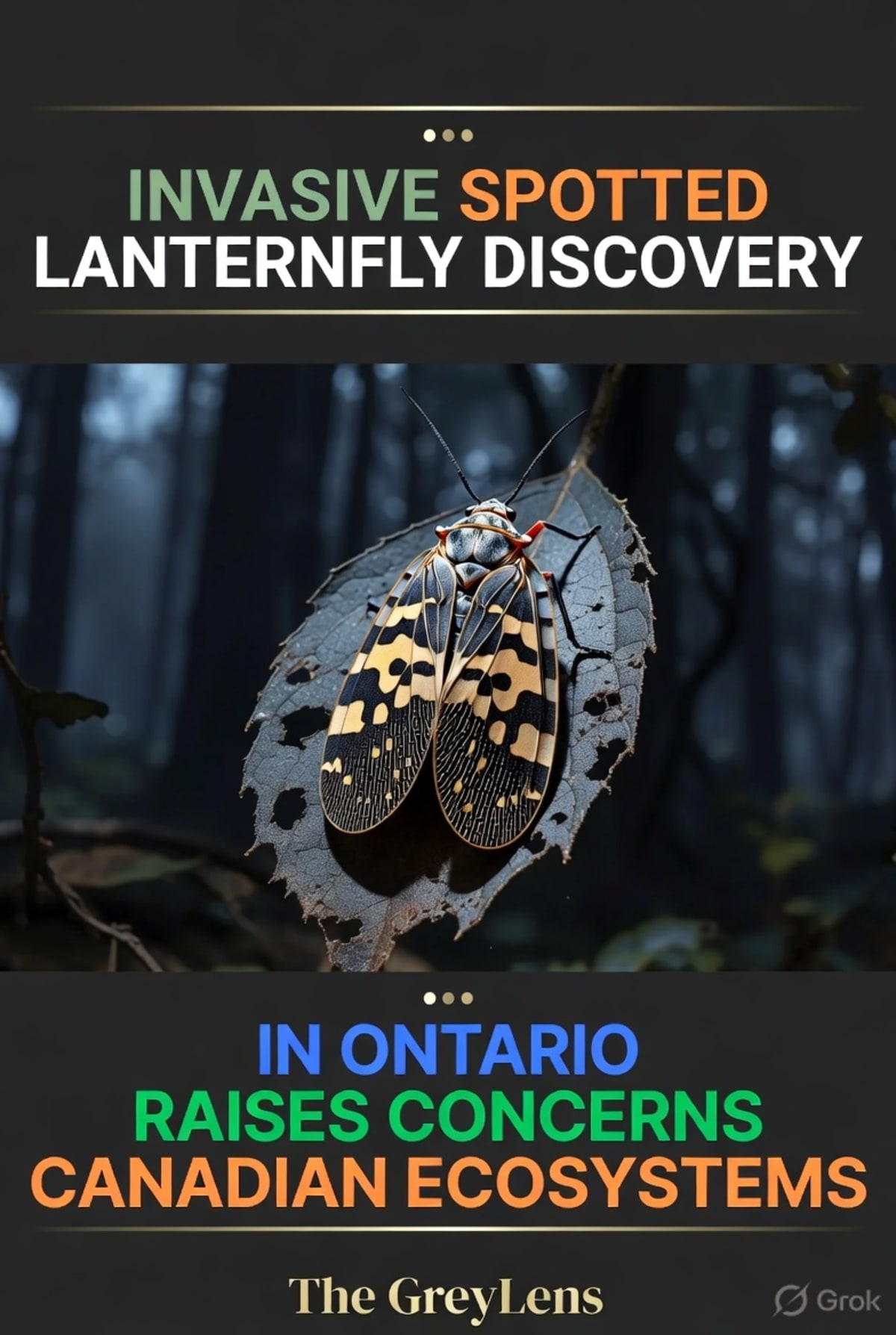
A destructive and invasive insect, the spotted lanternfly, has been detected in Ontario, sparking renewed concerns about its potential impact on Canada's ecosystems and agricultural sector. The discovery of the insect in St. Catharines, Ontario, follows a period where the pest has been a growing problem in the United States. Experts are warning that this invasive species poses a significant threat due to its voracious appetite for plant sap, which can lead to the demise of grapevines, fruit trees, and valuable hardwood forests.
A Growing Threat from the South
The spotted lanternfly (Lycorma delicatula) is native to Asia and was first identified in the United States in 2014. Since then, it has spread rapidly across several states, causing substantial damage to a wide range of plants. Its presence in Canada is particularly worrying because it can be transported easily on vehicles, shipping containers, and other human-related items. The recent detection in St. Catharines suggests that the insect has already made its way across the border, raising the alarm for provincial and federal agricultural authorities.
Ecological and Economic Ramifications
Scientists are particularly concerned about the spotted lanternfly's impact on economically important crops, such as grapes, apples, and cherries. The insect's feeding habits weaken plants, making them more susceptible to diseases and other environmental stressors. Furthermore, the lanternfly excretes a sticky, sugar-rich honeydew as it feeds, which can promote the growth of sooty mold. This mold can cover plants, block sunlight, and further hinder their growth and yield. The economic consequences for Canadian agriculture could be substantial if the pest becomes established, potentially impacting exports and domestic food production. The threat also extends to the health of natural forests, which are vital for biodiversity and environmental stability.
Monitoring and Mitigation Efforts
In response to the discovery, Canadian authorities are intensifying monitoring efforts to determine the extent of the infestation and to prevent further spread. Residents in the affected area and surrounding regions are being urged to be vigilant and report any sightings of the spotted lanternfly or its egg masses. The public is advised to take photos of suspected insects and their locations, and to avoid transporting firewood or other potential carriers of the pest. While specific mitigation strategies are still being developed for the Canadian context, lessons learned from the United States' experience will likely inform response plans. These may include a combination of biological controls, targeted pesticide applications in high-risk areas, and public education campaigns to encourage early detection and reporting.