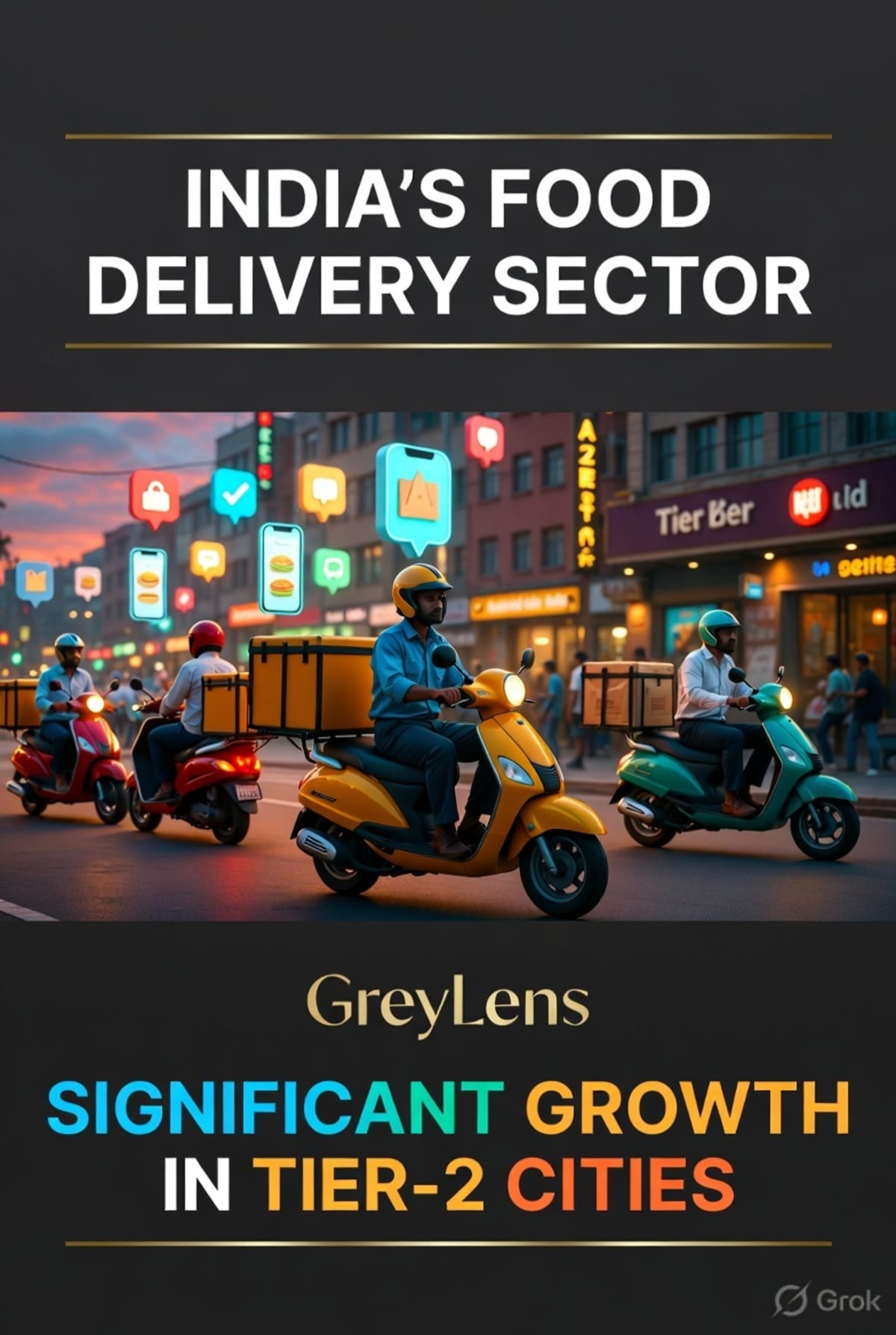
The Indian online food delivery market is on the cusp of a new growth phase, with projections indicating a significant expansion from approximately USD 9.1 billion in 2024 to nearly USD 27 billion by 2030. This robust growth, estimated at a 19% compound annual growth rate (CAGR), is largely attributed to evolving consumer behavior, including a rise in order frequency and the increasing penetration of food delivery services in Tier-2 and Tier-3 cities. This trend was detailed in a report by Investec Equities and published by The Tribune on May 2, 2026.
Shifting Geographical Focus and User Behavior
While metropolitan and Tier-1 cities currently account for a substantial 75-80% of the market's gross order value, the contribution from Tier-2+ cities is rapidly growing, already representing 20-25% of the market. This indicates a broadening of the market beyond traditional urban centers. The user base for food delivery platforms is expected to reach 137 million by 2029. Currently, Indian consumers place an average of 3-5 orders per month, a figure that has considerable room for growth compared to benchmarks in countries like the US and China, where monthly order averages range from 8-10 and 5-10 respectively. This 'frequency gap' presents a significant opportunity for platforms to bridge as accessibility continues to improve.
Economic Growth and Evolving Cuisines
The broader Indian food services market is also experiencing strong growth, projected to reach INR 11-12 trillion by FY30, with a compound annual growth rate of 11-12%. Despite this, the penetration of organized food services remains relatively low at 13% of total food consumption, far below figures seen in the US and China. This suggests a strong preference for home-cooked meals and a price sensitivity towards dining out. However, consumer preferences are diversifying, with a notable 30% increase in the number of unique cuisines ordered per customer over the past four years. While Mughlai and American cuisines remain popular in terms of volume, regional and global cuisines are showing faster growth trajectories. Hyper-regional Indian cuisines like Goan, Bihari, and Pahari are expanding at more than twice the rate of mainstream North and South Indian cuisines. Simultaneously, global offerings such as Korean, Vietnamese, and Japanese foods are experiencing disproportionately high growth, reflecting a widening culinary palate among Indian consumers. The report also highlights the growing popularity of Indian-origin beverages like buttermilk, sharbat, and chai, with café and QSR chains increasingly incorporating local flavors into their menus. Cold beverages, including matcha and boba-based drinks, are also seeing significant growth, outpacing traditional hot beverages.
Future Outlook and Industry Dynamics
The online food delivery segment is identified as the fastest-growing within the broader food services market. It has expanded from INR 270 billion in FY20 to an estimated INR 790 billion in FY25 and is projected to reach INR 1.7-2.2 trillion by FY30, with a CAGR of 17-23%. This growth is supported by factors such as convenience-driven consumption, the widespread proliferation of smartphones, and improved supply chain density. Average order values (AOVs) are also on an upward trend. For instance, Zomato's and Swiggy's AOVs are expected to increase from approximately Rs 282/Rs 407 in FY22 to Rs 461/Rs 463 in FY26. The continued expansion of Tier-2 and Tier-3 cities, coupled with increasing order frequency, will be key drivers for the sector's future success. The industry is poised for continued innovation and market expansion, adapting to the dynamic preferences of the Indian consumer.