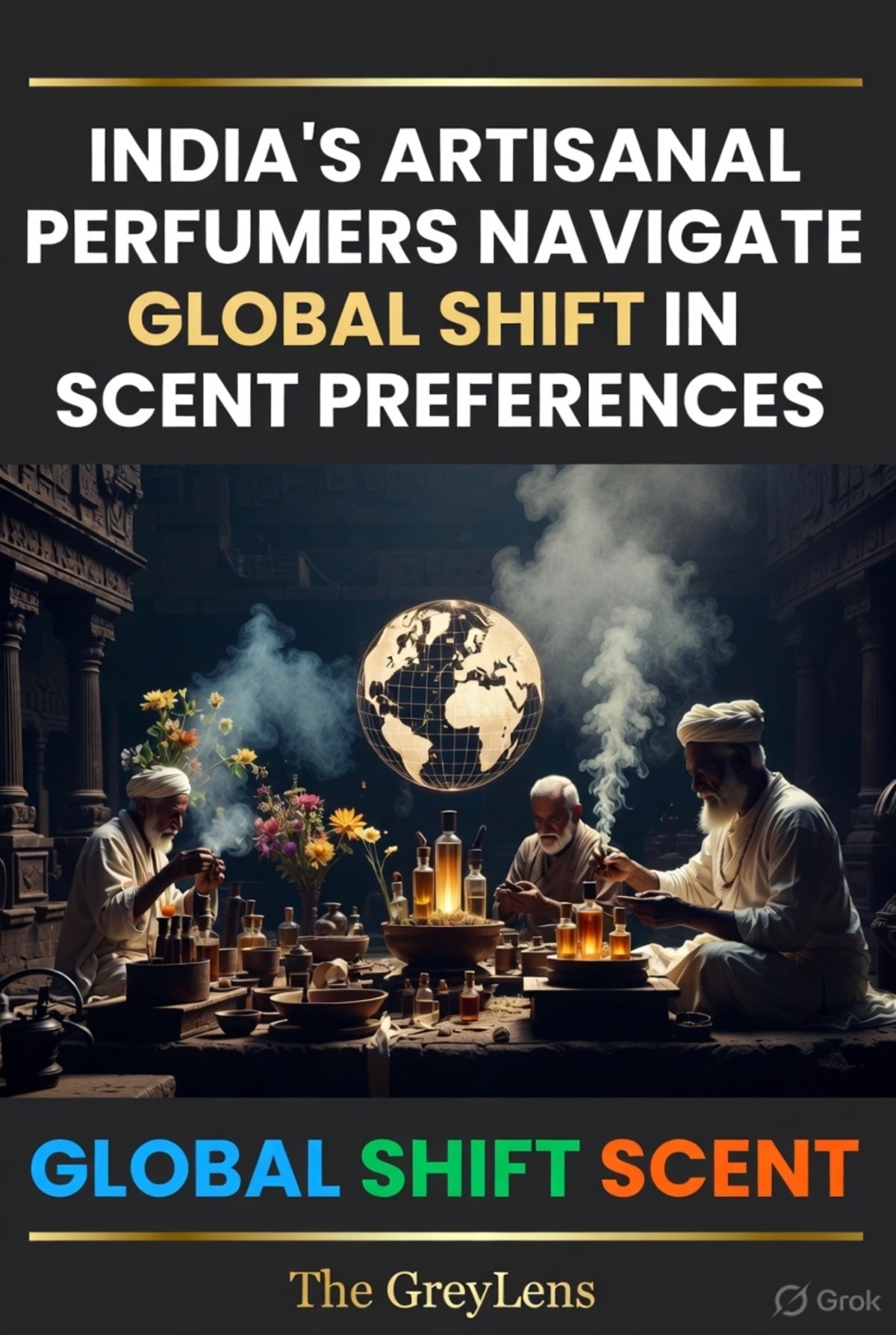
In the bustling lanes of Kannauj, often dubbed the 'Perfume Capital of India,' a quiet revolution is unfolding. While global fragrance giants dominate market share, a dedicated community of artisanal perfumers, known as 'ittars' or 'attars,' are grappling with evolving consumer preferences and the increasing imperative for sustainable sourcing. These traditional, alcohol-free perfumes, extracted through time-honored methods like hydro-distillation, face a unique set of challenges and opportunities that speak volumes about India's diverse cultural heritage and its place in the global economy.
The Scent of Tradition in a Modernizing Market
For centuries, attars have been an integral part of Indian culture, used in religious ceremonies, personal adornment, and traditional medicine. The extraction process itself is a labor of love, often involving the distillation of flowers, woods, and spices in small copper vessels over open fires. However, the rise of synthetic fragrances and the Western influence on scent profiles have presented a significant hurdle. Many younger consumers are drawn to mass-produced, complex Western perfumes, leaving traditional attar makers to compete in a shrinking niche. "Our heritage is in danger of being forgotten," laments Abdul Samad, a fourth-generation attar maker from Kannauj, whose family has been producing fragrances for over 150 years. "The younger generation prefers something that smells 'modern,' and the intricate, natural notes of our attars are sometimes perceived as old-fashioned."
Sustainability and Sourcing: A New Frontier
Beyond changing tastes, the attar industry is also confronting the global push for sustainability. The traditional reliance on certain natural ingredients, while inherently eco-friendly in its small-scale production, can face challenges related to the availability and ethical sourcing of raw materials. As climate change impacts agricultural yields and deforestation threatens biodiversity, attar makers are increasingly looking for ways to ensure their supply chains are robust and responsible. "We are exploring partnerships with local farmers to cultivate specific aromatic plants under organic conditions," explains Priya Sharma, a consultant working with attar cooperatives in Uttar Pradesh. "This not only ensures a consistent supply of high-quality ingredients but also supports rural economies and promotes biodiversity." Some perfumers are also experimenting with novel extraction techniques that minimize water usage and energy consumption, aligning with global environmental standards.
Global Reach and Digital Adaptation
Despite these challenges, the unique appeal of Indian attars is finding a new audience. The growing global interest in natural, ethical, and artisanal products has opened doors for these traditional perfumers. Online platforms and social media have become crucial tools, allowing small producers to reach international customers who appreciate the authenticity and artistry behind their creations. "We never imagined we could sell our attars to customers in Europe or North America a decade ago," says Rajesh Kumar, a perfumer who has embraced e-commerce. "Now, through our website and Instagram, we connect directly with people who value the purity and the story behind each bottle." This digital pivot is not just about sales; it's about education, sharing the cultural significance and the intricate craftsmanship involved in creating these precious scents. The future of India's artisanal perfumery, therefore, lies in a delicate balance: honoring its rich past while innovatively adapting to the demands of a globalized, environmentally conscious present.