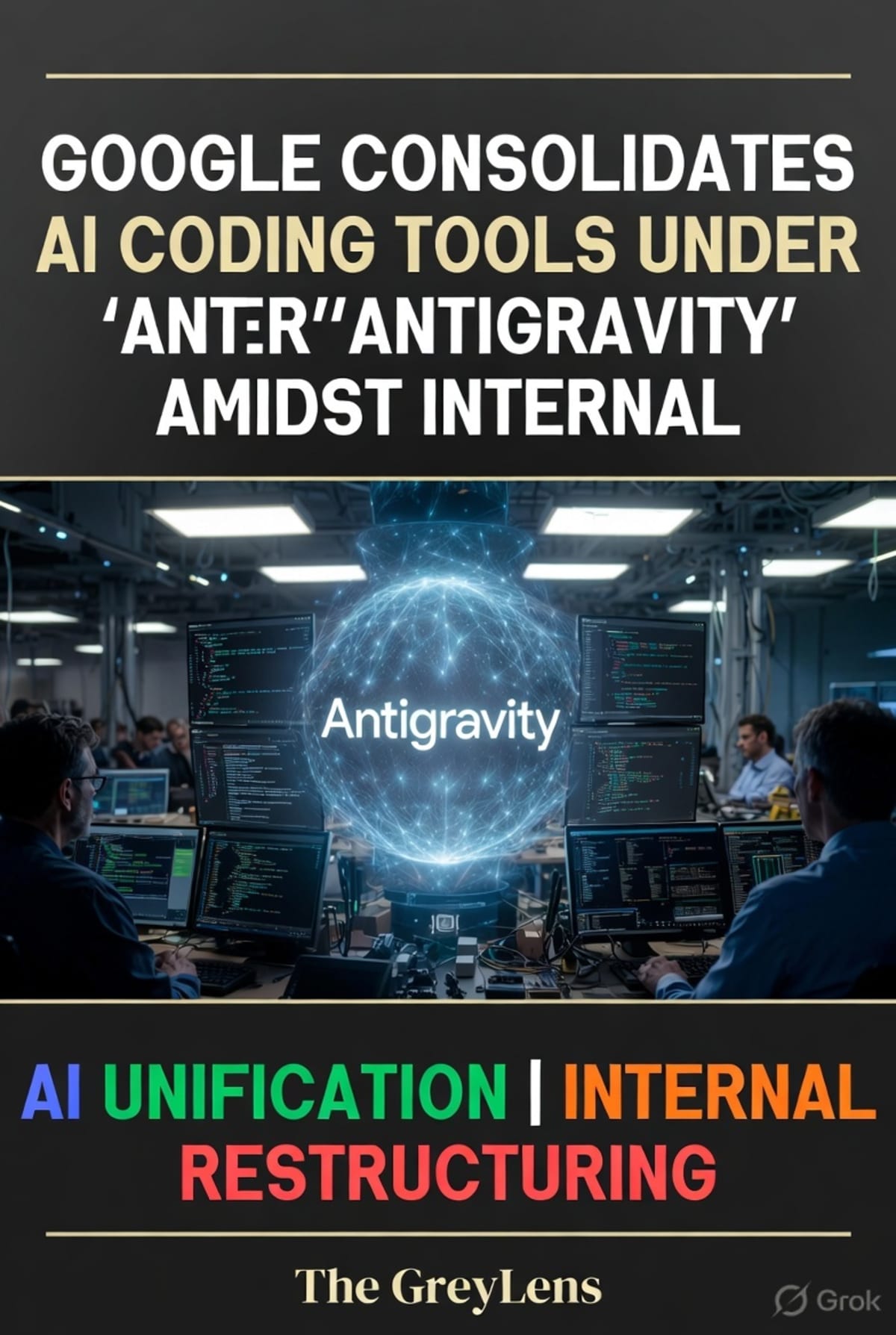
Google is making a significant push to consolidate its various AI-powered developer tools under a unified platform dubbed 'Antigravity.' This internal initiative, as reported by Bloomberg and detailed by outlets like Tech in Asia and CXO Digitalpulse, signals a strategic effort to streamline Google's offerings in the rapidly evolving AI development landscape. The consolidation comes amid internal discussions highlighting concerns that Google may be trailing behind competitors such as Anthropic and OpenAI in providing robust AI software development tools. While Alphabet has stated that AI currently contributes to approximately 50% of the company's new code, the fragmentation of its AI capabilities across multiple products has led to unclear priorities and potential overlaps. The Antigravity platform is envisioned as an "agent-first" development environment, moving beyond traditional code completion to empower AI agents that can autonomously handle tasks such as planning, writing, testing, and executing complex programming functions. This approach allows developers to orchestrate multiple AI agents that can operate seamlessly across editors, terminals, and browsers, fostering a more integrated workflow. The move to unify these tools is expected to reduce friction for developers who currently navigate different environments, ultimately aiming to boost productivity from the initial ideation phase through to deployment. Sources indicate that some teams within Google, including parts of DeepMind, have been granted exceptions to use external AI coding tools like Anthropic's Claude Code for specific tasks, further underscoring the internal debate around the effectiveness and accessibility of Google's proprietary tools. This internal dynamic, as reported by The Times of India, has led to some tension among engineers regarding access and performance. The Antigravity platform's development is seen as Google's answer to closing the gap in AI coding workflows, with a focus on enhancing the overall developer experience and ensuring Google remains a central hub for AI-driven software development, even as developers may opt for rival models for certain applications. The platform's "mission control" interface is designed to allow developers to manage multiple AI agents concurrently, each capable of independent tasks like debugging, feature development, or API integration, thereby streamlining the software creation process. This strategic consolidation is a key step in Google's broader ambition to solidify its position in the AI development tool market, a sector experiencing intense competition and rapid innovation.
IT
Google Consolidates AI Coding Tools Under 'Antigravity' Amidst Internal Competition Concerns
Google is reportedly unifying several of its AI-powered software development tools under a single platform internally named 'Antigravity.' This strategic move comes as the company faces growing internal concerns about its competitive standing against rivals like Anthropic and OpenAI in the crucial area of AI developer tools. The consolidation aims to streamline Google's fragmented AI coding ecosystem and create a more cohesive developer experience.
Report an error/suggestion: news@thegreylens.com