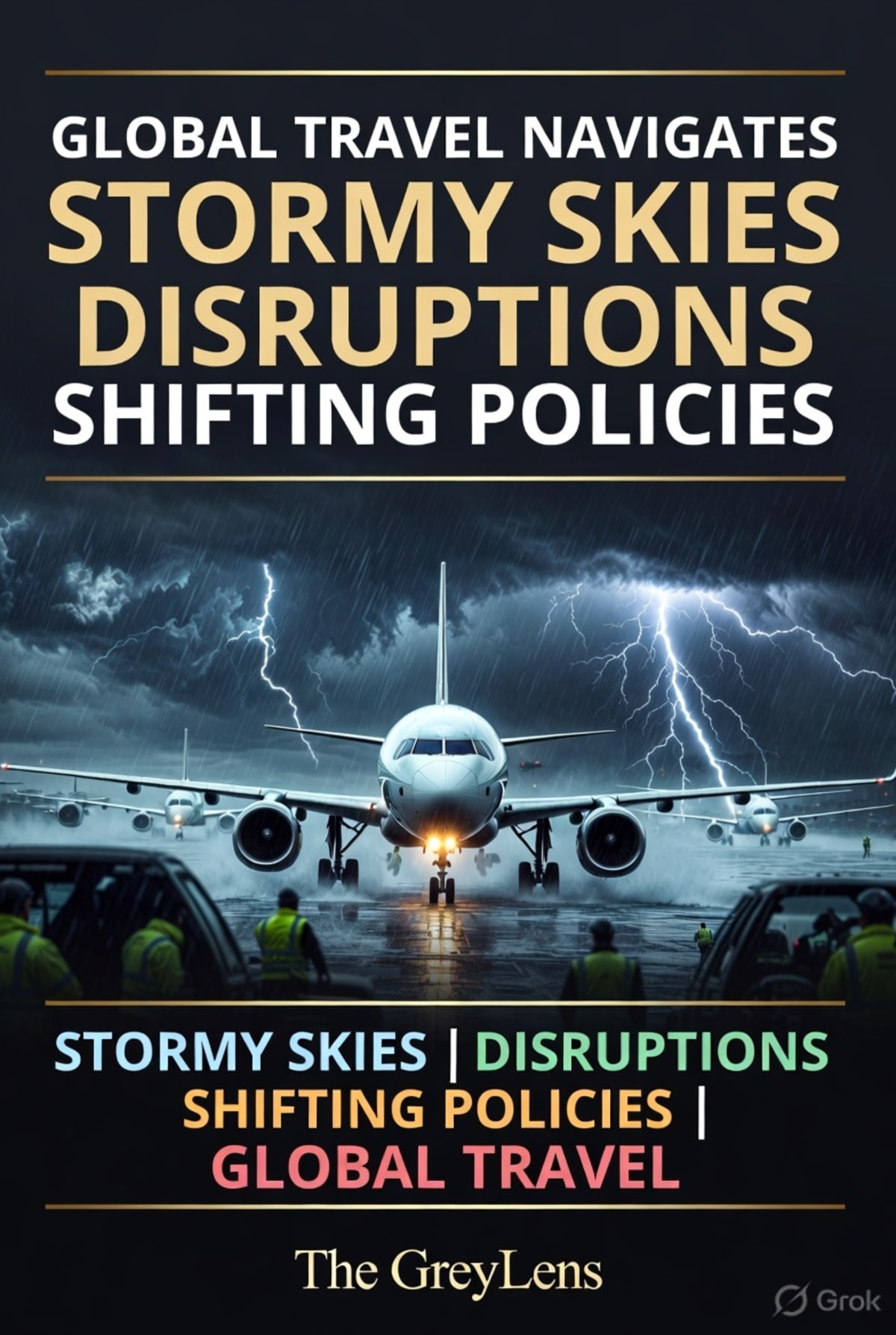
The global travel industry navigated a tumultuous March 2026, marked by significant flight disruptions, airport operational challenges, and shifts in visa policies, even as international tourism from overseas markets demonstrated resilience. Across the United States, severe weather, coupled with ongoing TSA staffing shortages exacerbated by a prolonged government shutdown, led to over 31,000 flight delays and cancellations throughout North and South America and the Caribbean. Major hubs like Atlanta, Chicago O'Hare, and New York's LaGuardia were particularly affected, experiencing hundreds of delays on peak days due to a combination of storms, record spring break travel volumes, and capacity constraints. The situation was further complicated by rising jet fuel prices following the closure of the Strait of Hormuz, prompting airlines to reduce capacity and adjust schedules, impacting flight availability and increasing prices for travelers.
Airport operations faced additional strain. While the TSA began to see some improvements as workers received overdue pay, persistent staffing shortages and the continued Department of Homeland Security shutdown impacted security and led to measures such as deploying ICE agents to assist with airport duties. A notable incident occurred at New York's LaGuardia Airport on March 22, when a commercial jet collided with a fire truck during landing, resulting in the deaths of two pilots and several injuries. A preliminary NTSB report highlighted the lack of transponders on fire trucks as a contributing factor.
In terms of policy, the United Kingdom introduced a 'visa brake' in March 2026, temporarily banning certain visa applications from Afghanistan, Cameroon, Myanmar, and Sudan to curb asylum claims. The U.S. Department of State also expanded social media screening for several nonimmigrant visa categories, effective March 30, 2026.
Despite these challenges, there were glimmers of recovery. U.S. international air traffic saw a slight decline of 2.4% in March, but overseas visitor arrivals increased by 3.6% year-over-year, indicating a gradual recovery in long-haul travel demand. Globally, the travel and tourism industry has fully recovered from the pandemic, with international arrivals surpassing pre-COVID records in 2025 and contributing significantly to global GDP. The International Air Transport Association (IATA) reported a strong start to 2026 for air travel, with a 3.8% increase in global passenger demand in January, although escalating conflict in the Middle East posed a risk to future growth and fuel costs. Aviation regulations also saw updates, with EASA introducing new cargo fire protection and helicopter fuel system crash resistance rules as part of its March 2026 Part-26 update.