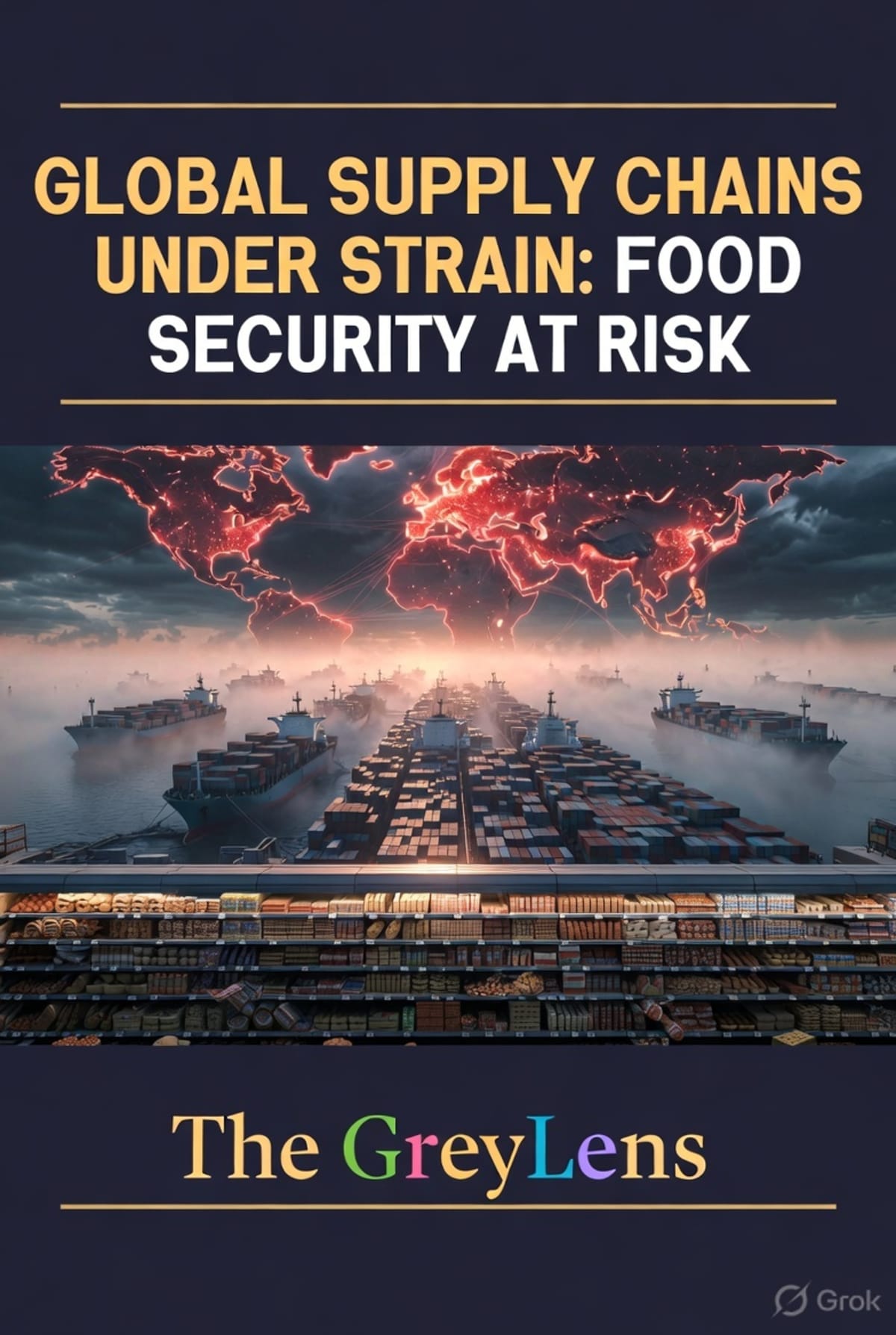
The ongoing geopolitical tensions in the Middle East, particularly concerning the Strait of Hormuz, are creating significant ripples across global food supply chains, according to multiple reports from April 17-18, 2026. Shipping transits through this critical chokepoint have plummeted, leading to a cascade of cost pressures across agricultural sectors. This disruption directly impacts the availability and affordability of food, especially for low-income, import-dependent countries, where households spend a larger portion of their income on food. Analyses by the UN and Purdue University highlight that these rising costs translate into substantial income shocks for vulnerable populations, widening the gap between food-secure and food-insecure economies. Furthermore, the effectiveness of global food aid systems is being weakened, as higher prices reduce the volume of food that humanitarian agencies can procure, while increased logistics costs strain their budgets. The duration of these disruptions is a key factor, with prolonged instability threatening more severe consequences for global food availability and affordability.
Beyond the immediate impact on food prices and aid, these supply chain disruptions are also introducing new threats to agricultural production. China's ban on sulphuric acid exports, coinciding with the Hormuz crisis, is further tightening the screws on fertilizer production. This, coupled with increased energy costs and fertilizer prices, is influencing farmers' planting decisions and potentially reducing crop yields. The U.S. Department of Agriculture (USDA) is taking proactive steps to safeguard domestic agriculture, including breaking ground on a new facility in Texas to produce sterile New World screwworm flies, a measure aimed at protecting livestock and the food supply chain from devastating infestations. Meanwhile, experts are urging governments to prioritize food security in diplomatic talks and to explore policy support such as freight stabilization and alternative trade routes to mitigate these growing risks. The interconnectedness of energy, fertilizer, and food markets underscores the fragility of the current global food system, making food security an increasingly critical component of national security.