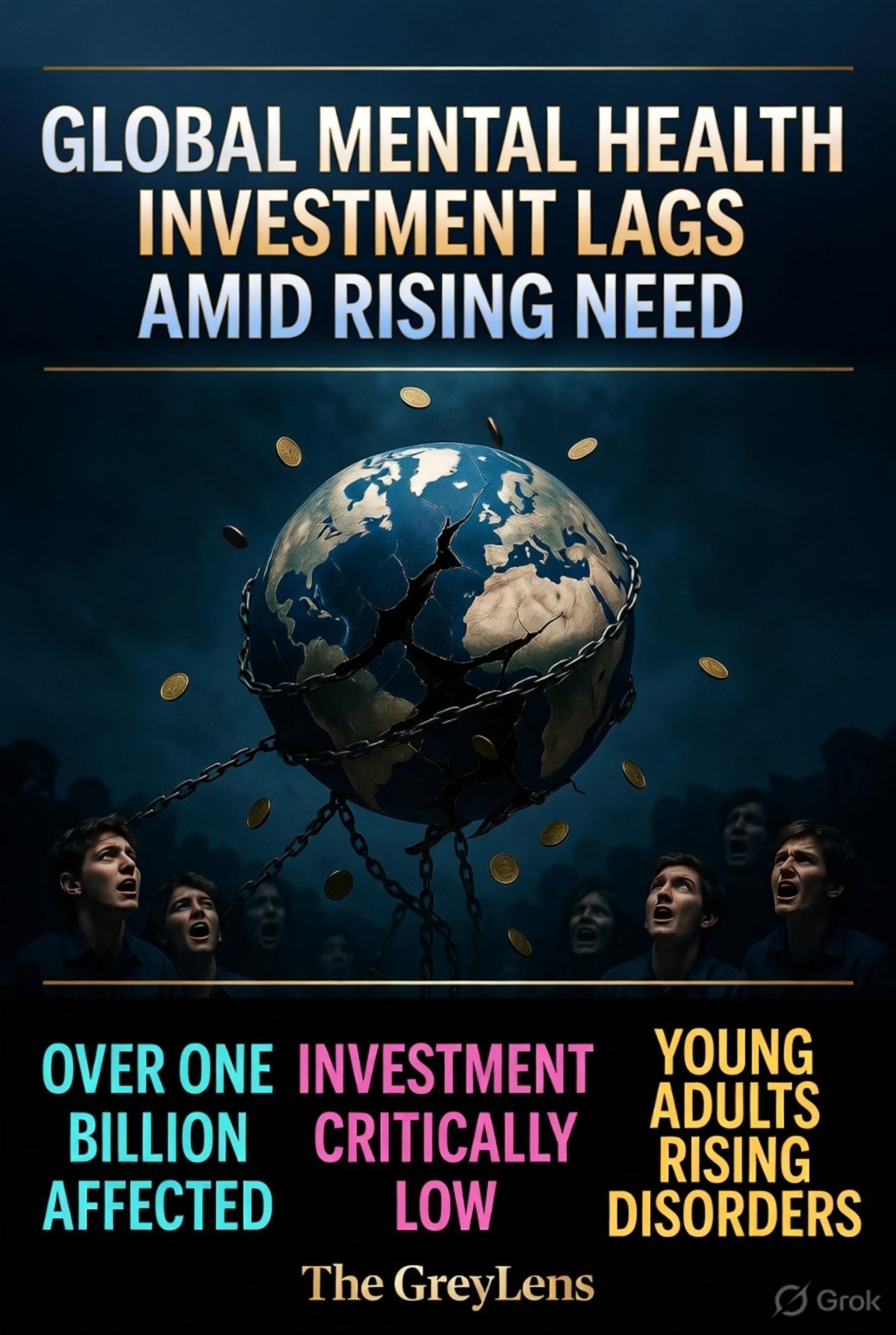
Recent reports from the World Health Organization (WHO) highlight a stark reality: while over a billion people globally live with a mental health condition, investment in mental health services has remained stagnant, accounting for only 2% of global health budgets since 2017. This lack of funding contributes to critical workforce shortages, particularly in low- and middle-income countries, and a slow transition to community-based care models. The WHO's Mental Health Atlas 2024 reveals that young adults, aged 20-29, have seen the highest rise in the prevalence of mental disorders since 2011. These findings underscore the urgent need for increased financial commitment and policy reform to address the growing global mental health crisis. For young professionals entering the workforce, this translates to a public health challenge with significant implications for well-being, productivity, and societal contribution, emphasizing the interconnectedness of mental health with economic and social development.
Lifestyle
Global Mental Health Investment Lags Amid Rising Need
Over one billion people worldwide live with a mental health condition, yet investment in services remains critically low. Young adults are experiencing a significant rise in mental health disorders.
Report an error/suggestion: news@thegreylens.com