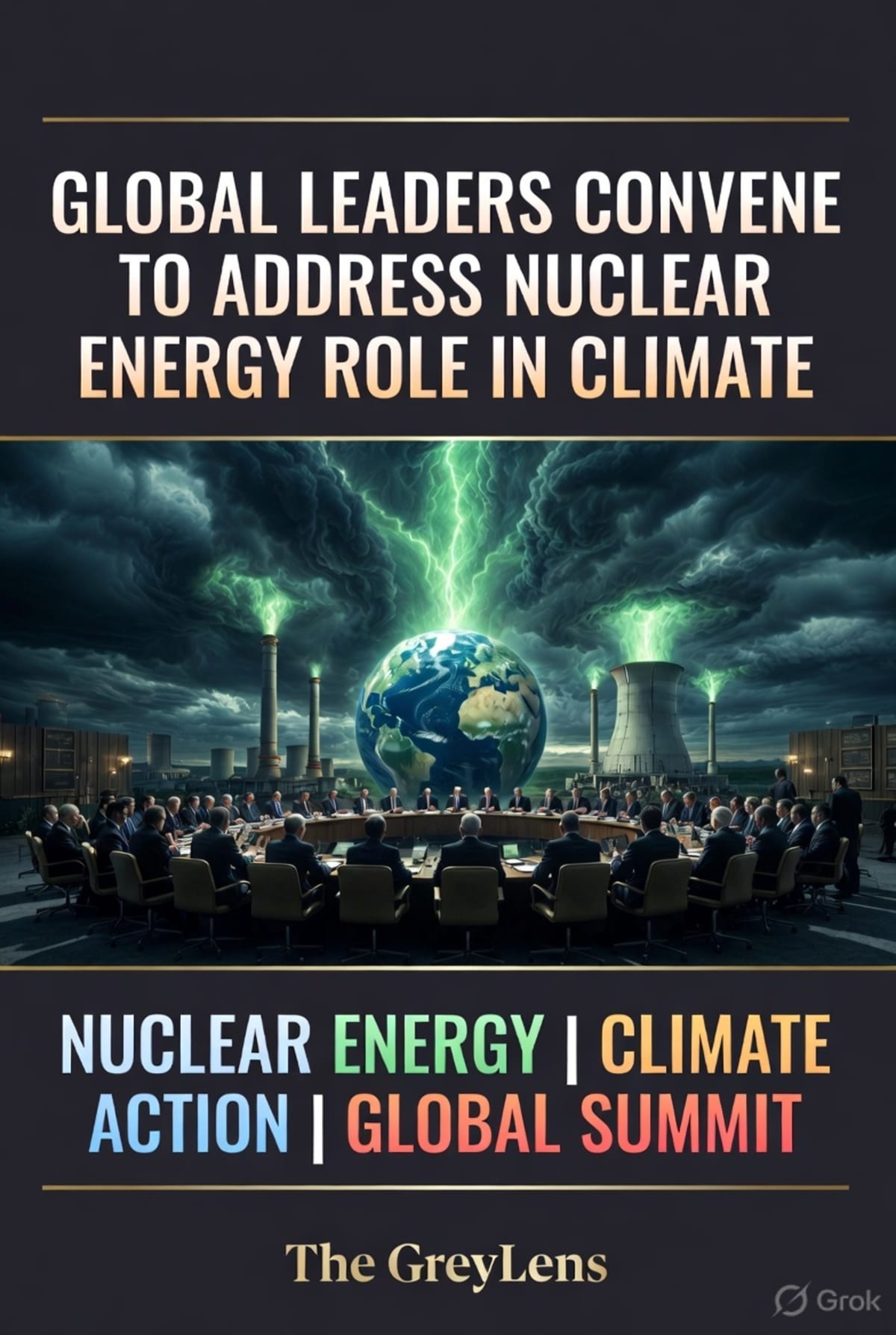
The ongoing dialogue surrounding nuclear energy's place in combating climate change has intensified, with a particular focus on its viability for young professionals and their future energy security. News reports from leading organizations like Reuters and the Associated Press indicate that international bodies and national governments are re-evaluating nuclear power's contribution to decarbonization goals. The urgency stems from the increasing frequency and severity of climate-related disasters, prompting a renewed look at all available low-emission energy technologies. For young professionals entering fields ranging from renewable energy engineering to finance, understanding the nuanced arguments for and against nuclear power is becoming increasingly crucial, as it impacts job markets, investment strategies, and long-term infrastructure development.
Analysis presented by Bloomberg suggests that while the upfront costs and long construction timelines of traditional nuclear power plants remain significant hurdles, advancements in small modular reactor (SMR) technology offer a potentially more flexible and cost-effective solution. These SMRs could be deployed more rapidly and at smaller scales, making them attractive for regions or industries with specific energy demands. The debate is not solely technical; it is deeply intertwined with public perception, regulatory frameworks, and the geopolitical implications of nuclear fuel supply chains. Environmental groups, while acknowledging the carbon-free nature of nuclear fission, continue to raise concerns about the long-term management of radioactive waste and the inherent risks associated with nuclear materials, issues that directly affect community well-being and require robust safety protocols.
The human impact angle is particularly relevant as policymakers consider the energy needs of a growing global population and the legacy of climate change. The International Energy Agency, as cited in reports by The Guardian, has emphasized the need for a diversified energy portfolio, where nuclear power could play a complementary role alongside renewables like solar and wind. For young people today, the decisions made now about energy infrastructure will shape the environment they inherit and the economic opportunities available. The challenge lies in balancing the immediate need for clean energy with the long-term considerations of safety, sustainability, and equitable access, ensuring that future generations are not burdened by the risks of today's energy choices.