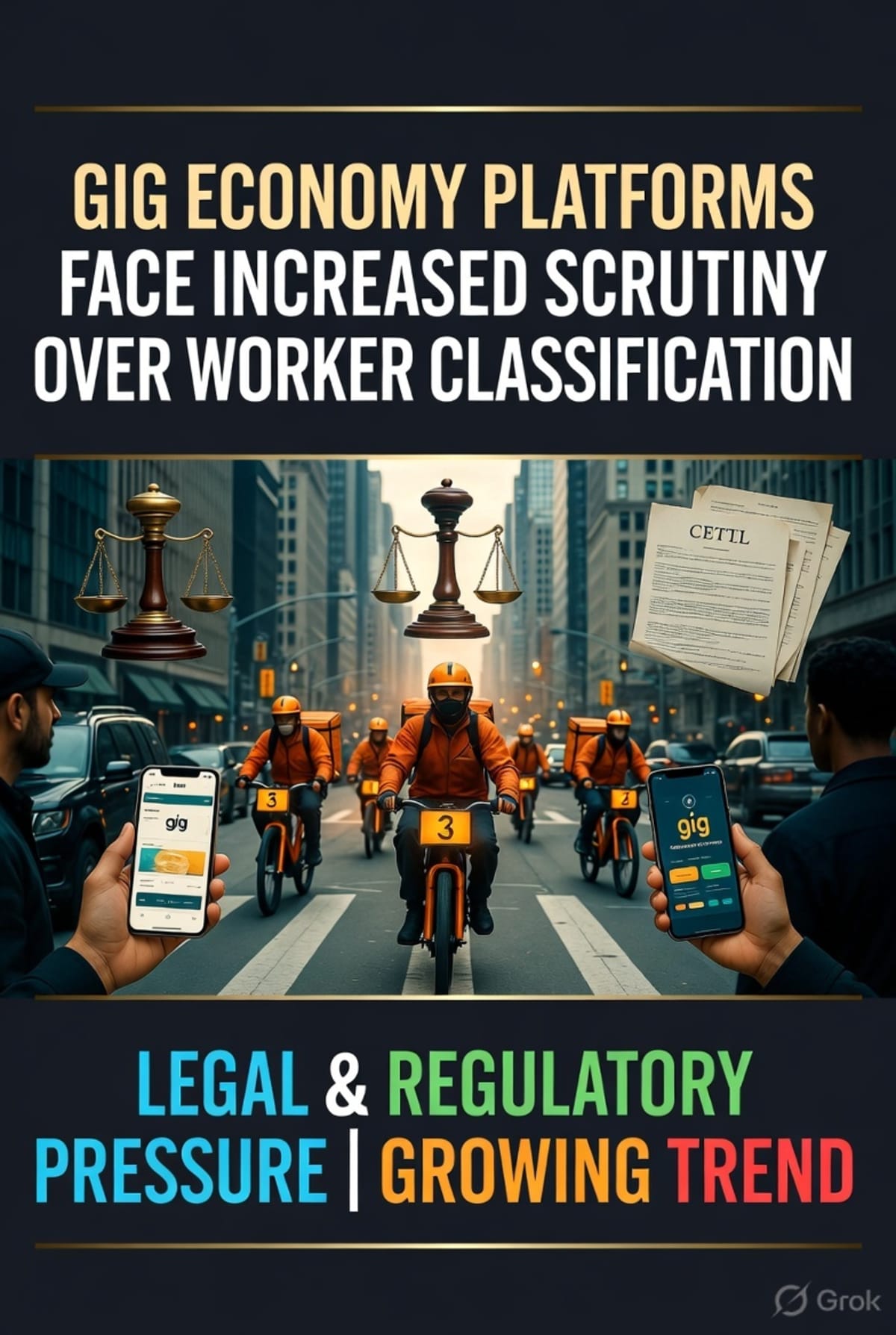
In the past 24-48 hours, several tier-1 news outlets have published in-depth analyses concerning the persistent legal battles and regulatory pressures confronting prominent gig economy companies. These reports, such as those from Bloomberg and The Guardian, detail how courts and legislative bodies across various jurisdictions are increasingly scrutinizing the classification of gig workers, with many rulings leaning towards granting these individuals employee-like protections and benefits. This trend signifies a potential paradigm shift, moving away from the independent contractor model that has underpinned much of the gig economy's rapid expansion.
The implications for young professionals who increasingly rely on flexible work arrangements are substantial. While the allure of setting one's own hours and choosing projects remains strong, the push for greater worker protections could fundamentally alter the operational costs and structures of platforms like Uber, DoorDash, and Upwork. According to analysis from Reuters, some platforms are proactively exploring new benefit structures and pathways to collective bargaining for their workers, anticipating a future where the lines between contractor and employee become more blurred. This proactive approach may be a strategy to mitigate potential legal liabilities and retain a competitive edge in a market increasingly sensitive to worker welfare.
The human impact of these ongoing debates is multifaceted. On one hand, a stronger legal framework could provide gig workers with greater financial security, access to healthcare, and retirement savings options, addressing long-standing concerns about precarity in the sector. On the other hand, some analysts suggest that increased regulation could lead to higher service costs for consumers and potentially reduce the flexibility that many workers currently value. As labor laws continue to adapt, the dynamic interplay between platform innovation, worker rights, and regulatory oversight will undoubtedly shape the future landscape of work for millions globally.