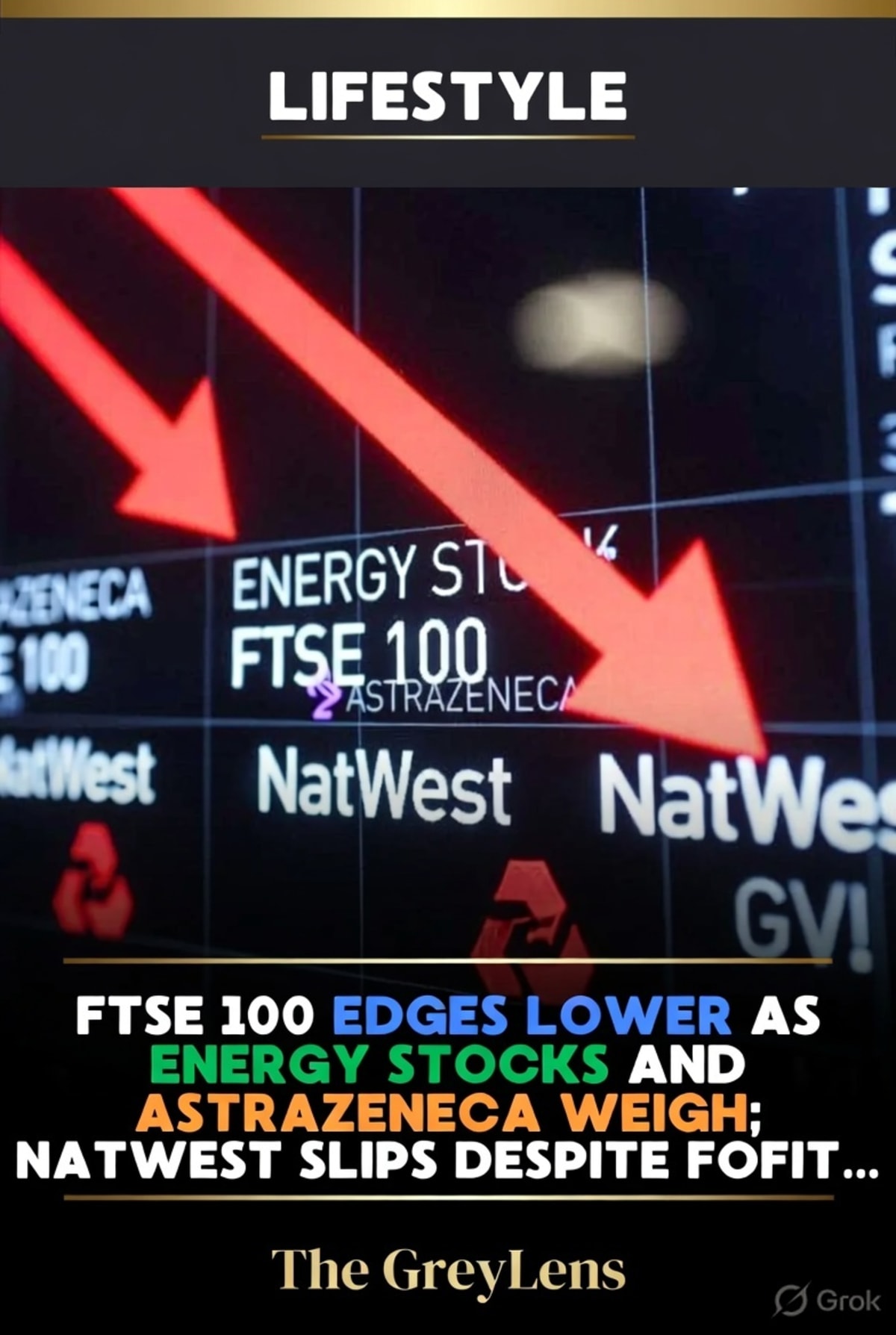
London's benchmark FTSE 100 index experienced a slight downturn on Friday, May 2, 2026, closing 0.1% lower at 10,363.93 points. The dip was primarily attributed to significant losses in major energy companies and a considerable drop in the share price of AstraZeneca, while the mid-cap FTSE 250 index managed a modest gain of 0.3%. Trading volumes were notably thin, a common occurrence ahead of a UK public holiday.
AstraZeneca Faces Setback, Energy Stocks Drag Index
AstraZeneca shares shed 3.1% following a U.S. Food and Drug Administration advisory panel's decision against recommending an experimental breast cancer treatment that the drugmaker had pinned significant hopes on for its long-term growth strategy. This development cast a shadow over the pharmaceutical giant's prospects. Concurrently, heavyweight energy stocks Shell and BP acted as considerable drags on the blue-chip index. Their performance mirrored a broader weakness in crude oil prices, which continued to weigh on the sector.
NatWest Profit Up, But Shares Decline on Missed Forecasts
NatWest reported a respectable 12% increase in its first-quarter profit, signaling a positive operational performance. However, the bank's shares tumbled by 3.4%. This decline was largely driven by its non-interest income falling 7% below analysts' forecasts, indicating a shortfall in expected revenue streams beyond core lending. Despite the profit growth, the market reacted negatively to the revenue miss, highlighting investor sensitivity to earnings details. The lender now expects 2026 total income to be at the top end of its previously guided range of GBP17.2 billion to GBP17.6 billion, reaffirming the remainder of its guidance provided with full-year results. Chief Executive Paul Thwaite stated that NatWest had started the year with "positive momentum, underpinned by healthy customer activity."
Mixed Fortunes for Other FTSE Constituents
In contrast to the broader market's decline, Pearson saw its shares rise by 3.1%. The education company announced that strong demand for its virtual learning products had led to a 4% increase in first-quarter underlying group sales. Consumer staples giant Unilever also experienced a positive trajectory, jumping 2.6% to reach a one-month high. Engineering firm Rolls-Royce added 1.5%, extending its gains from the previous day after reiterating its profit outlook. Spirits maker Diageo ended the trading session 0.7% higher. Conversely, United Utilities and Severn Trent were in negative territory, down 3.3% and 2.0% respectively, after Citi downgraded both stocks to 'neutral' from 'buy'.
The overall sentiment in the market was subdued, with many European markets closed for the Labour Day holiday, contributing to the reduced trading volumes. Investors are likely to remain cautious as they digest mixed corporate earnings and monitor ongoing geopolitical developments, particularly concerning the Strait of Hormuz. The market is also keeping an eye on inflation outlooks, with the Bank of England having previously warned of potential breaches of 6% in the coming year under certain scenarios linked to oil prices. The FTSE 100 concluded the week with marginal declines, marking its third consecutive week of losses.