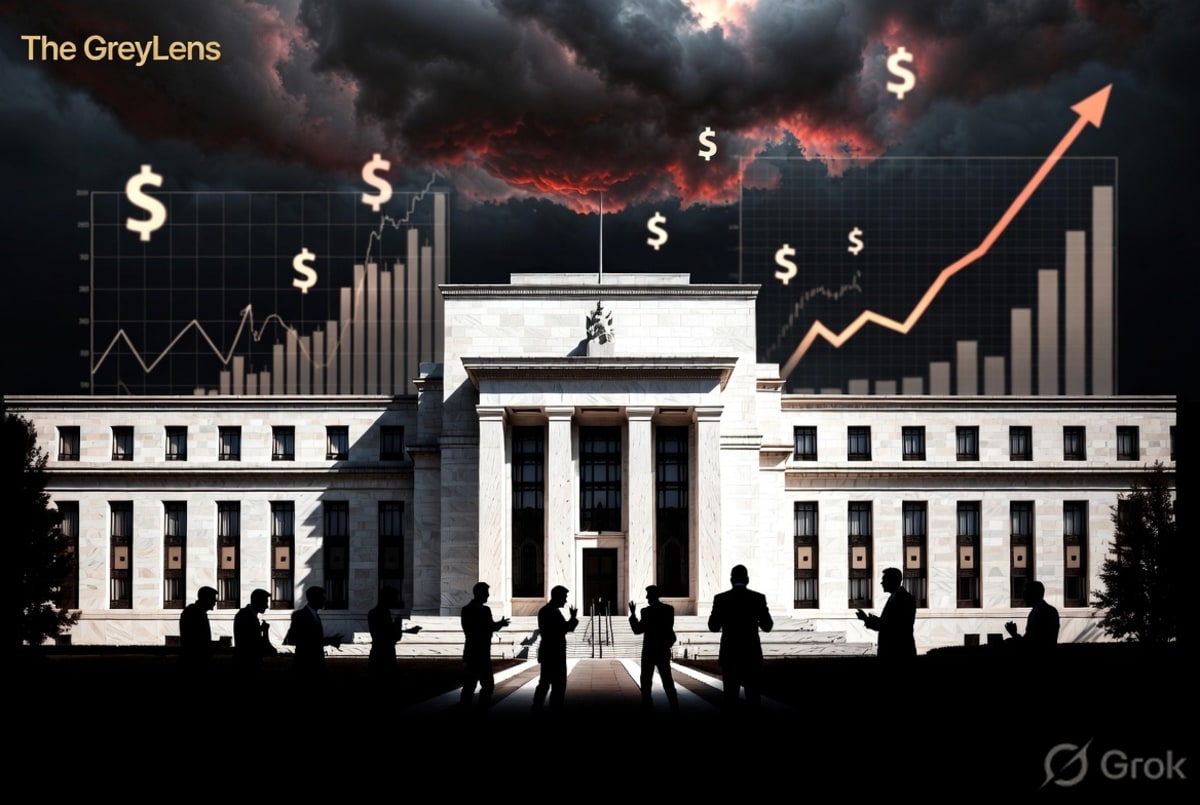
The latest minutes from the Federal Reserve's March 17-18 policy meeting reveal a growing divergence among officials regarding the future direction of interest rates. While the Federal Open Market Committee (FOMC) opted to keep the federal funds rate steady at 3.50% to 3.75%, the released minutes indicate that some policymakers are open to the possibility of interest rate increases. This sentiment stems from persistent inflation, which has been exacerbated by recent global developments, particularly the conflict in the Middle East. The minutes underscore a central tension now shaping monetary policy: officials are increasingly split on whether interest rates should fall, or potentially rise, depending on how inflation evolves.
Fed officials acknowledged that inflation remains above the central bank's 2% target, and the progress toward this goal has been uneven. This cautious stance is further complicated by external shocks, such as rising energy costs, which could make price pressures more persistent than previously anticipated. The minutes highlight concern that these factors might necessitate a reassessment of the timeline for potential rate cuts, or even lead to a consideration of further tightening. This divergence reflects a more complex policy backdrop than the Fed has faced in recent cycles, where the directionality of monetary policy was clearer.
The uncertainty surrounding inflation's trajectory has led to a widening split within the committee. Some officials expressed the view that if inflation fails to moderate, maintaining current rates or even implementing further increases may become necessary. Conversely, others emphasized the downside risks to economic growth and employment, arguing that weakening economic conditions could justify easing policy later in the year. This scenario suggests that the Fed's decisions will heavily rely on incoming economic data, with policymakers closely monitoring inflation trends, labor market conditions, and global developments.
For investors, this evolving landscape presents a period of potential volatility. Interest rate fluctuations may persist as markets recalibrate their expectations for both potential cuts and possible hikes. Fixed income strategies will require more nuanced positioning, with duration decisions hinging on the uncertain timing of policy shifts. Equity markets, in turn, could face episodic pressure if inflation surprises force the Fed to delay its anticipated easing plans. The central bank's commitment to carefully assess incoming data and the evolving outlook signals a shift toward a more reactive policy stance, rather than a predetermined path.