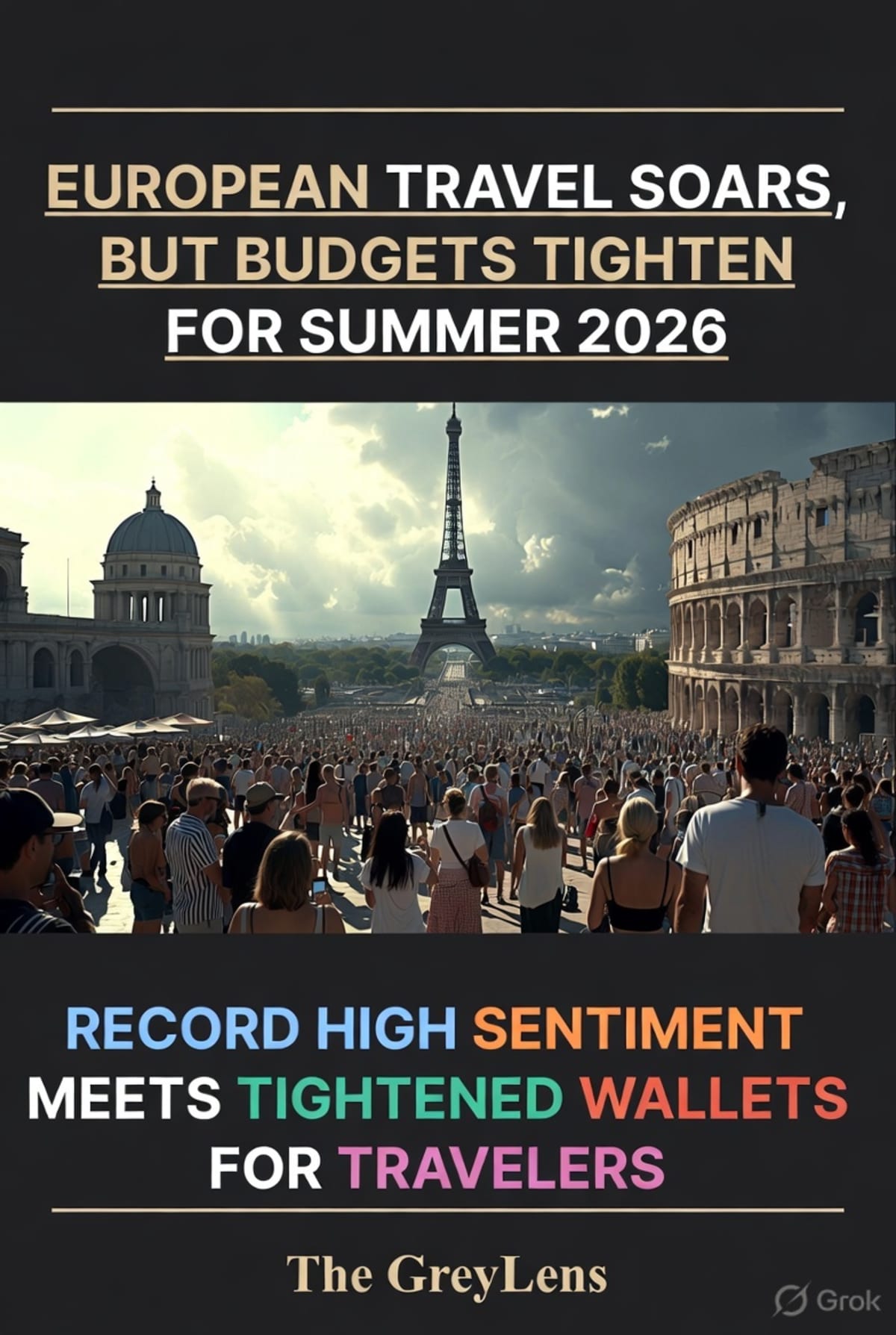
Europeans are signaling a strong desire to travel this spring and summer, with travel intentions reaching their highest level since 2020, according to the European Travel Commission (ETC). A significant 82% of Europeans plan to travel between April and September 2026, a notable increase from the previous year. This surge in wanderlust is particularly pronounced among younger demographics, with 18-to-34-year-olds showing the most substantial year-on-year rise in travel intentions.
Despite the high enthusiasm, travelers are becoming more strategic with their planning. The data indicates a trend towards shorter trips, with the most common duration now being 4 to 6 nights, a slight increase from last year. Conversely, longer stays of 7 to 12 nights have seen a decline.
Budgets are also reflecting a heightened sensitivity to costs. A larger proportion of travelers, up by 4%, plan to spend up to €1,000 per trip, while those budgeting €1,500 or more have decreased by 9%. This shift underscores a stronger focus on value for money and a more deliberate approach to spending.
Furthermore, Europeans are planning fewer trips overall, with 39% intending to take only one trip in the next six months, an increase of 7% compared to the previous year. The number of travelers planning at least two trips has consequently declined to 57%.
This trend of more deliberate and selective travel is supported by broader observations in budget travel for 2026. Smart planning, including flexible dates, embracing local experiences over tourist traps, and utilizing digital booking tools, is becoming paramount. Travelers are prioritizing making better decisions rather than sacrificing experiences, proving that memorable journeys do not always require premium budgets. Additionally, the rise of 'slow travel' and 'rail-maxing' are emerging as popular budget-friendly alternatives to flying, offering more scenic and often cost-effective ways to explore.
While air travel remains a consideration, budget airlines and alternative accommodation options like house-sitting and skill-swapping are also gaining traction as cost-saving measures. The strategic use of AI is also transforming travel planning, with tools now capable of generating cost-optimized itineraries tailored to specific budgets and preferences. As Europeans gear up for a busy travel season, the emphasis is clearly on experiencing more while spending wisely.