The Egyptian national team, drawn into Group A alongside Belgium, Iran, and New Zealand, will play all their group stage matches within the United States. This geographical concentration for their initial games, while offering some familiarity, highlights the broader logistical complexities of the 2026 World Cup. Egyptian FA president has pointed out that the vast distances between venues in North America, a stark contrast to the compact nature of the 2022 World Cup in Qatar, will require extensive travel. For instance, travel between the team's base and match venues during the group stage could take up to 50 minutes by air, a factor that could impact player recovery and preparation. This extensive travel requirement is seen as a significant challenge that could affect the team's performance, even beyond the strength of their opponents. The expansion of the World Cup to 48 teams, while providing more opportunities for nations to participate, also introduces these new logistical considerations that teams must navigate. Fans of the Egyptian team, and indeed supporters of many other nations, will be watching to see how these challenges are managed, as the tournament unfolds across a continent-spanning scale. The Egyptian FA is actively discussing these potential issues to ensure the team is as prepared as possible for both the on-field competition and the demanding off-field travel schedule. The draw, which places Egypt in a group with established European power Belgium, the resilient Iran, and debutants New Zealand, presents a balanced sporting challenge, but the true test may lie in the team's ability to adapt to the extensive travel and scheduling demands. The success of the Pharaohs at the 2026 World Cup may well depend as much on their logistical planning as on their tactical prowess on the pitch.
Sports
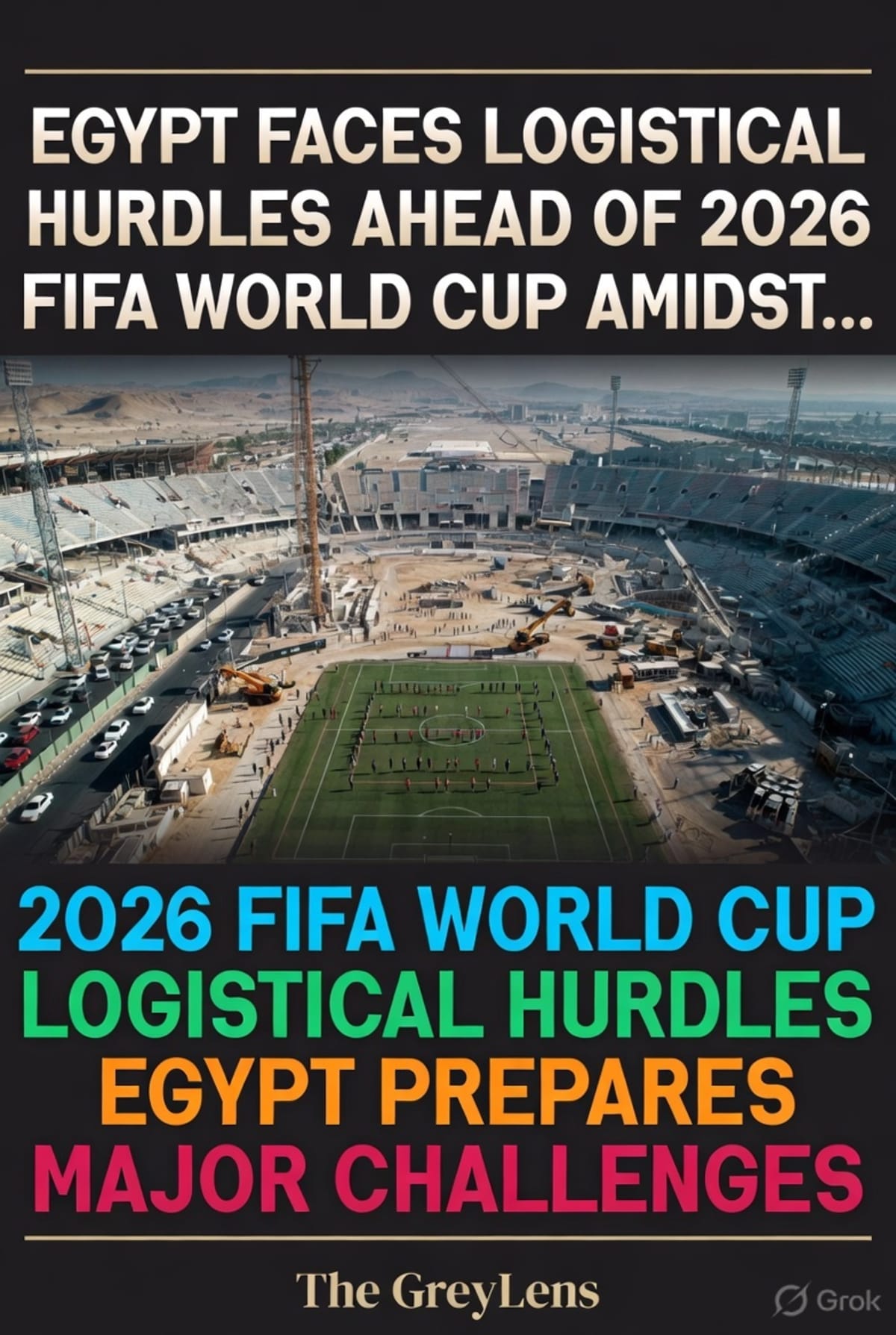
Egypt Faces Logistical Hurdles Ahead of 2026 FIFA World Cup Amidst Expanded Tournament Format
Egypt's national football team is preparing for significant logistical challenges as they gear up for the 2026 FIFA World Cup, hosted across the United States, Canada, and Mexico. The expanded 48-team tournament presents a unique set of off-field demands that are drawing attention from the Egyptian Football Association.
Report an error/suggestion: news@thegreylens.com