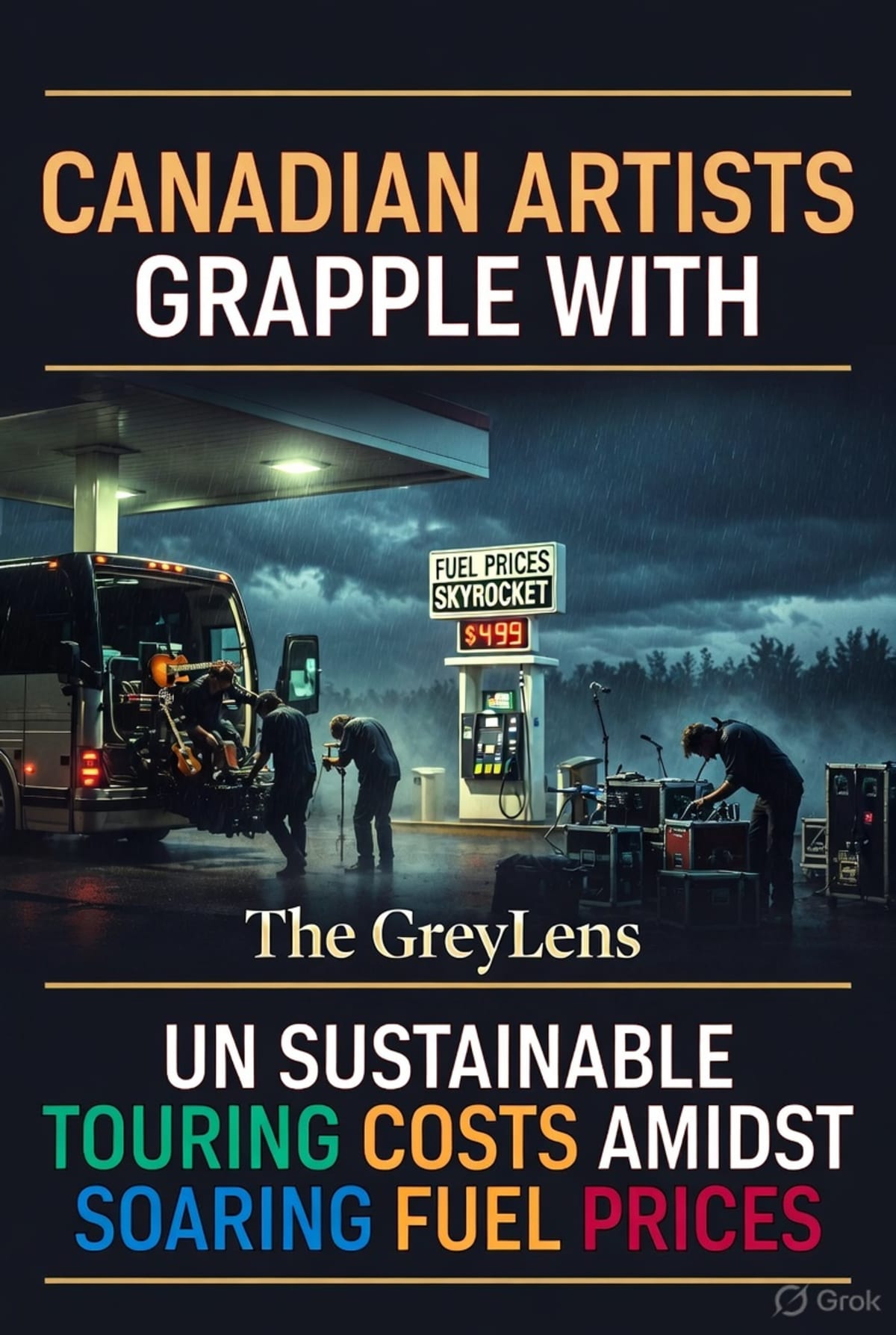
As fuel prices surge, Canadian artists are finding that the economics of touring have become increasingly unsustainable, with many facing significant financial hurdles. A report from 105.9 The Region, citing The Canadian Press, details the growing crisis, exemplified by the experience of B.C. singer-songwriter Miina. Her tour bus, a converted 1972 Greyhound running on recycled cooking oil, broke down near Cobourg, Ontario, forcing her to postpone several dates on her 24-date cross-country journey. This incident underscores the precarious financial landscape for musicians in 2026.
The Rising Cost of the Road
The current economic climate, partly influenced by geopolitical events such as the U.S.-Israel war with Iran, has led to a dramatic increase in fuel costs. This directly impacts the viability of touring for Canadian artists, who often depend on live performances and merchandise sales for the majority of their income. For independent artists like Miina, the escalating expenses for transportation, accommodation, and other tour-related necessities have become a formidable challenge. Her bandmate, Pat Ferguson, usually adept at troubleshooting mechanical issues, was unable to resolve the bus's malfunction, highlighting the unpredictable nature of these costs.
Miina's journey, which aimed to mitigate fuel expenses through innovative means, ultimately led to significant financial strain due to the unexpected breakdown. This scenario is not unique, as numerous artists are compelled to downscale their tours, absorb financial losses, or fundamentally re-evaluate their touring approaches. The dream-pop artist's experience serves as a poignant illustration of the difficulties inherent in maintaining a touring career in the current economic environment.
The Streaming Royalty Dilemma
Compounding the challenges of touring is the persistent issue of inadequate streaming royalties, which many artists find insufficient to sustain a living wage. A tour manager quoted in the report described earnings per stream as "a fraction of a penny," emphasizing the significant income gap that live performances are expected to bridge. For many independent musicians, live shows and merchandise sales account for more than 75 percent of their annual earnings. This heavy reliance on touring revenue makes the current surge in operational costs particularly detrimental to their financial stability.
These economic pressures compel artists to engage in frequent and difficult financial planning to make touring feasible. Bandmate Brendan Canning pointed out that while the costs associated with touring have escalated, the revenue generated by bands has not kept pace, creating an increasingly challenging financial equation. The broader geopolitical instability contributing to fuel price hikes adds another layer of complexity to these economic calculations.
Repercussions for the Canadian Music Scene
The unsustainability of touring due to escalating costs poses a significant threat to the vitality of the Canadian music industry. It curtails opportunities for emerging artists to expand their reach, connect with new audiences, and cultivate sustainable careers. The financial strain could result in fewer Canadian artists undertaking national tours, potentially diminishing regional music scenes and limiting cultural exchange across the country. The combination of insufficient streaming royalties and the prohibitive cost of touring creates a difficult ecosystem for musicians striving to earn a livelihood from their art.
This situation points to a systemic issue that warrants broader consideration, as the ability for artists to tour effectively is fundamental to the health and diversity of Canada's music sector. The ongoing struggle to reconcile artistic endeavors with financial realities is a narrative that resonates with an increasing number of Canadian musicians. The challenges highlighted in this report underscore the urgent need for support and innovative solutions within the Canadian music landscape.