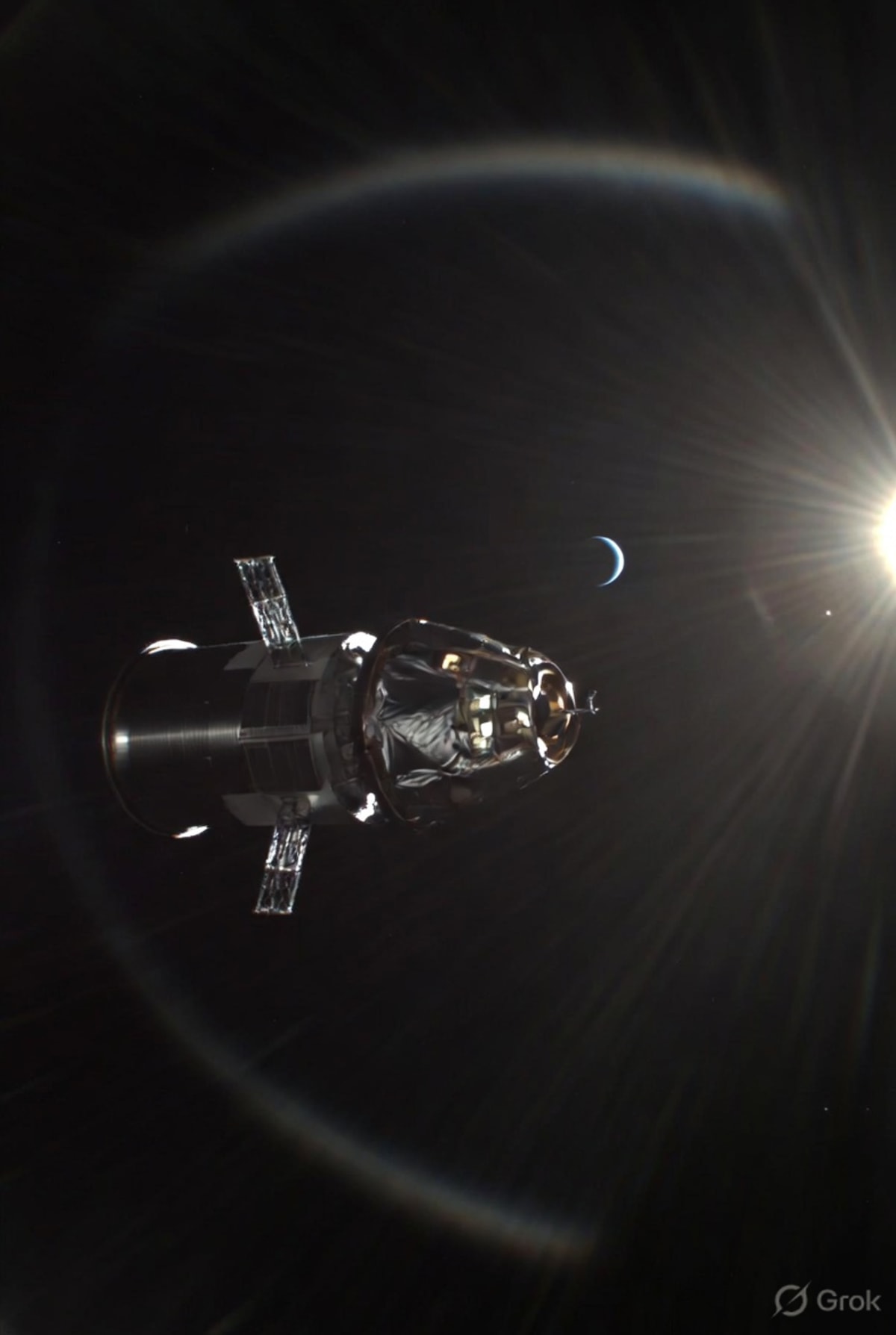
In a historic achievement for space science and technology, NASA's Artemis II mission has officially surpassed the previous record for the farthest distance humans have traveled from Earth. At 1:57 pm EDT today, April 6, 2026, the astronauts aboard the Orion spacecraft exceeded the 248,655-mile mark set by Apollo 13 in 1970. As the mission continues its trajectory, it is set to reach an even more remarkable 252,757 miles from Earth later tonight as it loops around the far side of the Moon. This monumental flight is not merely a record-breaking event; it is a pivotal moment that signals the dawn of a new era in space exploration, poised to catalyze a trillion-dollar space economy and unlock innovations with the potential to profoundly benefit life on Earth.
The scientific and technological advancements demonstrated by Artemis II are far-reaching. The mission's success is underpinned by the robust public-private partnerships that define the Artemis program. This collaborative approach is accelerating the development of a commercial space ecosystem that extends well beyond NASA's direct involvement. Emerging technologies such as artificial intelligence and high-resolution lunar digital twins are proving to be critical enablers for both lunar exploration and burgeoning commercial development. NASA's ongoing work on immersive, AI-driven virtual replicas of the Moon's surface will allow astronauts and stakeholders to conduct sophisticated assessments, visioning activities, and mission drills, thereby enhancing mission efficiency and safety.
Furthermore, the technological transfer from the Artemis program holds immense promise for terrestrial industries. Innovations in areas like radiation shielding, advanced life-support systems, autonomous operations, and novel materials science are being developed with potential applications in healthcare, energy, advanced manufacturing, and telecommunications. The long-term vision also includes the significant commercial opportunity of lunar resource extraction, with the Moon holding untapped resources valued in the hundreds of billions of dollars. The data collected during Artemis II, including crucial immune system monitoring of astronauts, will provide invaluable insights for future long-duration missions, including eventual crewed expeditions to Mars, further pushing the boundaries of human exploration and scientific discovery.
---
⚠️ This article used AI assistance. Please verify facts independently.