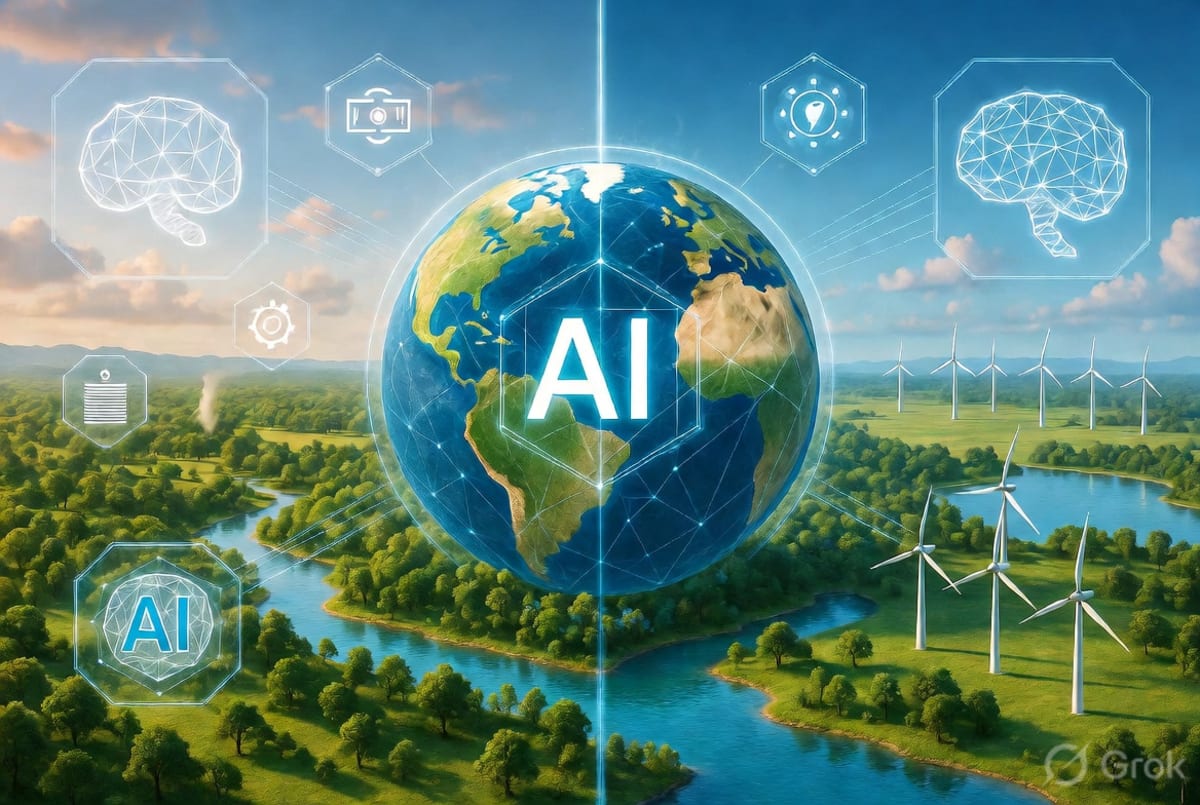
The race to combat climate change is often characterized by the shiny innovations of renewable energy and the ambitious promise of carbon capture technologies. However, a less visible but increasingly crucial player is emerging: Artificial Intelligence. Far from being an energy-guzzling culprit, AI is proving to be a powerful enabler of sustainability, offering unprecedented capabilities in both mitigating emissions and adapting to a changing climate.
AI's impact spans a remarkable breadth of applications. In the energy sector, AI-powered smart grids are optimizing the integration of intermittent renewable sources like solar and wind, improving grid management, and increasing the efficiency of renewable energy systems. Researchers predict AI could boost the load factor of solar photovoltaics and wind by as much as 20%. Beyond energy, AI is revolutionizing climate prediction and disaster management. Machine learning models analyze vast datasets to provide hyper-local forecasts for extreme weather events such as floods, hurricanes, and wildfires, giving communities crucial time to prepare and adapt. This predictive power extends to agriculture, where AI optimizes irrigation, forecasts yields, and warns of pests, thereby enhancing resilience in food systems.
Furthermore, AI is instrumental in industrial decarbonization. By optimizing production processes in sectors like cement and steel, AI can significantly reduce fuel use and emissions intensity. Startups are leveraging AI for sorbent discovery in carbon capture technologies, accelerating the identification of optimal materials for CO2 capture. This synergy between AI and direct climate technologies is critical, as AI's ability to analyze complex data and model intricate systems allows for more effective and efficient deployment of these solutions. For instance, AI-driven insights can inform policy design, predict investment risks in green technologies, and even monitor the effectiveness of climate action implementation.
Despite its immense potential, challenges remain. Concerns about the energy consumption of AI and data centers are valid, and researchers are conscious of the environmental impact. However, targeted applications of AI, particularly in optimizing efficiency and developing new climate solutions, are expected to deliver net benefits. A study by the Grantham Research Institute on Climate Change and the Environment suggests AI could reduce global emissions by 3.2 to 5.4 billion tonnes of CO2-equivalent annually by 2035. As climate risks escalate, the strategic integration of AI into green technology development and deployment is not just an opportunity, but a necessity for building a sustainable future.
---
⚠️ This article used AI assistance. Please verify facts independently.