Young professionals are experiencing a significant and disproportionate impact on their job prospects due to the rapid integration of artificial intelligence into the workplace. A Stanford University study found that employment for workers aged 22-25 in the most AI-exposed fields saw a 13% relative decline between late 2022 and July 2025, according to reporting by CBS News. This contrasts with more experienced workers in the same fields, whose employment remained stable or even grew. Specific roles such as software engineering and customer service have seen entry-level employment drop by approximately 20% during this period, as reported by Stanford economists. This trend suggests that AI is automating tasks rather than augmenting them in these entry-level positions, leading to a sustained reduction in the creation of new junior roles, as noted by PeopleScout. The implications for young professionals are stark: many employers now expect candidates to possess AI skills, compressing the traditional learning curve and potentially creating a disadvantage for those without. This shift is contributing to what some are calling an 'AIxiety Pivot,' where young professionals are proactively seeking career changes due to fears of instability.
IT
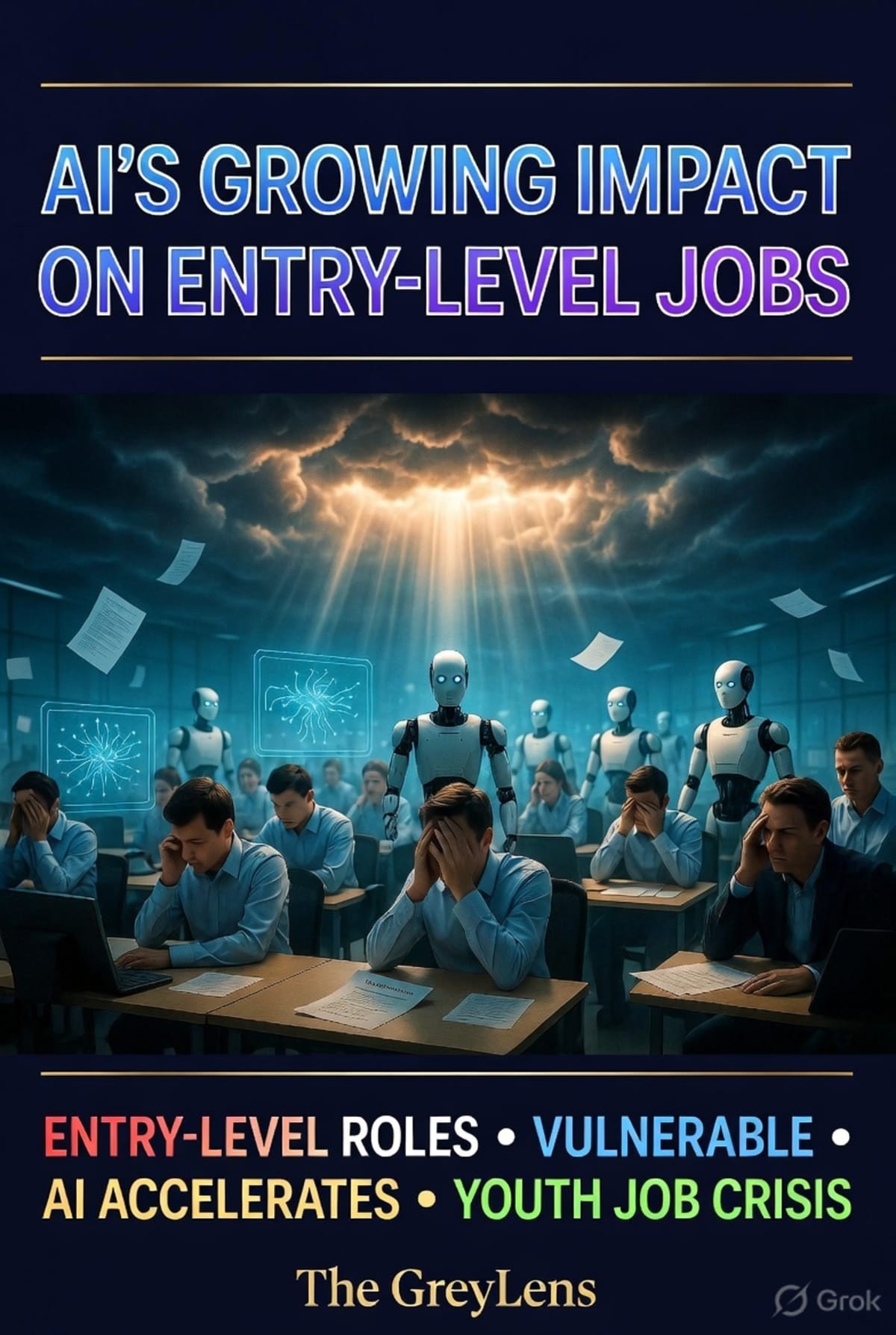
AI's Growing Impact on Entry-Level Jobs
Young professionals face a disproportionate job market challenge as AI adoption accelerates. Entry-level roles are particularly vulnerable, with significant declines in hiring and employment observed in AI-exposed fields.
Report an error/suggestion: news@thegreylens.com