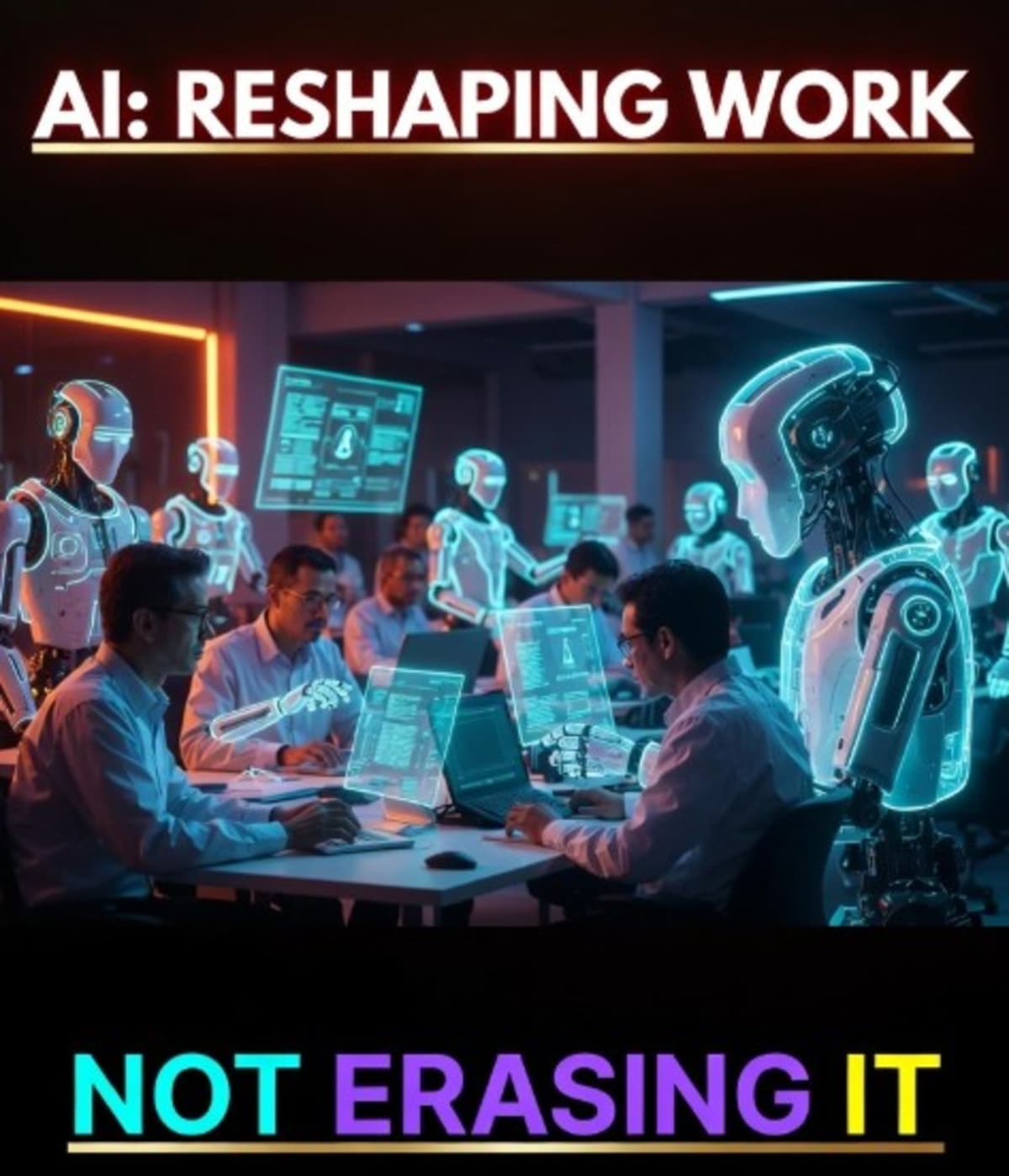
The narrative surrounding artificial intelligence and its effect on the job market is rapidly evolving. While initial fears often centered on widespread job elimination, a more nuanced understanding is emerging: AI is poised to reshape more jobs than it replaces. Research indicates that while automation will displace a certain percentage of roles, particularly those involving routine and repetitive tasks, the greater impact will be in augmenting human capabilities. This means many professions will see their day-to-day functions altered, requiring workers to adapt and collaborate with AI tools rather than be rendered obsolete by them.
This shift towards augmentation is not merely theoretical. Studies show that following the widespread adoption of generative AI tools like ChatGPT, job postings for roles involving highly structured and repetitive tasks have seen a notable decrease. Conversely, demand for jobs that benefit from AI enhancement—those requiring analytical, technical, and creative skills—has grown significantly. This suggests a future where human-AI collaboration is not just a possibility but a key driver of labor market transformation. For instance, in the legal field, AI can accelerate research and drafting, freeing up legal professionals to focus on complex judgment and client interaction. Similarly, software engineers may shift from repetitive coding to system-level thinking and design.
However, this transformation is not without its challenges. While AI may create new opportunities, particularly in tech and specialized fields, it also necessitates a significant upskilling and reskilling of the workforce. Experts estimate that a substantial portion of the global workforce will need to acquire new AI-related skills to remain competitive. The concern is that this transition may not be uniform, with some groups, particularly those without four-year degrees or in lower-wage roles, facing greater difficulties in adapting. The erosion of traditional career pathways that led to advancement could be exacerbated by AI, potentially widening existing inequalities.
Ultimately, the future of work in the age of AI hinges on strategic choices made by businesses, governments, and educational institutions. The focus must shift from simply adopting new technologies to intentionally designing work processes that foster human-AI collaboration. This includes investing in continuous learning, developing clear communication about AI's role, and ensuring human oversight in critical decision-making. The goal is not to prevent AI from transforming jobs, but to guide that transformation in a way that maximizes productivity, fosters innovation, and creates a more inclusive and prosperous future of work for all.
---
⚠️ This article used AI assistance. Please verify facts independently.