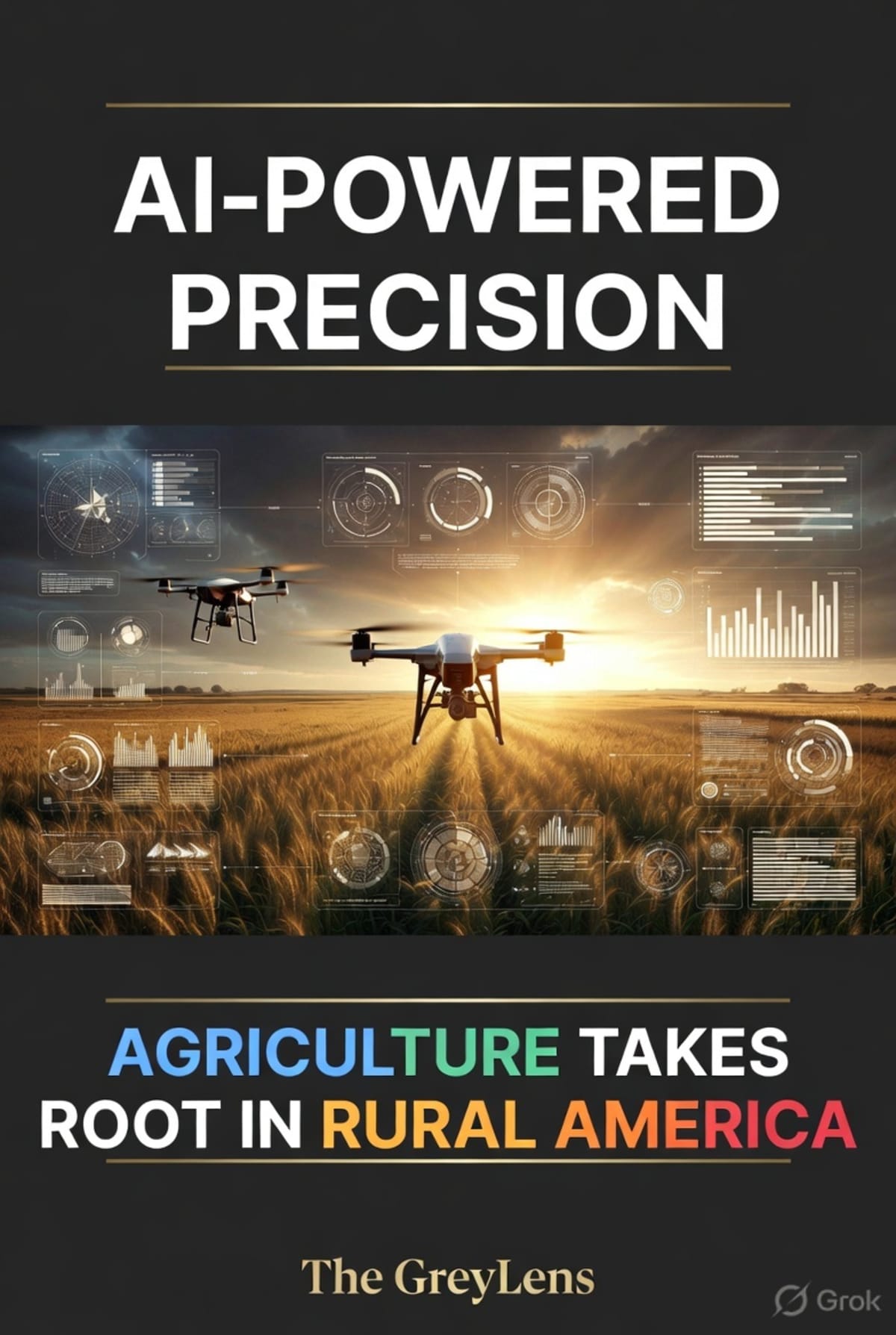
In the heartland of America, a quiet revolution is unfolding, one that promises to reshape the future of farming and address critical challenges facing rural communities. A pioneering project, spearheaded by the Iowa State University's Digital Agriculture Center, is deploying advanced artificial intelligence to offer hyper-localized, data-driven solutions directly to farmers. This initiative, gaining significant traction today, moves beyond broad agricultural trends to tackle the increasingly complex demands placed upon individual farmers, from unpredictable weather patterns to market volatility and the persistent issue of farmer burnout.
A Digital Co-Pilot for the Modern Farmer
The core of this innovation lies in AI algorithms that analyze vast datasets, including soil composition, historical yield data, real-time weather forecasts, and satellite imagery. This information is then translated into actionable insights delivered via user-friendly mobile applications. Farmers receive tailored recommendations on planting schedules, irrigation needs, and precise fertilizer application, minimizing waste and maximizing efficiency. Dr. Anya Sharma, lead researcher on the project, explained in a recent interview with the Associated Press that the goal is to act as a "digital co-pilot" for farmers, augmenting their deep-seated knowledge with cutting-edge technological capabilities. "We're not replacing the farmer; we're empowering them with tools that can make their jobs less physically demanding and more intellectually rewarding," Dr. Sharma stated. Early results from pilot programs have shown a 15% increase in crop yields and a 20% reduction in water usage among participating farms.
Tackling Burnout and Ensuring Food Security
The implications of this AI-driven approach extend far beyond mere efficiency gains. Farmer burnout, a growing crisis exacerbated by long hours, financial pressures, and an aging demographic, is a central concern the project aims to alleviate. By automating complex decision-making processes and providing predictive analytics, the AI tools reduce the cognitive load on farmers, allowing them to reclaim some personal time and focus on strategic aspects of their operation rather than constant reactive management. This is particularly crucial as the nation grapples with ensuring long-term food security in the face of climate change. According to the USDA, the average age of an American farmer is nearly 60 years old, highlighting the urgent need for solutions that make farming more sustainable and attractive to future generations. This AI initiative offers a tangible pathway to achieving that goal.
The Next Five Years: From Seed to Silicon
Looking ahead, the potential impact of this technology is immense. Experts anticipate that within the next five years, similar AI-driven precision agriculture systems could become standard across a significant portion of American farmland. This could lead to a paradigm shift, fostering more resilient agricultural systems capable of adapting to environmental stressors. Furthermore, the data generated by these systems will provide invaluable insights for agricultural research, policy-making, and the development of even more sophisticated farming technologies. While challenges remain, including ensuring equitable access to technology for all farmers and addressing data privacy concerns, the momentum is undeniable. This fusion of agricultural tradition with artificial intelligence is not just about growing crops; it's about cultivating a more sustainable, efficient, and human-centered future for American agriculture.