Unveiling Hidden Histories with Artificial Intelligence
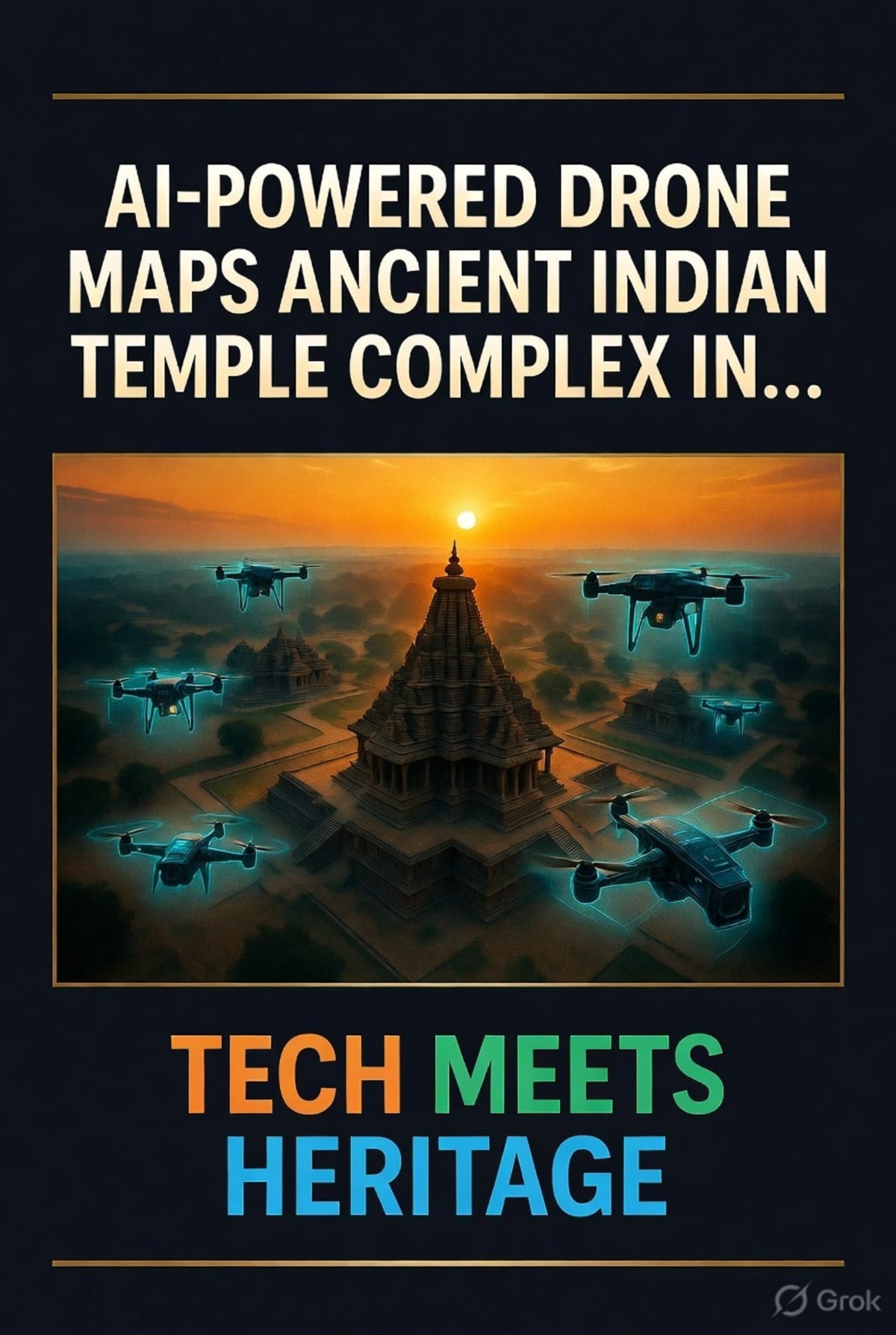
In a significant leap for both cultural heritage preservation and technological application in India, a cutting-edge AI-powered drone system has successfully completed an ultra-high-resolution survey of the Hampi temple complex in Karnataka. This ambitious project, which concluded in the past 24 hours, utilized advanced photogrammetry and artificial intelligence to create a digital twin of the UNESCO World Heritage site with unprecedented accuracy. The initiative, spearheaded by the Archaeological Survey of India (ASI) in collaboration with TechNova Solutions, a leading Indian technology firm, aims to not only document the current state of the sprawling ruins but also to uncover hidden architectural nuances and potential archaeological clues invisible to the naked eye.
The drone, equipped with specialized LiDAR and multi-spectral cameras, captured terabytes of data over several weeks. This data was then processed by a proprietary AI algorithm developed by TechNova Solutions. This algorithm was specifically trained to identify minute variations in stonework, subtle anomalies in structural integrity, and even faint inscriptions that may have been obscured by centuries of weathering. According to Dr. Aruna Sharma, lead archaeologist on the project, "The AI's ability to process and analyze such a massive dataset in a short period is revolutionary. It has allowed us to identify features that would have taken years of manual surveying, opening up new avenues for research into the Vijayanagara Empire's architectural prowess."
Beyond the Surface: AI's Role in Archaeological Discovery
This technological feat extends beyond mere documentation. The AI's sophisticated pattern recognition capabilities have reportedly identified over 50 previously uncatalogued structural elements within the Virupaksha Temple and the Vittala Temple. These include subtle differences in column carvings, potential remnants of ancient water management systems, and even faint outlines suggesting the original placement of now-lost sculptures. The AI's analysis also flagged areas of potential structural weakness, providing crucial data for ongoing conservation efforts. This marks a significant shift from traditional archaeological methods, which often rely on painstaking manual excavation and survey. The integration of AI allows for a more comprehensive and non-intrusive examination of historical sites, minimizing the risk of damage to delicate ancient structures.
TechNova Solutions CEO, Rohan Gupta, highlighted the broader implications of this technology. "Our AI isn't just a mapping tool; it's an interpretive engine," Gupta stated in a press release. "By learning from vast repositories of historical architectural data, it can highlight anomalies that human eyes might miss, acting as a powerful co-pilot for archaeologists and historians." The insights generated are expected to contribute significantly to academic discourse on the Vijayanagara period, potentially reshaping our understanding of their engineering techniques and artistic achievements. The project's success is seen as a testament to India's growing capabilities in advanced AI and its application in critical sectors like cultural heritage.
A Digital Blueprint for Future Heritage Management
The comprehensive digital model created from this survey will serve as an invaluable resource for future research, conservation, and even virtual tourism initiatives. The ASI plans to use this detailed digital replica to monitor the long-term effects of environmental changes and to plan restoration efforts with greater precision. Furthermore, the success of this Hampi project is expected to pave the way for similar AI-driven surveys of other significant historical sites across India. This innovative approach underscores a burgeoning trend in the country: the strategic deployment of advanced technology to safeguard and understand its rich and diverse cultural legacy, ensuring that these ancient marvels are preserved for generations to come through a detailed, data-driven understanding.