Recent studies suggest that artificial intelligence is having a notable and uneven impact on the job market, particularly affecting young professionals. Research from Stanford economists, as reported by CBS News and other outlets, indicates that early-career employees in fields highly exposed to AI have seen a significant drop in employment opportunities since 2022. These declines are more pronounced for workers aged 22-25 in AI-exposed occupations, with some analyses showing a relative employment decrease of up to 13% for this demographic. In contrast, employment for more experienced workers in similar fields has remained steady or even increased. Occupations such as software engineering, customer service, accounting, and administrative work are among those showing these patterns. While the overall impact on the aggregate labor market may currently be modest, the trend highlights a significant shift, with AI potentially automating tasks previously performed by junior staff. This phenomenon is leading to a rearrangement of employment, where workers using AI to augment their roles may benefit, while those whose tasks are easily automated face greater challenges. The data suggests that while AI can boost productivity, its immediate effect is creating a more competitive landscape for those entering the workforce.
IT
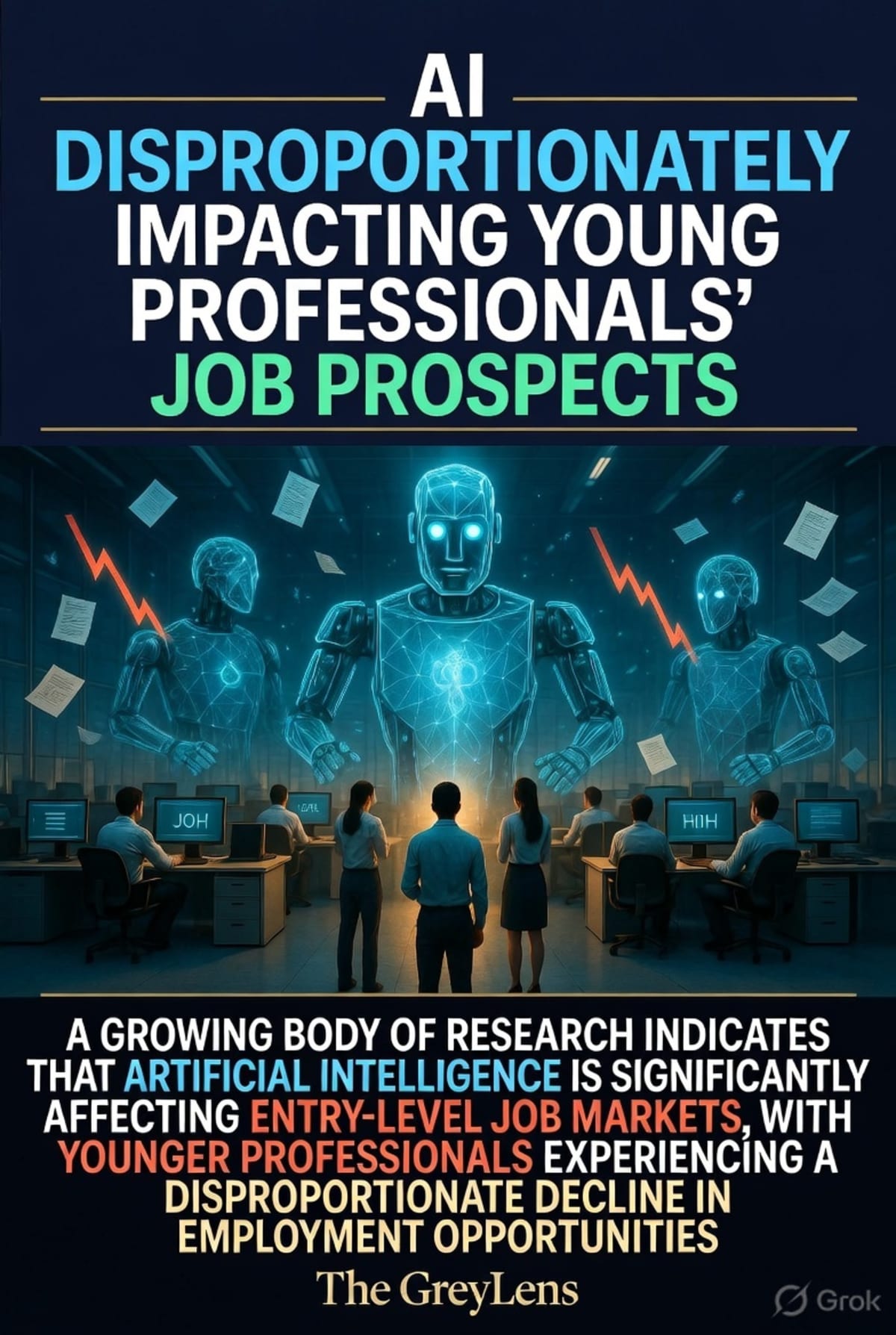
AI disproportionately impacting young professionals' job prospects
A growing body of research indicates that artificial intelligence is significantly affecting entry-level job markets, with younger professionals experiencing a disproportionate decline in employment opportunities.
Report an error/suggestion: news@thegreylens.com