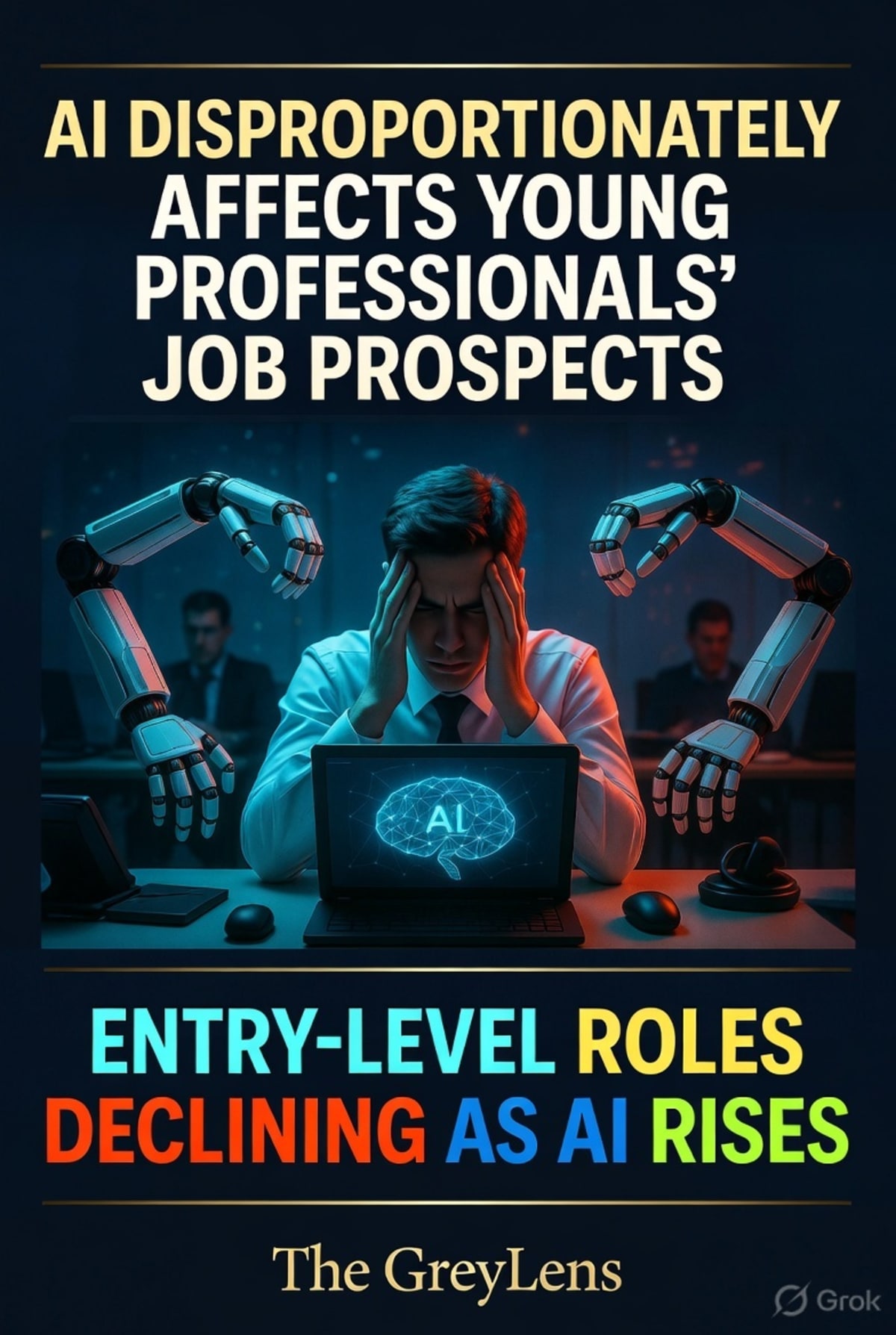
Recent analyses indicate that artificial intelligence is beginning to disproportionately affect young professionals' entry into the workforce. A Stanford University study found that workers aged 22 to 25 in occupations with high AI exposure experienced a 13% decline in employment since 2022, according to reporting from CBS News and the Dallas Fed. In contrast, employment for more experienced workers in similar fields has remained steady or increased. This trend suggests that AI is automating tasks traditionally handled by junior employees, thereby eroding traditional career entry points. For instance, entry-level positions in software engineering and customer service have seen notable declines, while roles for older workers in these same areas have grown. This shift presents a significant challenge for Gen Z workers, as these entry-level jobs have historically served as crucial training grounds for skill development and career progression. The situation underscores a growing concern that AI adoption may be hindering the career mobility and increasing income instability for the next generation of the workforce.
IT
AI Disproportionately Affects Young Professionals' Job Prospects
Young professionals are facing a unique challenge as AI adoption grows, with early-career roles showing a decline in employment. This trend suggests AI is impacting entry-level positions more than experienced roles.
Report an error/suggestion: news@thegreylens.com