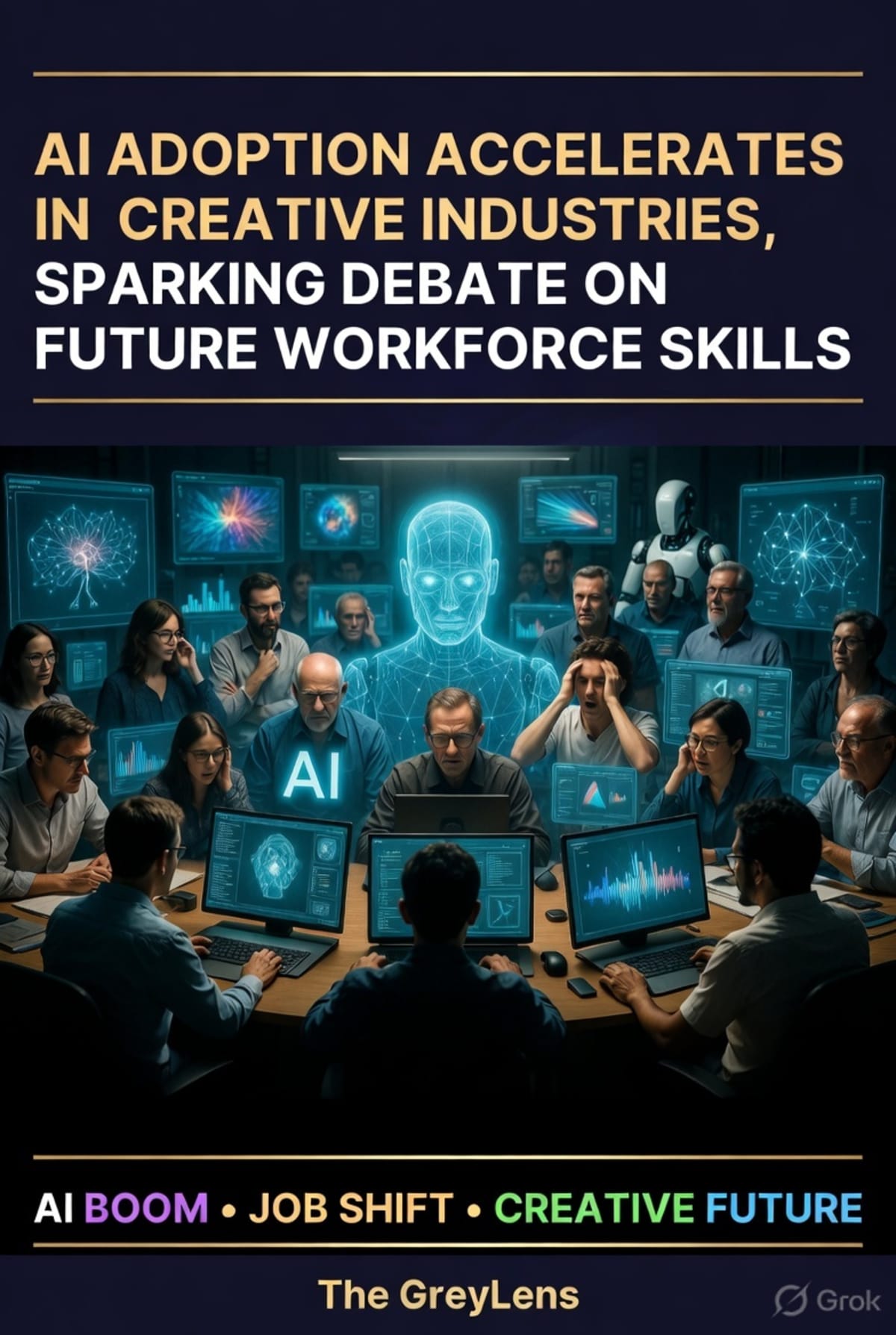
Reports emerging today from sources like the BBC and The Guardian indicate a rapid acceleration in the adoption of AI-powered tools across fields such as graphic design, content creation, and even music composition. These platforms, capable of generating text, images, and audio with increasing sophistication, are moving beyond experimental phases and into mainstream professional workflows. For young professionals entering these industries, this trend necessitates a proactive approach to skill development, focusing on areas where human oversight, critical thinking, and unique conceptualization remain paramount. The ability to effectively prompt, curate, and ethically integrate AI-generated content is quickly becoming as crucial as traditional technical skills.
While the immediate impact on employment figures is still being assessed, experts quoted by Reuters suggest a shift rather than a wholesale elimination of roles. The focus is moving towards augmentation, where AI assists human creatives in tasks like ideation, rapid prototyping, and repetitive processes, freeing them to concentrate on higher-level strategic and artistic contributions. However, this transition is not without its challenges. Concerns are being raised about the potential for AI to commoditize creative output, driving down prices and making it harder for individual artists and designers to command fair compensation. The ethical implications of AI-generated art, including issues of copyright and originality, are also becoming a central point of discussion among industry leaders and legal experts.
The human element remains a critical differentiator, according to analyses from Bloomberg. The nuanced understanding of emotion, cultural context, and subjective aesthetic judgment are areas where AI currently falls short. Professionals who can leverage AI as a tool while imbuing their work with a distinct human perspective are likely to be the most resilient and successful in this evolving landscape. Educational institutions and professional development programs are thus under pressure to adapt their curricula to prepare the next generation of creatives for a hybrid human-AI work environment, emphasizing adaptability, continuous learning, and a strong ethical compass in the face of unprecedented technological change.