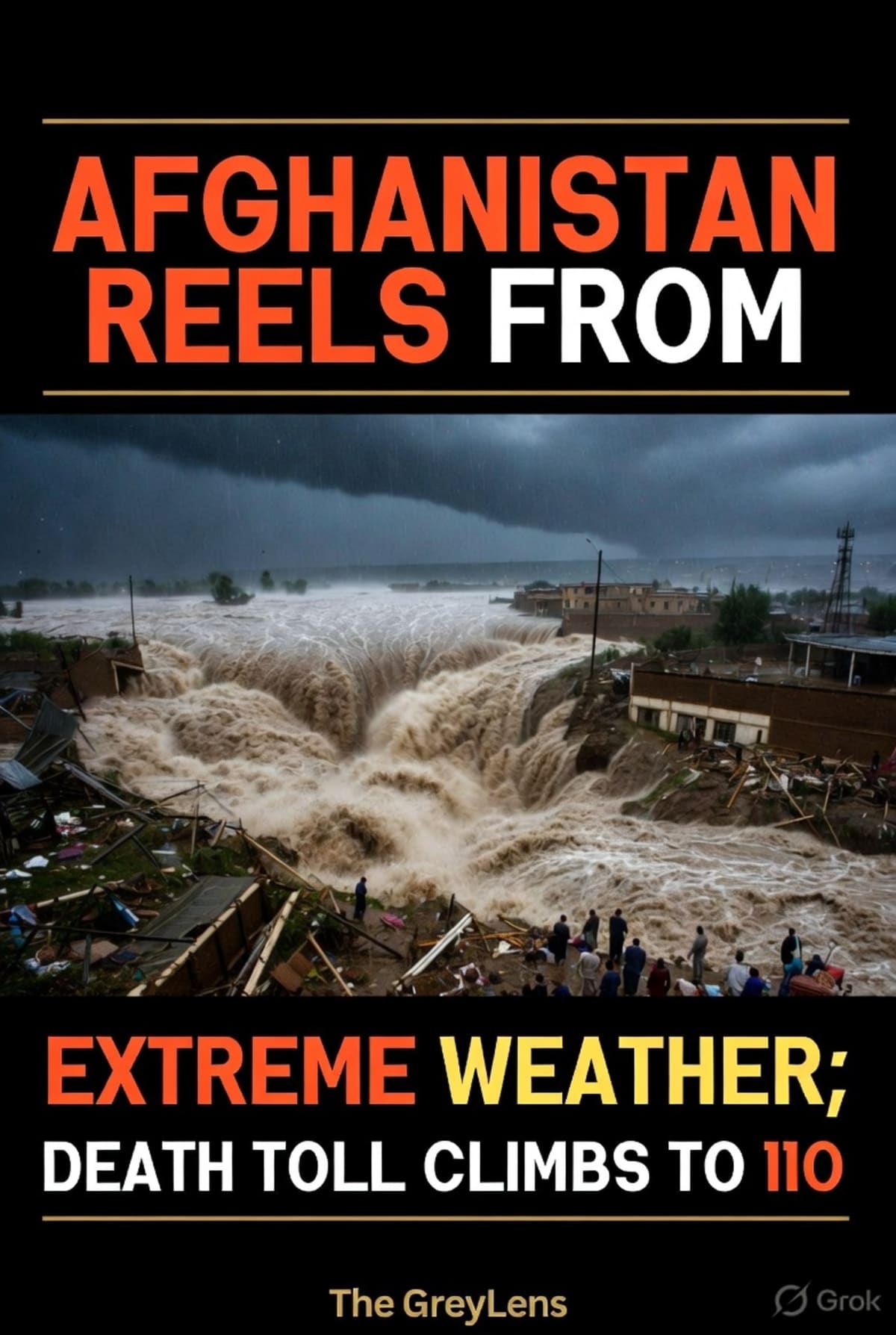
Afghanistan is currently facing a devastating natural disaster crisis as extreme weather conditions have led to widespread flooding and landslides across the country. According to Afghanistan's disaster management authority, the relentless storms and heavy rainfall, which began approximately 12 days ago, have impacted most of the nation's 34 provinces, resulting in a tragic death toll of at least 110 people. Seven individuals remain missing as rescue and recovery efforts continue.
The severe weather has not only claimed lives but has also caused significant damage and disruption. Heavy rains and subsequent floods have triggered landslides, exacerbating the crisis in affected regions. Images from Jalalabad show residents inspecting buildings partially collapsed due to the intense flooding, highlighting the scale of destruction. The ongoing rainfall across the country is severely disrupting transportation networks, further complicating aid delivery and emergency response operations.
This recent disaster adds to a series of challenging events for Afghanistan. Reports from early April indicated a death toll of 77 from floods and landslides within a 10-day period, and a separate earthquake in early April also resulted in casualties, including members of a refugee family returning from Iran. The cumulative impact of these natural disasters places immense strain on the country's resources and infrastructure.
The international community is closely monitoring the situation as Afghanistan grapples with this escalating crisis. The consistent occurrence of extreme weather events underscores the vulnerability of the region and the urgent need for robust disaster preparedness and response mechanisms. The ongoing rainfall and the resulting devastation present a significant humanitarian challenge, with the full extent of the damage and the long-term consequences still unfolding.