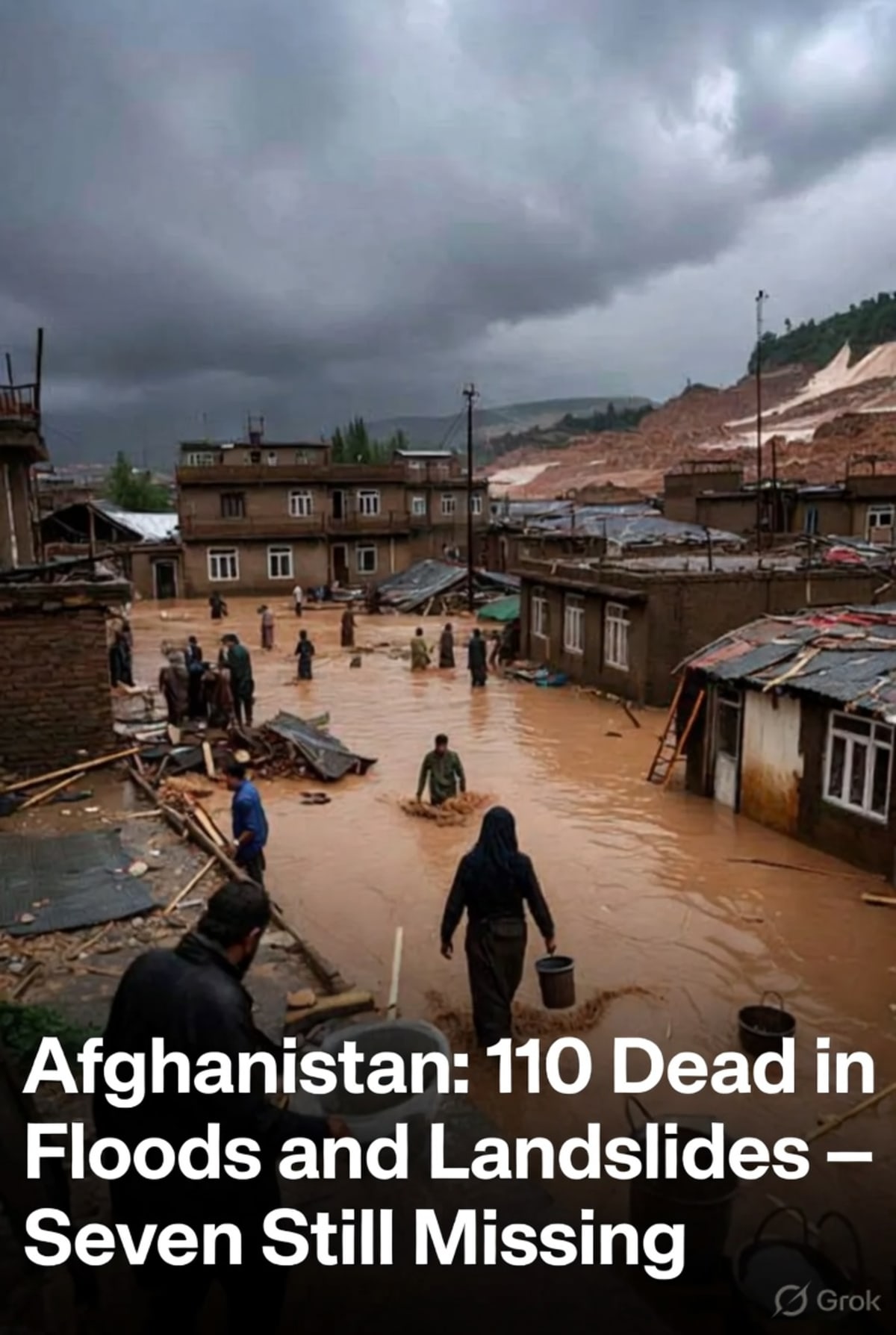
Afghanistan is currently grappling with a devastating wave of extreme weather, as intense rainfall has unleashed widespread flooding and catastrophic landslides across much of the country. Authorities reported on Monday that the death toll has tragically risen to at least 110 individuals, with an additional seven people still unaccounted for and feared lost to the deluge. The relentless storms, which began approximately 12 days ago, have affected all 34 provinces of Afghanistan, leaving a trail of destruction in their wake.
In the past 24 hours alone, the Disaster Management Authority confirmed 11 fatalities and six injuries. Seven individuals were reported missing in separate incidents, all believed to have been swept away by the surging floodwaters. The cumulative impact of the flooding, landslides, and lightning strikes over the past 12 days has been severe, with 958 homes completely destroyed and another 4,155 suffering partial damage. The Ministry of Defense reported using a helicopter to airlift two individuals to safety after they became stranded by floodwaters in the western province of Herat.
The destruction extends beyond residential areas, with over 325 kilometers (200 miles) of roads rendered impassable. Businesses, vital agricultural land, irrigation canals, and fresh-water wells have also sustained damage, impacting a staggering 6,122 families. These figures are considered preliminary, with authorities warning that the full extent of the devastation may still be unfolding. The Kabul to Jalalabad highway, a crucial artery linking the capital to the Pakistani border and eastern provinces, has been closed since Thursday, and the road from Jalalabad to Kunar and Nuristan provinces has been blocked by falling rocks since Sunday.
Authorities have issued weather warnings for nearly the entire country, urging residents to stay away from rivers and flood-prone areas. The forecast indicates a continued risk of heavy rain, suggesting that the crisis could deepen. This natural disaster underscores the vulnerability of many regions to extreme weather events, exacerbated by changing climate patterns, and highlights the urgent need for robust disaster preparedness and response mechanisms.
---
⚠️ This article used AI assistance. Please verify facts independently.